
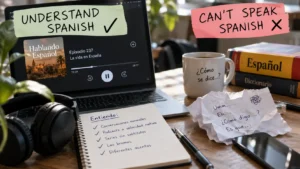
Why You Understand Spanish but Can’t Speak It (And How to Fix It)
You follow podcasts at normal speed. You might even watch series without subtitles and catch most of the jokes. Then…
Read article ↗LLH Archive / articles & research
Explore resources to learn Spanish for free, including grammar tips, vocabulary, and speaking practice for beginners to advanced learners.
You follow podcasts at normal speed. You might even watch series without subtitles and catch most of the jokes. Then…
Read article ↗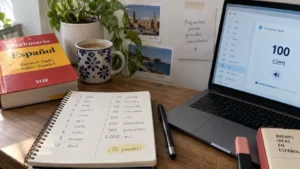
Spanish numbers are easier to learn than they first seem. Once you know the numbers 1–15 and the main tens,…
Read article ↗
Hola is a good start, but it is not always the right greeting. Learning different Spanish greetings can help you…
Read article ↗
Knowing Spanish grammar is useful, but travel is where the language becomes real. That’s why learning some Common Spanish Phrases…
Read article ↗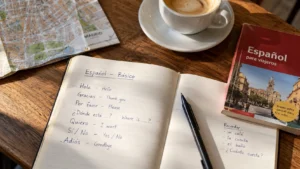
TL;DR: Start with the most common Spanish words first. Learn basic greetings, numbers, pronouns, everyday nouns, key verbs, question words,…
Read article ↗
TL;DR: Spanish numbers are highly predictable once you learn the basics. Start with 1–20, memorise the tens, and you’ll be…
Read article ↗TL;DR: Spanish shapes your English rhythm, stress, intonation, and connected speech to sound clearer and more natural. With consistent practice,…
Read article ↗TL;DR: English word stress is the key to sounding natural and being clearly understood, especially for Spanish speakers whose rhythm…
Read article ↗TL;DR: Spanish speakers don’t sound “flat” in English because of bad grammar or low fluency, it’s usually due to a…
Read article ↗