
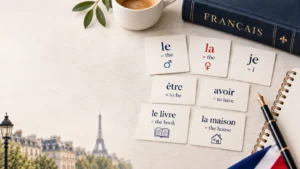
Break Out of the French B1 Plateau for Intermediate Learners

French B1 plateau

TL;DR: The French B1 plateau isn’t a failure. It’s the point where your old methods stop working. At B1, you can communicate, but not naturally. You understand the gist, but miss nuance. Progress feels slow, and confidence dips. That’s normal. It means you’ve hit the stage where French shifts from study to real use. You’re … Read more

How to Learn French with Films and Series (Without Just Reading Subtitles)

learn french with films

TL;DR: Watching French films isn’t the problem. Watching passively is. If you rely on English subtitles, you follow the story but miss the language. Real progress comes from active watching: focusing on key phrases, rewatching short scenes, and using context, tone, and visuals to understand meaning. Most people watch French films. Very few actually decide … Read more

Sound Natural in French: Fillers, Connectors, and Little Words

sound natural in french

TL;DR: Sounding natural in French isn’t about advanced grammar. It’s about using small, everyday words the way native speakers do. Fillers, connectors, and little expressions make speech flow, buy time to think, and add tone. Without them, your French can be correct but stiff. Sounding natural in French isn’t about using more complex grammar. It’s … Read more

How to Prepare for the DELF B1: A Practical Study Plan

delf b1

TL;DR: DELF B1 isn’t about perfect French. It’s about communicating clearly under pressure. The exam tests four skills equally: listening, reading, writing, and speaking. To pass, you need 50/100 overall and at least 5/25 in each. Examiners care about clarity, structure, and completing the task. Not advanced grammar. The DELF B1 is about one thing: … Read more

French Travel Phrases: Survival in Cafés, Hotels, and Emergencies

french travel phrases

TL;DR: You don’t need perfect French to travel well in France, you just need the right phrases at the right moments. A handful of polite expressions for cafés, hotels, directions, shopping, and emergencies gives you confidence, independence, and smoother interactions. More importantly, starting with simple French shows respect, which often leads to better service and … Read more

French False Friends: Common Traps and How to Avoid Them

french false friends

TL;DR: French false friends look familiar, but they trick you. They’re words that resemble English but mean something completely different, leading to subtle mistakes, awkward moments, and misunderstandings you often don’t notice. The fix is simple: stop trusting appearances. That French word looks familiar – but French false friends change this. You translate it. And … Read more

French Listening Practice for Beginners: Simple 15-Minute Routine

french listening practice

TL;DR: French listening feels overwhelming at first—but you don’t need hours to improve. A simple 15-minute daily routine is enough: warm up your ear, focus on one short audio, then reflect on what you understood. Don’t try to catch every word. Train yourself to recognise patterns and meaning instead. French listening practice can feel intimidating … Read more

The Royal Language of Diplomacy: Why French Is Still Spoken

french language of diplomacy

TL;DR: French remains the language of diplomacy not by tradition alone, but because of its precision, neutrality, and deep roots in international law and institutions. From the Treaty of Versailles to modern bodies like the United Nations and European Union, it continues to shape negotiations and global policy. For a language no longer ruling global … Read more