
|
Getting your Trinity Audio player ready...
|
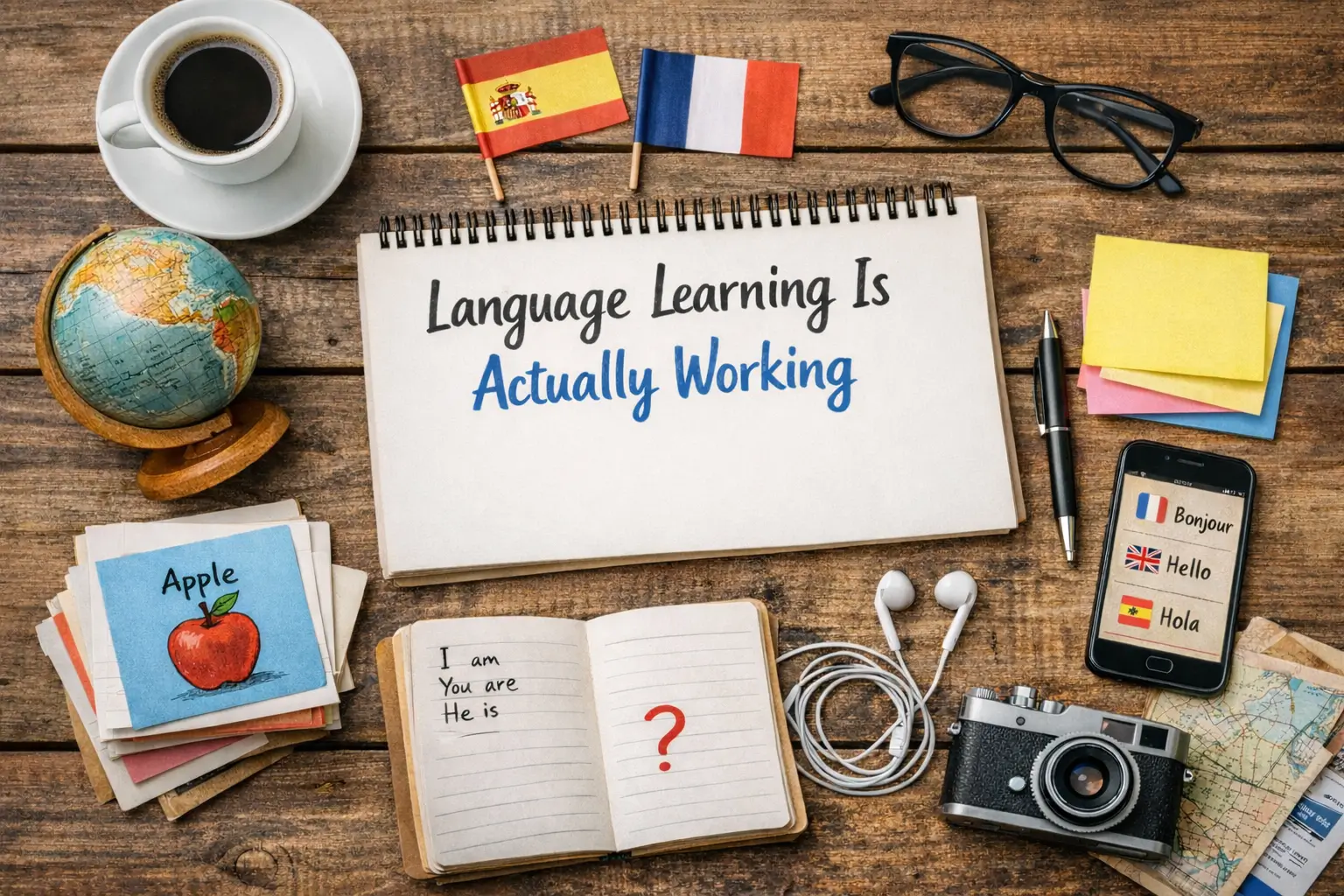
You study the vocabulary, practise the grammar, and you listen to podcasts, watch videos, and try to speak whenever you can. But sometimes it still feels like you’re not getting anywhere, even though your Language Learning Is Actually Working.
The truth is, language learning progress is often subtle. Improvements happen gradually, and many of the biggest signs that you’re improving are easy to miss.
Common frustrations and doubts learners face
Learning a new language is exciting at first, but many learners eventually reach a point where progress feels slow or even invisible. However, it’s important to recognise signs that language learning is actually working, even if they aren’t always obvious at first.
It’s common to question whether your efforts are actually paying off, especially when improvements happen gradually rather than all at once.
- Feeling like you’re studying a lot but not improving
- Forgetting vocabulary that you thought you had already learned
- Struggling to understand native speakers speaking at normal speed
- Hesitating or freezing when trying to speak in conversations
- Comparing your progress to that of other learners and feeling behind
- Hitting “plateaus” where progress seems to stall
- Doubting whether you’ll ever become fluent
- Feeling overwhelmed by the amount of grammar and vocabulary to learn
Why It Often Feels Like You’re Not Improving
Improvement often happens gradually and in small steps that are easy to overlook day to day.
Learners focus on what they still can’t do, it can seem like nothing is changing, even when their skills are quietly improving in the background.
- Language learning is gradual, so improvements can be difficult to notice in the short term
- Learners often focus on mistakes and gaps, rather than the progress they’ve made
- Different skills (listening, speaking, reading, writing) develop at different speeds
- Plateaus are common and often happen just before major breakthroughs
- Increased exposure makes you realise how much more there is to learn, which can create the illusion of slower progress
- The brain needs time to process and store new vocabulary and grammar patterns
- Confidence can lag behind actual ability, making learners feel less capable than they really are
Small Signs Your Brain Is Adapting to the Language
When your brain starts adapting to a new language, the changes are often subtle.
You might not suddenly feel fluent, but small shifts begin to appear in how you recognise words, understand conversations, and process meaning.
These quiet improvements are often some of the strongest signs that your language learning is working:
- You recognise words instantly without needing to translate them
- You understand the general meaning of conversations, even if you miss some words
- Certain grammar patterns start to feel natural rather than confusing
- You automatically correct your own mistakes while speaking
- You notice familiar words in songs, films, or podcasts
- You can guess the meaning of new words from context
- You start forming simple thoughts in the language without translating first
Increased Vocabulary Retention
One of the first signs your language learning is working is improved vocabulary retention. At the beginning, new words can feel impossible to remember.
But with repeated exposure, your brain gradually strengthens the connections between words and their meanings.
Over time, recalling vocabulary becomes faster, easier, and more automatic.
Explanation of how vocabulary acquisition works
Vocabulary is learned through exposure, repetition, and context.
Each time you encounter a word in conversation, reading, or listening, your brain reinforces the connection between the word and its meaning.
Eventually, words move from short-term memory to long-term memory, especially when you see or use them in different situations.
Signs of improved retention
As your vocabulary improves, you’ll start to notice small but important changes.
- Recalling words without needing to translate
- Recognising vocabulary instantly when reading or listening
- Remembering words you learned days or weeks ago
- Using familiar words naturally when speaking
- Guessing the meaning of new words from context
These are strong signs your brain is building a working vocabulary.
Tips for expanding vocabulary effectively
The best way to grow your vocabulary is through consistent exposure and active use.
- Use spaced repetition to review words regularly
- Learn vocabulary in sentences and real contexts
- Read, listen, and watch content in your target language
- Practise using new words when speaking or writing
- Group vocabulary by themes or topics
With regular exposure, vocabulary gradually becomes automatic, helping you understand more and communicate with greater confidence.
Improved Listening Comprehension
Listening is often one of the most challenging parts of learning a language.
Native speakers talk quickly, use informal expressions, and rarely slow down for learners. However, as your skills develop, your brain gradually becomes better at recognising sounds, words, and patterns in real time.
Improved listening comprehension is a strong sign that your language learning is paying off.
Listening skills in language learning
Listening comprehension involves more than just hearing words. It requires recognising pronunciation, understanding sentence structure, and interpreting meaning from context.
As you gain more exposure to the language, your brain becomes better at identifying familiar sounds and connecting them to words you already know.
Indicators of progress
As your listening skills improve, you’ll start noticing small but meaningful changes.
- Understanding the general meaning of conversations
- Recognising familiar words even when spoken quickly
- Following the main ideas in podcasts or videos
- Needing subtitles less often when watching content
- Identifying different accents or speaking styles
These signs show that your brain is becoming more comfortable processing the language naturally.
Recommended resources for enhancing listening skills
Regular exposure to spoken language is the most effective way to improve listening comprehension.
Some useful resources include:
- Podcasts designed for language learners
- Films and TV shows in your target language
- YouTube channels with native speakers
- Audiobooks or storytelling platforms
- Language learning apps with listening exercises
Listening frequently, even passively, helps your brain adapt to the rhythm and sounds of the language over time.
Enhanced Speaking Confidence
Speaking is often the skill that feels the most intimidating when learning a new language. Many learners understand far more than they can comfortably say.
As you gain experience and practise regularly, hesitation starts to fade, and speaking becomes more natural.
Growing confidence when speaking is a strong sign that your language ability is developing.
The role of speaking in language proficiency
Speaking allows you to actively use the vocabulary and grammar you’ve learned. It turns passive knowledge into practical communication.
The more you speak, the more your brain learns to organise thoughts quickly in the target language and respond in real conversations.
Signs of increased confidence
As your confidence improves, certain changes become noticeable in how you communicate.
- Speaking with fewer pauses or hesitation
- Responding more quickly in conversations
- Using a wider range of vocabulary
- Feeling less afraid of making mistakes
- Starting conversations instead of avoiding them
These shifts show that your brain is becoming more comfortable producing the language.
Strategies to practise speaking more effectively
Consistent speaking practice is key to building fluency and confidence.
- Practise speaking out loud, even when studying alone
- Use language exchange platforms or conversation partners
- Record yourself speaking and review your pronunciation
- Repeat phrases from podcasts, films, or videos
- Focus on communication rather than perfect grammar
The more you practise speaking, the more natural and automatic the language will become.
Better Reading Comprehension
Reading is one of the most effective ways to build vocabulary and reinforce grammar in a new language.
Unlike conversations, reading allows you to slow down, notice patterns, and understand how words work together in context. As your skills improve, texts that once felt difficult gradually become easier to understand.
Improved reading comprehension is a clear sign that your language ability is developing.
Importance of reading in language acquisition
Reading exposes you to a wide range of vocabulary, sentence structures, and expressions. It helps reinforce what you’ve already learned while introducing new words in meaningful contexts.
Because written language is often more structured than spoken language, it also helps learners recognise grammar patterns more easily.
Signs of improvement
As your reading skills grow, you’ll begin to notice clear progress.
- Understanding the general meaning of texts without translating every word
- Recognising vocabulary you’ve learned in other contexts
- Reading longer passages without losing track of the meaning
- Guessing the meaning of unfamiliar words from context
- Reading more quickly and smoothly
These changes show that your brain is processing the language more naturally.
Suggestions for reading materials to boost comprehension
Choosing the right materials can make reading both easier and more enjoyable.
- Graded readers designed for language learners
- News articles written in simplified language
- Short stories or beginner-friendly novels
- Blog posts and online articles in your target language
- Social media posts or forums for everyday language
Reading regularly, even for a few minutes a day, helps strengthen vocabulary recognition and improves overall language comprehension.
Writing Skills Development
Writing is one of the most powerful ways to reinforce what you’ve learned in a new language.
It forces you to organise your thoughts, apply grammar rules, and actively use vocabulary. While it can feel slow and challenging at first, consistent practice gradually makes expressing ideas in the language much easier.
Improving writing skills is a clear sign that your language knowledge is becoming more structured and reliable.
Overview of writing as a language skill
Writing helps transform passive knowledge into active use. When you write, you must recall vocabulary, construct sentences, and apply grammar correctly.
This process strengthens memory and deepens your understanding of how the language works.
Indicators of progress
As your writing improves, several positive changes start to appear.
- Making fewer grammatical mistakes
- Writing longer sentences and paragraphs
- Expressing ideas more clearly
- Using a wider range of vocabulary
- Spending less time searching for the right words
These signs show that your ability to organise and communicate ideas in the language is developing.
Tips for improving writing skills
Writing regularly is the best way to improve accuracy and confidence.
- Keep a short daily journal in your target language
- Write messages or posts using the language online
- Practise describing everyday activities or experiences
- Use language correction tools or feedback from native speakers
- Review and rewrite your texts to improve clarity
With consistent practice, writing becomes faster, clearer, and much more natural.
Cultural Understanding and Context
Language is deeply connected to culture. Words, expressions, humour, and communication styles all reflect the history, values, and traditions of the people who speak the language.
As you learn more about the culture behind a language, many expressions and conversations start to make much more sense.
Developing cultural understanding is an important sign that your language learning is becoming more natural and meaningful.
The connection between language and culture
Language doesn’t exist in isolation. It reflects how people think, interact, and express ideas within their society.
Idioms, humour, politeness levels, and even body language are often tied to cultural context. Understanding these cultural elements helps learners interpret meaning more accurately and communicate more naturally.
Signs of deeper cultural insight
As your cultural awareness grows, you’ll begin to notice important changes in how you understand the language.
- Recognising idioms, slang, and cultural references
- Understanding jokes or humour in the language
- Noticing differences in politeness or communication style
- Interpreting tone and meaning more accurately
- Feeling more comfortable engaging with native speakers
These signals show that you’re moving beyond vocabulary and grammar into real cultural understanding.
Ways to immerse yourself in the culture of the language
Immersion helps you experience how the language is used in everyday life.
- Watch films and TV shows from the culture
- Listen to music, podcasts, or radio in the language
- Follow native speakers on social media
- Read books, blogs, or news from the region
- Participate in language exchanges with native speakers
Engaging with the culture behind the language makes learning more enjoyable and helps you develop a deeper connection with the language itself.
Ability to Think in the Target Language
One of the most exciting milestones in language learning is when you begin to think directly in the language.
Instead of translating every word in your head, your brain starts processing ideas naturally in the target language.
This shift often happens gradually, but when it begins, it’s a strong sign that your language ability is becoming more automatic.
The cognitive shift in language learning
Early in language learning, most people translate from their native language before speaking or understanding meaning.
Over time, as vocabulary and grammar become more familiar, the brain starts linking words directly to ideas rather than translations.
This cognitive shift allows you to process the language faster and communicate more naturally.
Signs that you are thinking in the target language
As this shift develops, you may start to notice subtle but exciting changes.
- Having short internal thoughts in the language
- Recognising words instantly without translating
- Responding faster in conversations
- Forming simple sentences automatically
- Occasionally dreaming in the language
These moments show that your brain is beginning to treat the language as a natural communication system.
Techniques to encourage thinking in the target language
You can strengthen this ability by increasing exposure and actively using the language in daily life.
- Narrate everyday activities in your head using the language
- Label objects around your home with their names in the language
- Describe what you see or hear during your day
- Speak to yourself out loud while practising
- Consume media in the language regularly
The more your brain interacts with the language, the easier it becomes to think in it naturally.
Positive Feedback from Others
Sometimes the clearest sign that your language learning is working comes from other people.
Native speakers, teachers, or fellow learners may notice improvements before you do. Their feedback can provide valuable reassurance and highlight progress that might otherwise go unnoticed.
Positive feedback helps build confidence and motivates you to keep improving.
The value of external validation in language learning
When you practise regularly, it can be difficult to judge your own progress objectively. Outside feedback offers a different perspective and helps confirm that your communication is becoming clearer and more natural.
Encouragement from others can also boost motivation and make the learning process feel more rewarding.
Signs of recognition from native speakers or peers
As your skills develop, people around you may begin to acknowledge your progress.
- Native speakers complimenting your pronunciation
- People understanding you without needing clarification
- Conversations flowing more naturally
- Teachers or partners noticing improved grammar or vocabulary
- Friends encouraging you to keep practising
These moments often signal real improvement in your communication ability as the language learning is actually working.
How to seek constructive feedback
Actively asking for feedback can help you identify both strengths and areas for improvement.
- Practise with native speakers through language exchanges
- Ask conversation partners to correct key mistakes
- Join online language communities or discussion groups
- Share writing with teachers or tutors for feedback
- Record yourself speaking and compare your progress over time
Constructive feedback helps you refine your skills and continue progressing with greater confidence.
Quick Self-Check: Are You Improving?
Language progress can be difficult to notice day to day, but small changes often reveal how much you’ve improved. Taking a moment to reflect on what you can do now compared to when you started can help you recognise real progress.
Ask yourself these quick questions:
- Do you recognise more words when listening or reading than before?
- Can you understand the general meaning of conversations or videos?
- Are you speaking with less hesitation than when you first started?
- Do you sometimes think or form simple thoughts in the language?
- Can you guess the meaning of unfamiliar words from context?
- Do native speakers understand you more easily?
If you answered yes to even a few of these, your language learning is working.
Progress in language learning is rarely sudden. It builds gradually through consistent exposure and practice.
Language Learning Is Actually Working FAQs
How do you know if your language learning is working?
You’ll usually notice small improvements across different skills. This might include recognising more vocabulary, understanding conversations more easily, speaking with less hesitation, or reading texts more comfortably.
Why does language learning sometimes feel like you’re not improving?
Progress often feels slow because language learning happens gradually. Learners also tend to focus on what they don’t know yet rather than the progress they’ve already made.
How long does it take to notice progress in a new language?
Many learners notice small improvements within a few weeks of consistent study. More noticeable progress usually appears after several months of regular exposure and practice.
Is it normal to forget words when learning a language?
Yes. Forgetting vocabulary is a normal part of the process. Words become easier to remember over time through repeated exposure and use.
When do learners start thinking in the target language?
This usually happens gradually as vocabulary and familiarity increase. It often begins with short phrases or simple thoughts in the language.
What should you do if progress feels slow?
Increase your exposure to the language. Listening, reading, and speaking regularly can help reinforce what you’ve learned and speed up improvement.