How to Learn a Language Full-Time (Without Burning Out)

learn a language

TL;DR: Learning a language alongside a full-time job feels difficult because time and energy are limited, not because progress is impossible. The key is to focus on small, consistent habits rather than long study sessions. Prioritising quality over quantity, staying flexible, and integrating the language into daily life keeps learning sustainable. Learning a language while … Read more

Spanish for Healthcare Workers: Practical Phrases for Clinical Situations

Spanish for Healthcare Workers

TL;DR: Spanish in healthcare is a practical skill that directly improves patient safety, trust, and quality of care. You don’t need fluency, just the ability to ask about symptoms, explain procedures, and give clear instructions using basic medical language. Consistent, focused practice turns Spanish into a reliable tool for safer, more effective everyday clinical communication. … Read more

Latin American vs European Spanish: Which Should You Learn First?

Latin American vs European Spanish

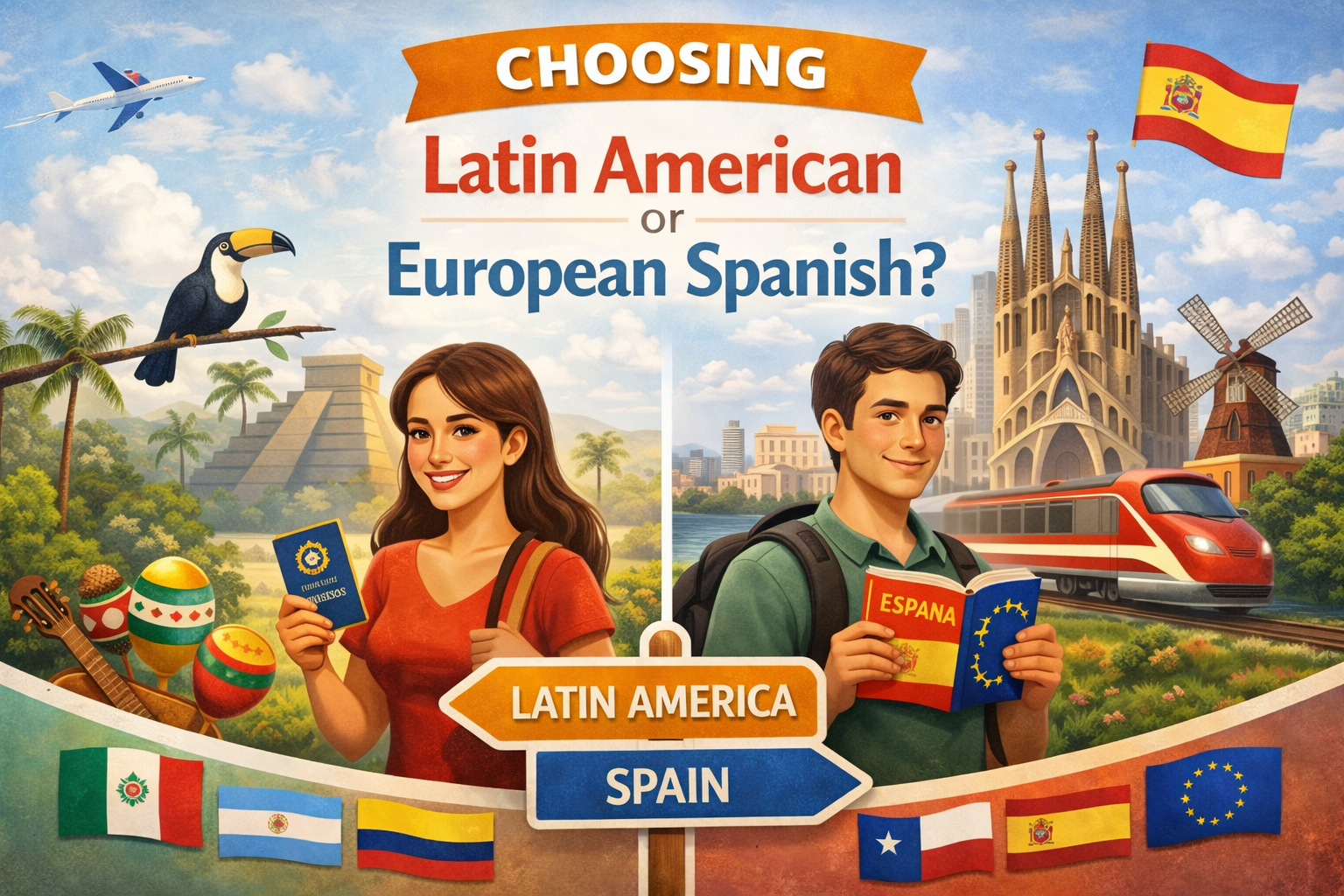
TL;DR: Spanish is a global language with two main varieties, Latin American and European, that share the same core but differ in pronunciation, vocabulary, and usage. Latin American Spanish is more widely used in media, learning resources, and global communication, making it more accessible for most learners. European Spanish reflects how the language is spoken … Read more

Spanish for Travel: 50 Essential Phrases to Learn Before You Fly

spanish for travel

TL;DR: You don’t need fluency to travel in Spanish-speaking countries, just a small set of practical phrases. Basic greetings, directions, food, accommodation, and emergency expressions are enough to handle most real situations with confidence. Using simple Spanish improves communication, reduces stress, and leads to friendlier, more helpful interactions. It also helps you navigate independently and … Read more

Master German for Work: Emails, Meetings, and Professional Calls

german for work

TL;DR: Professional German is less about perfect grammar and more about clear, structured communication. In German-speaking workplaces, directness, precision, and formality signal competence and build credibility quickly. By learning core phrases for emails, meetings, and calls, understanding cultural expectations, and using polite but concise language, you can communicate effectively from an early stage. Clear, confident … Read more

From Zero to Habit: How to Turn Language Learning into Reflex

Turn Language Learning into a Daily Reflex

TL;DR: Language learning only becomes reliable when it stops depending on motivation and starts running as a habit. Progress stalls not because people lack effort, but because learning isn’t embedded into daily routines. By using the habit loop (cue, routine, reward), setting clear and measurable goals, and keeping practice small and consistent, language learning becomes … Read more

German Sentence Structure: A Simple Guide with Everyday Examples

german sentence structure

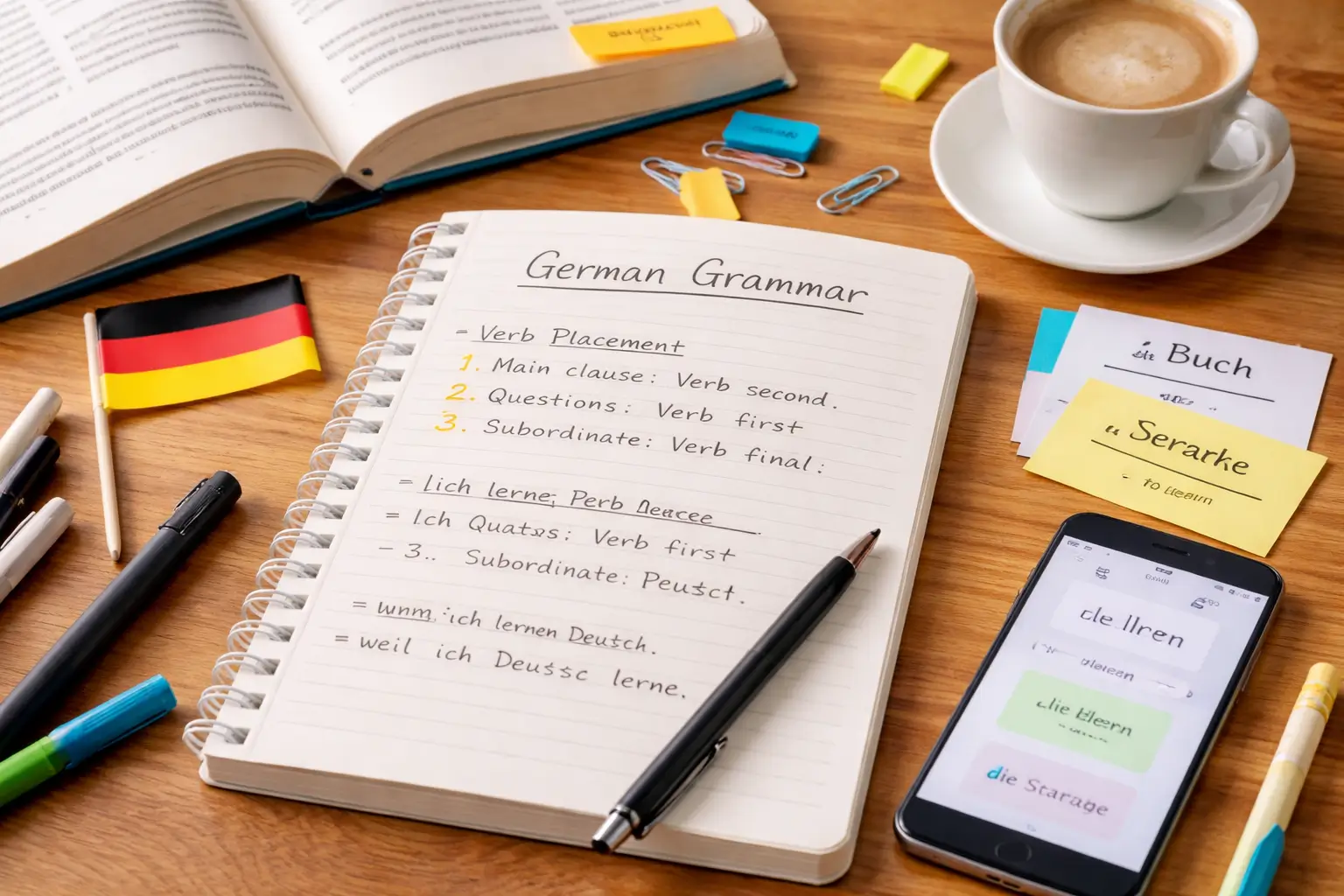
TL;DR: German sentence structure feels difficult at first because meaning depends on verb position rather than fixed word order. Once you understand that the verb controls the sentence, everything becomes more predictable. Main clauses follow the verb-second rule, questions move the verb to the front, and subordinate clauses push it to the end. Cases then … Read more

Morning vs Evening: When Is the Best Time to Study a Language?

studying a language

TL;DR: The best time to study a language depends on how your brain functions throughout the day, with mornings generally better for focused, analytical tasks like grammar and vocabulary due to higher alertness, while evenings tend to suit immersive and communicative activities like listening or speaking because of a more relaxed mental state and the … Read more

Polyglot Presidents: How Many Languages Do Global Leaders Really Speak?

Polyglot Presidents

TL;DR: Polyglot presidents are rarer than often assumed, with most modern leaders speaking one or two additional languages rather than true polyglots (four or more), but even limited multilingual ability can enhance diplomacy, build trust, and strengthen public image when used authentically. World leaders are often portrayed as global communicators. But how many languages do … Read more

Pope Leo XIV and the Languages of the Vatican

languages of the vatican

TL;DR: The Vatican operates as a highly structured multilingual system where Latin preserves doctrinal precision, Italian supports daily administration, and global languages like English, Spanish, and French enable diplomacy and outreach, allowing the Catholic Church to balance historical continuity with worldwide communication. Behind the ceremonial grandeur of the papacy lies a deeply multilingual world. Pope … Read more