
|
Getting your Trinity Audio player ready...
|
In our LingQ App Review, we explore how learning a new language isn’t about memorising grammar rules or repeating scripted phrases. It’s about understanding real speech, real stories and real contexts.
LingQ takes this idea and turns it into a complete learning system. Offering an immersion-based alternative to the traditional app experience.
In this LingQ App review, we’ll explore how LingQ works, who it’s best for, and whether its unique. This includes content-driven approach can help you achieve natural, long-term fluency.
What is LingQ?
LingQ is a language-learning app built around immersion rather than memorisation.
You learn through real content: articles, podcasts, videos, books and even material you import yourself.
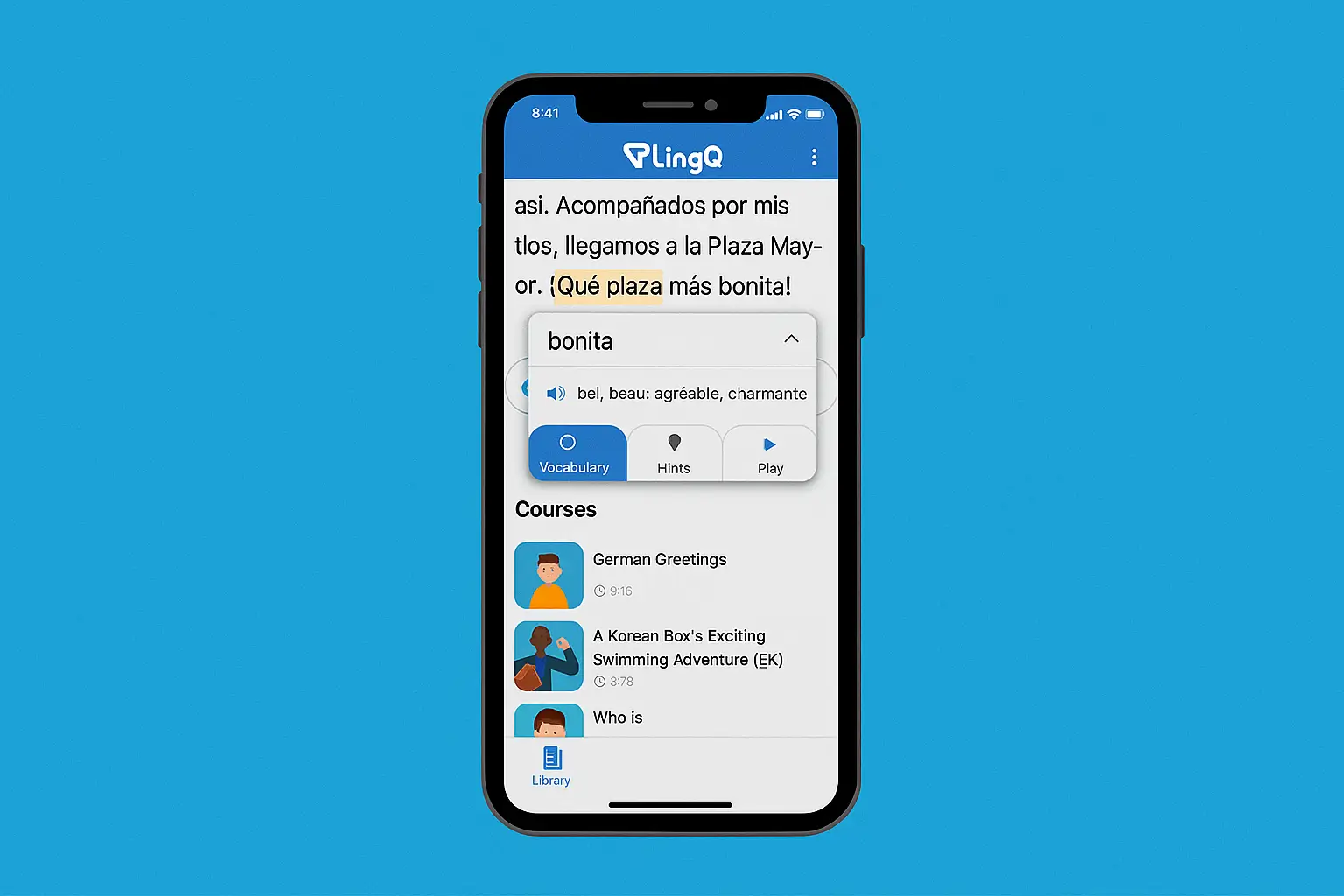
Everything becomes interactive. Allowing you to tap unknown words, save them instantly, and build vocabulary naturally as you read and listen.
Explanation of the app and its core features
LingQ transforms authentic content into learner-friendly lessons.
Its reading interface highlights new and known words. All helping you track your progress while building vocabulary in context. You can listen to audio while following transcripts, and create personalised flashcards. You revisit tricky phrases until they become familiar.
The platform also includes courses, community-generated lessons, and statistics that track your growth. This includes tools to import YouTube videos, ebooks or articles to study in your own style.
The target audience and the range of languages offered
LingQ suits independent learners who prefer immersion, flexibility and real-world material. All rather than textbook-style instruction.
It’s especially valuable for intermediate learners looking to expand comprehension and vocabulary. Though motivated beginners can still enjoy its “Mini Stories” and guided starter lessons.
The app offers more than 60 languages, from major options like:
Key Features of LingQ
LingQ is built to make real-world content easier to understand, explore and remember.
Its tools focus on helping you read, listen and absorb vocabulary in a natural, engaging way. All while giving you access to a global community of fellow learners.
Interactive tools for reading and listening
LingQ’s reading interface is the heart of the app.
Every word is colour-coded based on whether you’ve seen it before, and you can tap any unfamiliar term for an instant translation. Audio is often paired with transcripts, allowing you to listen while reading along.
Users can also import YouTube videos, podcasts or ebooks. Turning them into interactive, personalised study material.
Vocabulary-building system, including flashcards and word tracking
Vocabulary growth is handled through LingQ’s “learning by exposure” system.
Each saved word becomes a LingQ. Added to your personal list with definitions, examples and spaced-repetition flashcards. The app tracks how often you encounter a word, helping you move it from “unknown” to “known” through repeated reading and listening.
Review tools include flashcards, cloze tests, dictation exercises and statistical progress dashboards that show your vocabulary size increasing over time.x
Community features and opportunities for language exchange
LingQ also includes a strong social element. Users can join community challenges. Follow other learners’ progress. Share lessons or vocabulary lists.
The platform offers writing corrections from native speakers. As well as opportunities for live conversation through community tutors.
This mix of social accountability and peer support helps create motivation. It encourages more consistent learning, especially for those studying.
User Experience
LingQ is designed to feel intuitive and adaptable, giving learners the freedom to interact with content in a way that suits their style.
Its interface focuses on clarity and immersion. Personalisation tools make the platform feel genuinely tailored to your progress and preferences.
Interface design, layout, and ease of use
The LingQ interface is clean and minimalist, placing the content front and centre. Text, audio and translations sit together neatly. Making it easy to jump between reading, listening and vocabulary review without disruption.
Words are colour-coded to show your familiarity at a glance, and pop-up translations keep the learning flow smooth. The layout may feel busy at first. Most users adapt, and the design supports long reading sessions without feeling cluttered.
Accessibility across devices
LingQ works consistently across mobile, tablet and desktop. Allowing you to switch devices without losing your place.
The mobile app is ideal for quick sessions. Listening practice and vocabulary review, while the web version offers a larger workspace. All for longer reading or managing imported content.
Personalisation options to tailor the learning experience
The platform gives you a lot of control over how you study. You can choose from curated courses or build your own from imported videos, ebooks and articles.
| Personalisation Feature | What It Allows You to Do |
| Curated or Custom Courses | Choose pre-made lessons or create your own using imported videos, ebooks, podcasts or articles. |
| Adjustable Reading Settings | Change text size, layout and colour highlights to suit your reading comfort and focus. |
| Custom Playback Controls | Modify audio speed to match your listening level — slow it down for clarity or speed it up for challenge. |
| Vocabulary Prioritisation | Highlight or save words you want to focus on, creating a personalised vocabulary journey. |
| Custom Word Tracking | Control how words move from “unknown” to “known,” based on exposure and your own confidence. |
| Adaptive Content Recommendations | LingQ suggests lessons based on your progress, interests and previously studied material. |
| Progress Indicators | Colour-coded word status and detailed statistics show how your vocabulary and comprehension are improving over time. |
Learning Methodology
LingQ’s learning method centres on natural exposure to real language.
Drilling grammar or memorising word lists. The platform encourages learners to read, listen and engage with meaningful content.
Mirroring how we acquire languages in real life.
LingQ’s input-based learning approach
LingQ follows the principles of comprehensible input. It allows learners to improve through repeated exposure to real content. Key elements include:
- Interactive reading tools that make authentic texts approachable.
- Instant translations for words and phrases as you encounter them.
- Audio paired with transcripts to strengthen listening and reading together.
- Content-driven learning, not structure-driven lessons.
The importance of contextual understanding in language acquisition
LingQ leverages context to support deeper, more durable learning:
- Words appear in stories, dialogues, news articles and media, making their meaning clear.
- Learners encounter vocabulary in many contexts, reinforcing patterns.
- Comprehension grows through exposure, rather than isolated drilling. Grammar becomes familiar through real usage, not rule memorisation.
How the platform promotes immersion and sustained engagement
Below is a table summarising the main ways LingQ creates an immersive, motivating environment:
| Immersion Feature | How It Supports Engagement |
| Real-world content library | Lets learners explore podcasts, articles and videos they genuinely enjoy. |
| User-imported materials | Turns personal interests (YouTube, ebooks, blogs) into lessons. |
| Progress tracking & streaks | Encourages consistent study and habit formation. |
| Word colour-system | Makes reading feel like a game while showing real improvement. |
| Adaptive recommendations | Let learners explore podcasts, articles and videos they genuinely enjoy. |
Pros of Using LingQ
LingQ offers a modern, flexible approach to language learning. Making it especially appealing for learners who prefer immersion and real-world content.
Its features are built around freedom, exploration and natural exposure. It sets it apart from more traditional, linear apps.
Flexibility to learn at your own pace and in your preferred style
One of LingQ’s greatest strengths is its flexibility. You can follow curated courses if you prefer structure. You can build your own study path by importing ebooks, articles, podcasts or videos.
This makes the app adaptable to your schedule and learning habits. You study in long sessions, dip in and out throughout the day, or switch between devices.
The ability to customise reading settings, audio speed and vocabulary tracking adds another layer of personal control. Letting you shape the experience exactly how you want it.
Extensive library of content across a wide range of topics
LingQ also stands out for its enormous content library. The app includes thousands of lessons. Beginner-friendly Mini Stories and community-created courses covering a huge range of subjects.
You can transition from graded beginner material to authentic native content. Including news articles, podcasts and literature. This breadth keeps the learning experience varied and engaging, making it easier to stay motivated over time.
Supportive community and additional learning resources
Another advantage is the strong sense of community built into the platform.
Learners can join challenges, share study progress and stay motivated alongside others. The community also provides helpful extras. This includes writing corrections from native speakers, shared vocabulary lists and user-created lessons.
LingQ offers opportunities for live conversation practice with tutors or experienced learners. This blend of social support and supplementary resources. It adds real value to the learning experience.
Cons of Using LingQ
LingQ offers a powerful and flexible approach to language learning. It won’t suit everyone.
Some users may find the platform overwhelming at first. Others might prefer the structure found in more traditional apps.
These factors are worth considering before committing to the subscription.
Potential learning curve for beginners or non-tech-savvy users
LingQ’s interface is rich with features, menus and customisation options. This can feel complicated for new users.
Beginners may find it challenging to navigate the colour-coded system. Manage vocabulary settings or decide where to start among the many available lessons.
Those who prefer straightforward, guided instruction might struggle with the platform’s emphasis on self-direction.
Subscription pricing and considerations around value for money
LingQ operates on a subscription model, and while it offers a free tier. The most useful features must a paid plan.
For learners on a tight budget, the price may feel high compared with other apps that offer more structured content at a lower cost.
The value for money depends on how much you use the platform’s immersion tools. Users who engage daily and rely on imported content may find it worthwhile.
Comparison with Other Language Learning Apps
LingQ occupies a different space from most mainstream language-learning apps.
Platforms like Duolingo or Babbel focus on guided lessons, gamified drills and structured grammar progressions. LingQ prioritises real-world content and learner autonomy.
Brief comparison with popular alternatives
Duolingo and Babbel provide a structured path. All with bite-sized lessons, quizzes and clear grammar explanations.
Here is the comparison between some of these popular alternatives:
| Feature | LingQ | Duolingo / Babbel |
| Learning Style | Immersion-based; focuses on reading and listening to real content. | Structured lessons with step-by-step progression. |
| Lesson Structure | Minimal traditional lessons; user-led exploration. | Bite-sized lessons, quizzes and grammar explanations. |
| Content Type | Authentic material (podcasts, articles, videos, imported content). | Scripted, curriculum-based content designed for beginners. |
| Vocabulary Learning | Built through context, exposure and personalised tracking. | Built through drills, repetition and guided exercises. |
| Best For | Independent learners who want flexibility and real-world language use. | Beginners or casual learners wanting clear guidance and routine. |
| Progression Style | Self-directed; no fixed path. | Predictable progression through levels and modules. |
Unique selling points that set LingQ apart
What makes LingQ unique is the depth of its immersion tools. Here are the unique selling points that set LingQ apart:
- Deep immersion tools that prioritise extensive reading and listening over traditional lessons.
- Ability to import almost any content and turn it into interactive study material.
- Instant translations and personalised vocabulary tracking, helping learners build understanding in real time.
- Unmatched level of content customisation, giving users full control over what they study.
- Colour-coded word system that visually tracks familiarity and progress as you read.
- Advanced statistics and progress analytics for learners who enjoy measuring improvement.
- Highly appealing for polyglots and serious learners. Those who want autonomy and access to authentic materials.
- Exposure-based learning method that mirrors real-life language acquisition and supports long-term fluency.
LingQ App Review FAQs
Is LingQ good for complete beginners?
Yes, LingQ offers “Mini Stories” and beginner courses designed to ease new learners into the language.
The platform works best once you’re comfortable reading short texts and exploring simple content.
Can LingQ really help you learn a language through immersion?
Absolutely. LingQ’s method is built around extensive reading and listening. This mirrors how languages are acquired naturally.
Engaging with real content daily, learners develop vocabulary, intuition and comprehension without relying on memorisation.
Do I need a paid subscription to get the most out of LingQ?
The free version is useful for trying the platform, but major features require a paid plan. Most users find that the subscription becomes worthwhile if they use the app.
How does LingQ compare to other language-learning apps like Duolingo?
Duolingo offers structured lessons and gamified exercises. LingQ focuses on authentic content and learner-driven exploration. It’s ideal for those wanting freedom, immersion and real-world reading and listening. Rather than predefined drills.
Which languages are available on LingQ?
LingQ currently offers 60+ languages. This includes popular choices like Spanish, French, Japanese and German. As well as less taught languages such as Welsh, Catalan, Persian, Ukrainian and Afrikaans.