
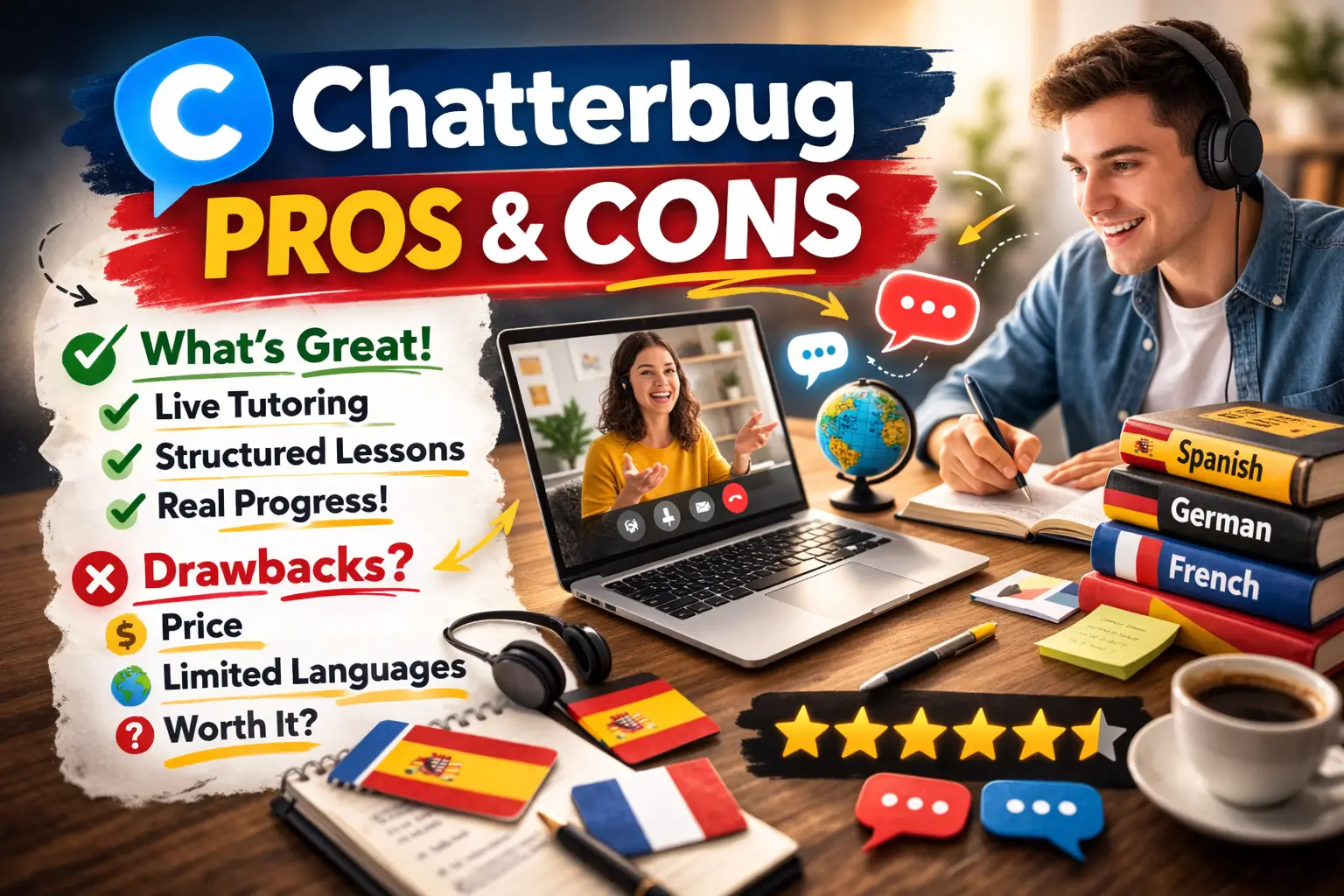
TL;DR: Chatterbug is a structured language learning platform that combines interactive lessons with live tutoring sessions. It focuses heavily on conversation practice and guided learning pathways, making it ideal for serious learners.
Learning a new language online can feel overwhelming. With dozens of apps promising fluency, it’s hard to know which ones actually deliver real progress.
Chatterbug is one platform that has attracted attention for its structured lessons, personalised feedback, and strong focus on speaking practice.
But is it actually worth the money? And how does it compare to other platforms like iTalki, Preply, or Lingoda?
What is Chatterbug?
Chatterbug is a structured online language learning platform designed to combine self-study lessons with live tutoring.
Rather than relying purely on flashcards or short app exercises, the platform blends interactive coursework with guided speaking sessions led by professional teachers.
The idea is simple: give learners the flexibility of an app with the effectiveness of real conversation practice.
Overview of the platform
At its core, Chatterbug is built around structured courses that guide learners from beginner to advanced levels. Lessons are organised into clear pathways, meaning you always know what to study next.
The platform combines several learning elements:
- Interactive exercises that build vocabulary and grammar
- Listening and comprehension activities
- Speaking practice with professional tutors
- Personalised feedback on pronunciation and mistakes
Unlike many language apps that encourage quick daily streaks, Chatterbug focuses on deeper learning sessions that simulate a classroom environment.
Target audience and language offerings
Chatterbug is designed primarily for serious language learners who want structured progress, rather than casual users looking for quick vocabulary practice.
It works particularly well for:
- Beginners who want a clear learning pathway
- Intermediate learners looking to improve speaking skills
- Students preparing for real conversations or travel
- Professionals needing practical language skills
Unique selling points compared to other language learning tools
The language learning market is crowded with apps and tutoring platforms, but Chatterbug takes a slightly different approach.
Instead of separating self-study apps and private tutoring, it combines them into a single learning system.
Key features that make Chatterbug stand out include:
Structured curriculum
Many platforms rely on loose exercises or random lessons. Chatterbug uses a guided curriculum that steadily builds your language skills.
Integrated live tutoring
Learners can take lessons with certified tutors directly inside the platform, reinforcing what they’ve learned in self-study sessions.
Personalised learning path
The system adapts based on your progress, helping you focus on areas that need improvement.
Speaking-focused learning
While some apps prioritise reading and vocabulary, Chatterbug places strong emphasis on real conversation practice.
High-quality teaching materials
Lessons are designed by language experts and include interactive tools that help learners actively engage with the material.
Key Features of Chatterbug
What sets Chatterbug apart from many language learning platforms is its blend of structured lessons, real human interaction, and adaptive learning technology.
Instead of relying on simple flashcard drills or gamified exercises, the platform is designed to guide learners through a more comprehensive learning journey.
Interactive lessons and content
Chatterbug’s lessons are designed to keep learners actively engaged rather than passively memorising vocabulary.
Each lesson combines multiple learning elements, including:
- Vocabulary building exercises
- Grammar explanations and practice
- Listening activities
- Pronunciation practice
- Reading and comprehension tasks
The platform uses interactive exercises that require learners to actively participate, whether by selecting answers, completing sentences, or responding to prompts.
Personalised learning paths
One of Chatterbug’s most useful features is its adaptive learning system. This adjusts your learning journey based on your progress.
As you complete lessons, the platform tracks performance and identifies areas that need improvement. This allows the system to:
- Reinforce difficult grammar points
- Reintroduce vocabulary that hasn’t been fully mastered
- Suggest the most relevant next lessons
This personalised approach helps learners avoid common problems such as repeating material they already know or skipping important foundations.
Integration of live tutoring sessions
A standout feature of Chatterbug is its integration of live tutoring sessions with professional language teachers.
Unlike many apps that rely solely on automated lessons, Chatterbug allows learners to practise speaking with real instructors through scheduled online sessions.
These tutoring sessions provide:
- Real conversation practice
- Immediate feedback on pronunciation and grammar
- Personalised guidance from experienced teachers
- Opportunities to apply vocabulary and grammar learned in lessons
Use of technology and AI in language learning
Chatterbug also makes use of modern technology to enhance the learning process.
The platform uses data and adaptive algorithms to monitor learner progress and adjust lesson difficulty. This ensures that students continue to face challenges that match their current skill level.
Technology on the platform supports:
- Smart lesson recommendations
- Progress tracking and analytics
- Pronunciation guidance
- Adaptive review of vocabulary and grammar
While the human tutoring element remains central to the experience, these technological tools help streamline learning and make the platform more responsive to each learner’s needs.
User Experience and Interface
A language learning platform can have great content, but if the interface is confusing or difficult to use, learners quickly lose motivation.
Chatterbug places a strong emphasis on creating a clean, structured, and easy-to-navigate learning environment that keeps users focused on studying rather than figuring out how the platform works.
Design and usability of the platform
Chatterbug’s design is modern, minimal, and built around a clear learning structure.
The platform guides learners through lessons step-by-step, making it easy to understand what to study next.
Key usability highlights include:
- Clear course progression and lesson structure
- Simple navigation between lessons and tutoring sessions
- Progress tracking that shows how far you’ve advanced
- Clean layout that keeps exercises easy to follow
Accessibility on different devices (desktop, mobile)
Flexibility is essential for modern learners, and Chatterbug supports studying across multiple devices.
The platform works smoothly on:
- Desktop browsers, which provide the best experience for full lessons and tutoring sessions
- Tablets, offering a comfortable middle ground for studying on the go
- Mobile devices, allowing users to review lessons or practise vocabulary anywhere
While the desktop experience is generally the most complete, mobile compatibility ensures that learners can continue practising even when they don’t have access to a computer.
User feedback on navigation and overall experience
Overall, user feedback about Chatterbug’s interface tends to be positive, particularly when it comes to the platform’s clarity and structured learning approach.
Many learners highlight the following strengths:
- The logical progression of lessons
- The simplicity of the interface
- The ability to easily schedule tutoring sessions
- A focused learning environment without unnecessary distractions
Some users note that the platform prioritises depth of learning over gamification, which may feel less “game-like” compared to apps such as Duolingo.
However, for learners seeking a more serious learning environment, this approach is often seen as a benefit rather than a drawback.
Learning Methodology
One of the most important aspects of any language learning platform is how it actually teaches the language.
Chatterbug takes a structured, communication-focused approach that blends traditional language instruction with modern online learning tools.
The platform is designed to help learners understand the language, practise it actively, and use it in real conversations.
Chatterbug’s teaching approach
Chatterbug follows a structured curriculum designed by language experts, guiding learners through progressive levels that build on one another.
Lessons typically introduce new vocabulary and grammar concepts before reinforcing them through interactive exercises.
These exercises aim to strengthen multiple language skills at once, including:
- Reading comprehension
- Listening skills
- Vocabulary retention
- Grammar understanding
- Sentence construction
Role of immersion and conversation practice
A major focus of Chatterbug’s methodology is active language use, particularly through speaking and conversation.
Chatterbug addresses this by integrating live tutoring sessions and conversation practice into the learning experience.
These sessions allow learners to:
- Practise speaking in real conversations
- Improve pronunciation and fluency
- Receive immediate feedback from tutors
- Apply vocabulary and grammar learned during lessons
By regularly practising with real instructors, learners can develop confidence and move beyond passive understanding to active communication.
Comparison with traditional language learning methods
Traditional language learning methods, such as classroom courses or textbook-based study, often focus heavily on grammar explanations and written exercises.
While these approaches can build a solid foundation, they sometimes lack the flexibility and practical speaking opportunities that modern learners need.
Chatterbug attempts to bridge this gap by combining elements of both worlds.
Compared with traditional learning methods, the platform offers:
- Greater flexibility, allowing learners to study at their own pace
- Immediate access to tutors, rather than waiting for scheduled classes
- Interactive exercises, which make practice more engaging
- Continuous feedback, helping learners correct mistakes early
Pricing and Subscription Options
Pricing is often one of the biggest deciding factors when choosing a language learning platform.
Chatterbug positions itself as a premium learning experience. This combines structured coursework with live tutoring sessions.
Because of this blended approach, the pricing tends to sit somewhere between traditional language apps and private tutoring platforms.
Chatterbug pricing plans
Chatterbug typically offers subscription plans that combine self-study lessons with live tutoring sessions.
The exact pricing can vary depending on the language and plan you choose, but most plans fall into two main categories.
Self-study plans
These plans give learners access to the platform’s interactive lessons and structured curriculum without live tutoring sessions.
They’re usually the most affordable option and work well for learners who prefer studying independently.
Tutoring plans
Higher-tier subscriptions include live tutoring sessions with certified teachers, allowing learners to practise speaking and receive direct feedback.
These plans cost more but provide a more immersive learning experience.
Pricing usually depends on:
- The number of tutoring sessions included
- The duration of the subscription
- The language course selected
Value for money analysis
Whether Chatterbug offers good value largely depends on what you’re looking for in a language learning platform.
Compared with simple language apps, Chatterbug may appear more expensive. However, it provides significantly more structure and access to real instructors.
When compared with private tutoring platforms, the cost can actually be competitive, since tutoring is integrated directly into the learning system.
Potential value highlights include:
- Structured courses designed by language experts
- Regular speaking practice with professional tutors
- Interactive learning tools that reinforce lessons
- A guided pathway from beginner to advanced levels
Free trial and refund policies
Many language platforms allow users to test the service before committing, and Chatterbug has historically offered trial opportunities so learners can explore the platform.
These trials may allow users to:
- Access a limited number of lessons
- Experience the interface and course structure
- Try a live tutoring session
Refund policies and trial conditions can vary depending on the subscription plan and promotions available at the time.
Before subscribing, it’s always worth checking:
- Whether a free trial or introductory offer is available
- The length of the trial period
- The platform’s refund or cancellation policy
Community and Support
For many language learners, progress isn’t just about lessons and exercises.
Having access to helpful resources, responsive support, and a supportive learning environment can make a big difference in staying motivated.
Chatterbug aims to support learners through a mix of structured guidance, tutor interaction, and platform resources. This helps students stay on track throughout their learning journey.
Availability of resources and support for learners
Chatterbug provides several resources designed to help learners navigate the platform and get the most out of their studies.
These typically include:
- Structured lesson pathways that guide learners step by step
- Learning materials integrated directly into the lesson system
- Progress tracking tools that show improvement over time
- Access to tutors who can answer questions during sessions
Because much of the learning experience is integrated into the platform itself, learners rarely need to search externally for explanations or study materials.
Community engagement and interaction
Compared to some language learning apps that feature large discussion forums or social communities, Chatterbug places more emphasis on direct interaction with tutors rather than peer communities.
The platform’s community aspect primarily comes through:
- Live tutoring sessions with language instructors
- Opportunities for real conversation practice
- Personalised feedback during lessons
Feedback from users regarding support services
User feedback on Chatterbug’s support and learning environment is generally positive, particularly when it comes to the quality of instructors and structured learning support.
Many learners appreciate:
- The professionalism of tutors
- Clear lesson organisation
- The ability to receive feedback during live sessions
- A focused learning environment without distractions
Some users note that the platform is more structured and teacher-focused than highly social language apps, which can feel less community-driven.
However, for learners who prioritise guided learning and professional instruction, this structure is often seen as a major advantage rather than a limitation.
Pros and Cons of Chatterbug
No language learning platform is perfect, and Chatterbug is no exception. While it offers a structured learning experience with integrated tutoring, it may not suit every type of learner.
Summary of strengths
Chatterbug stands out for its focus on structured learning and real conversation practice, which can be a major advantage for learners who want more than quick vocabulary drills.
Some of the platform’s biggest strengths include:
- Structured curriculum: Unlike many apps that rely on scattered exercises, Chatterbug provides a clear learning pathway that guides learners from beginner to advanced levels.
- Integrated tutoring sessions: The combination of self-study lessons and live sessions with professional tutors allows learners to practise speaking regularly and receive direct feedback.
- High-quality teaching materials: Lessons are carefully designed and include a mix of vocabulary, grammar, listening, and speaking activities that reinforce language skills.
- Focus on real communication: The platform prioritises conversation and practical language use, helping learners build confidence in real-world situations.
- Professional instructors: Many users report positive experiences with tutors who provide helpful corrections and structured guidance during sessions.
Discussion of weaknesses or areas for improvement
Despite its advantages, Chatterbug also has a few limitations that potential users should consider.
- Limited language selection: Compared to some large language apps, Chatterbug currently offers fewer languages, focusing mainly on Spanish, German, French, and English.
- Higher cost than basic apps: The platform includes live tutoring and structured courses, it can be more expensive than simpler language apps that focus on self-study exercises.
- Less gamification: Learners who enjoy highly gamified experiences with streaks, rewards, and leaderboards may find Chatterbug’s more academic structure less entertaining.
- Scheduling constraints for tutoring: Although live tutoring is a major benefit, availability can sometimes depend on tutor schedules and time zones.
User testimonials and experiences
User feedback on Chatterbug tends to highlight the platform’s structured learning approach and tutor interaction as major benefits.
Many learners report that the combination of lessons and tutoring helps them progress more quickly than with self-study apps alone.
Common positive experiences include:
- Increased confidence in speaking
- Clear progression through lesson levels
- Helpful feedback from tutors during conversations
- A more focused and serious learning environment
Comparison with Competitors
The online language learning space is crowded with apps, tutoring platforms, and structured courses. Each platform approaches language learning slightly differently, which means the “best” choice often depends on your learning style and goals.
Brief comparison with other popular language learning platforms
Many language learners consider platforms such as Duolingo, iTalki, Preply, and Lingoda when deciding where to study.
Here’s a quick overview of how Chatterbug stacks up.
| Platform | Learning Style | Key Strength |
| Chatterbug | Structured lessons + live tutoring | Balanced learning system |
| Duolingo | Gamified self-study app | Fun and beginner-friendly |
| iTalki | Tutor marketplace | Huge variety of tutors |
| Preply | Tutor marketplace | Flexible private lessons |
| Lingoda | Online language school | Structured group classes |
Unique advantages of Chatterbug
Chatterbug’s biggest strength is the way it blends self-study lessons with guided speaking practice.
Several features help it stand out from competitors:
- Integrated learning system: Instead of using separate apps for study and tutoring, Chatterbug combines both within the same platform.
- Clear learning pathway: The structured curriculum helps learners move through levels systematically rather than jumping between random lessons.
- Conversation-focused learning: Speaking practice with tutors is built into the learning process rather than being an optional extra.
- High-quality course design: Lessons are carefully designed to reinforce vocabulary, grammar, listening, and speaking together.
Situations where Chatterbug may not be the best fit
Despite its strengths, Chatterbug isn’t necessarily the right platform for everyone.
It may not be the best choice for:
- Casual learners: If you simply want a quick daily vocabulary game or a low-commitment language app, platforms like Duolingo may feel more convenient.
- Learners on a tight budget: Chatterbug includes tutoring and structured courses, it tends to cost more than basic language apps.
- People who prefer fully flexible tutoring: Platforms like iTalki and Preply offer thousands of tutors and lesson styles, giving learners more freedom to design their own learning approach.
- Learners looking for many language options: Some platforms provide courses in dozens of languages, whereas Chatterbug focuses on a smaller selection.
Chatterbug Review FAQs
Is Chatterbug good for beginners?
Yes. Chatterbug offers structured lessons that guide beginners step by step through vocabulary, grammar, and conversation practice.
How much does Chatterbug cost?
Chatterbug uses a subscription model. Prices vary depending on whether you choose self-study lessons or plans that include live tutoring.
What languages can you learn on Chatterbug?
Chatterbug mainly offers courses in Spanish, German, French, and English for non-native speakers.
Does Chatterbug include live tutors?
Yes. Many plans include live tutoring sessions, allowing learners to practise speaking with professional teachers.
Is Chatterbug better than apps like Duolingo?
Chatterbug offers more structure and conversation practice, while Duolingo is cheaper and more gamified for casual learning.