|
Getting your Trinity Audio player ready...
|
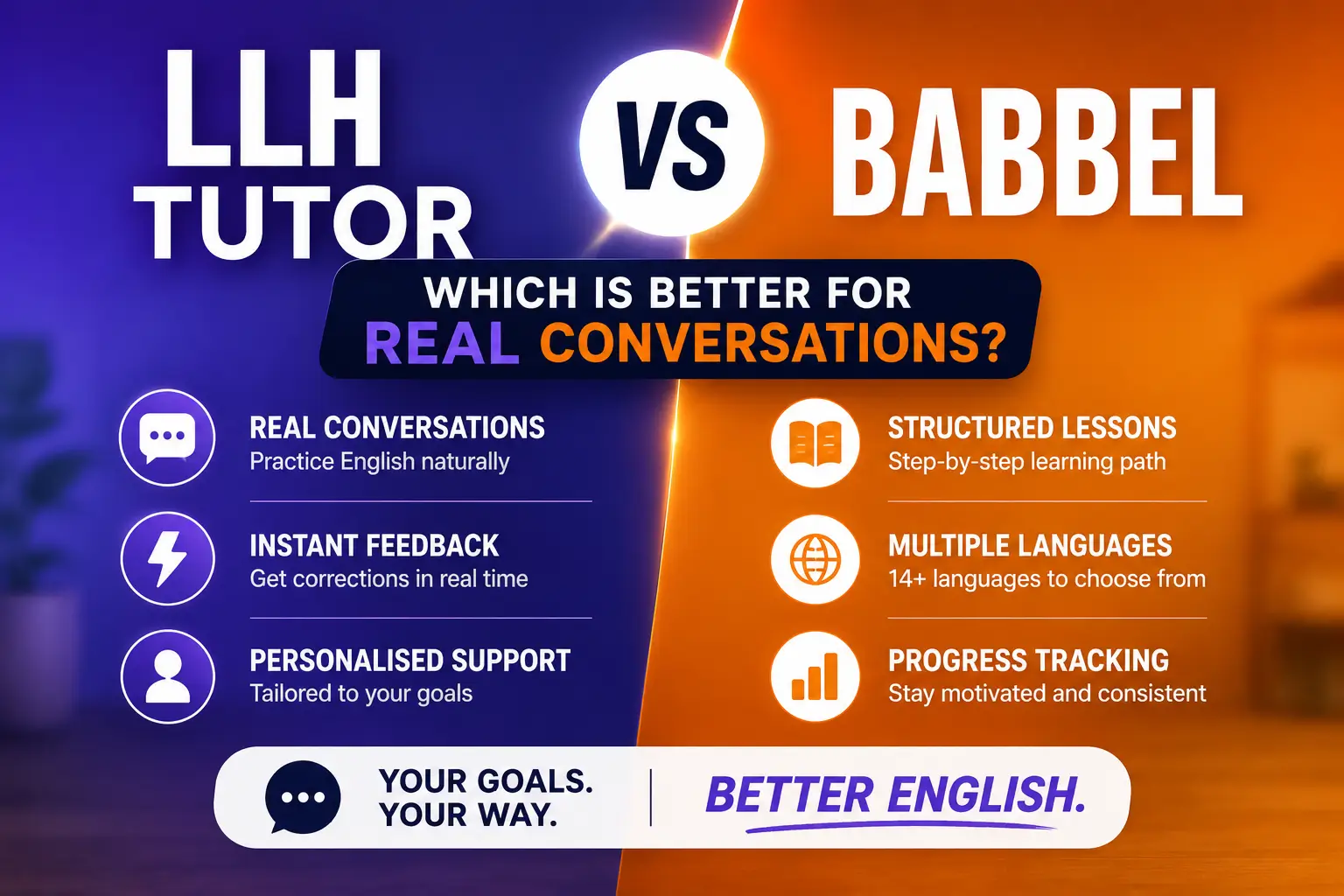
TL;DR: Babbel is a strong choice for learners who want structured lessons, clear progression, and support across multiple languages. LLH Tutor is better for English learners who want personalised help, real conversation practice, instant corrections, and flexible tutor-style support. This guide will compare LLH Tutor vs Babbel to help you choose the right language learning platform for your needs.
Most language apps help you practise words, phrases, and grammar. But real conversations are different.
They’re fast, messy, personal, and full of moments where you forget what to say.
Babbel is known for structured lessons and practical dialogues, while LLH Tutor takes a more flexible approach: giving learners an AI English tutor that can practise, correct, explain, and build confidence in real conversation.
So, which is better for speaking real English: LLH Tutor or Babbel?
What is LLH Tutor?
LLH Tutor is an AI-powered English tutor created by Language Learners Hub to help learners practise real English in a more natural, flexible way.
Instead of only following fixed lessons or memorising phrases, learners can use LLH Tutor to ask questions, practise conversations, improve grammar, understand vocabulary, and get support with real-life English situations.
The main focus is simple: helping English learners build confidence, communicate more naturally, and understand how English is actually used.
Key features and functionalities
LLH Tutor is designed to support learners beyond traditional app-style exercises. It can help users:
- practise everyday English conversations
- ask grammar and vocabulary questions
- get corrections and explanations
- understand natural phrases, expressions, and tone
- prepare for real-life situations such as travel, work, study, or casual chats
- learn at their own pace without pressure
Because it works like a flexible AI tutor, learners are not limited to one lesson path. They can focus on what they personally need help with.
Target audience and learning approach
LLH Tutor is mainly built for people who want to improve their English, especially learners who need more speaking confidence and practical support.
It is useful for beginners who want clear explanations, intermediate learners who want to sound more natural, and advanced learners who want help refining their English.
Rather than just teaching isolated words, LLH Tutor helps learners practise English in context, understand mistakes, and build the confidence to use the language in real situations.
Exploring Babbel
Babbel is a well-known language learning app built around structured lessons, practical vocabulary, grammar support, and everyday dialogues.
Its courses are designed to help learners build confidence step by step, with short lessons that focus on reading, writing, listening, and speaking practice.
Key features and functionalities
Babbel offers bite-sized lessons, interactive dialogues, speech recognition, grammar tips, review activities, podcasts, games, and cultural content.
Its lessons are designed around real-life situations, making it useful for learners who want a clear path through the basics and beyond.
Babbel also supports multiple languages, making it a broader language learning platform rather than an English-only tutor.
Target audience and learning approach
Babbel is best suited to learners who want a structured, app-based learning experience. It works well for people who like organised lessons, guided practice, and a clear progression system.
Its approach is practical and lesson-led. Instead of throwing learners into completely open conversation, Babbel teaches language through planned exercises, dialogues, review tools, and pronunciation practice.
Comparison of Learning Methodologies
LLH Tutor and Babbel both help learners improve their language skills, but they do it in very different ways.
Babbel is built around structured lessons, while LLH Tutor is designed around personalised support, flexible practice, and real conversation.
LLH Tutor’s personalised tutoring approach
LLH Tutor works more like a private English tutor than a traditional language app. Learners can ask questions, practise specific situations, get corrections, and focus on the areas they personally struggle with.
Instead of following the same path as everyone else, users can practise the English they actually need, whether that is preparing for a job interview, improving small talk, understanding slang, or fixing repeated grammar mistakes.
Babbel’s structured lesson plans
Babbel takes a more guided approach
Its lessons are organised into clear topics and levels, helping learners build their knowledge step by step. This is useful for people who want structure, routine, and a clear learning path.
The main benefit is consistency. Learners know what to study next, and the app gives them a manageable way to build vocabulary, grammar, listening, and pronunciation skills over time.
Effectiveness of each method for real conversations
For real conversations, LLH Tutor has the stronger advantage because it lets learners practise in a more natural and personalised way.
Real conversations are rarely predictable, so being able to ask follow-up questions, make mistakes, receive corrections, and practise different responses can be extremely valuable.
Babbel is still useful for building foundations. Its structured lessons can help learners learn common phrases, grammar patterns, and everyday vocabulary.
However, because it is more lesson-based, it may not offer the same level of flexible, real-time conversation support.
User Experience and Interface
User experience matters because language learners need to feel comfortable, not overwhelmed.
A good language app should be easy to use, simple to navigate, and motivating enough to keep learners coming back.
LLH Tutor’s user interface and accessibility
LLH Tutor keeps the experience simple and direct. Instead of working through lots of menus, levels, and lesson screens, learners can open the tutor and start practising straight away.
This makes it useful for learners who want quick, practical support.
With LLH Tutor, users can:
- ask English questions instantly
- practise real-life conversations
- get corrections and explanations
- ask for simpler examples
- repeat difficult topics without pressure
- focus on the English they actually need
The interface feels less like a traditional course and more like a flexible tutor. This can make it easier for learners who want help in the moment, rather than having to follow a fixed lesson path.
Babbel’s user interface and ease of navigation
Babbel has a polished and structured app experience. Lessons are organised by level, topic, and skill, which makes it easy for learners to know where to begin.
This works well for users who like a clear learning path.
Babbel is especially useful for learners who want the following:
- organised lessons
- progress tracking
- topic-based courses
- review exercises
- a familiar app-style layout
- short, guided study sessions
The main strength of Babbel’s interface is structure. Learners always know what to do next.
Overall user experience and engagement
Babbel is strong for learners who enjoy routine, structure, and steady progress. It gives users a clear path and encourages regular study through short lessons and review activities.
LLH Tutor is stronger for learners who want flexibility, personalisation, and direct support. It lets users practise what matters to them, instead of only following a set course.
Overall, Babbel offers the better traditional app experience. LLH Tutor offers the better tutor-style experience for learners who want to practise real English conversations.
Conversation Practice Opportunities
Conversation practice is where language learning becomes real. It is one thing to recognise words in a lesson. It is another to respond naturally, make mistakes, ask follow-up questions, and keep a conversation going.
This is where LLH Tutor and Babbel take very different approaches.
LLH Tutor’s real-time conversation practice
LLH Tutor is built for flexible, real-time English practice. Learners can start a conversation, ask questions, practise specific situations, and get support when they make mistakes.
This makes it useful for practising real-life English, such as:
- introducing yourself
- preparing for interviews
- making small talk
- asking for help
- practising travel conversations
- improving workplace English
- understanding natural phrases and slang
The main advantage is flexibility. Learners are not limited to a fixed dialogue.
Babbel’s interactive dialogues and exercises
Babbel also includes conversation-style practice, but it is more structured. Learners work through interactive dialogues, listening activities, pronunciation exercises, and fill-in-the-gap tasks.
This helps build confidence with common phrases and everyday situations.
Babbel is useful for learners who want:
- guided dialogues
- pronunciation practice
- listening exercises
- short speaking tasks
- everyday vocabulary
- structured repetition
The experience is clear and beginner-friendly. However, because the conversations are lesson-based, they may not feel as open or personalised as speaking with a tutor-style tool.
Comparison of conversation practice effectiveness
For real conversations, LLH Tutor has the stronger advantage. Real conversations are unpredictable, and LLH Tutor gives learners space to practise freely, make mistakes, and receive personalised support.
Babbel is still effective for learning useful phrases and building a foundation. Its dialogues can help learners recognise common patterns and practise simple responses.
However, LLH Tutor is better for learners who want to move beyond rehearsed answers and practise English in a more natural, flexible way.
Overall, Babbel helps learners prepare for conversations. LLH Tutor helps learners practise them.
Pricing and Value for Money
Price matters, but value matters more. The best language app is not always the cheapest one. It is the one that helps learners make real progress and stay consistent.
Babbel and LLH Tutor use very different pricing models, so the better choice depends on what the learner wants from the product.
LLH Tutor pricing structure
LLH Tutor is currently free during its beta period, giving early users a chance to try the platform before paid pricing begins.
After the beta period, LLH Tutor is expected to offer an affordable monthly plan for early members, with the first founding users getting access from £4.99 per month.
This makes LLH Tutor especially attractive for learners who want:
- personalised English support
- flexible conversation practice
- grammar and vocabulary help
- corrections and explanations
- tutor-style guidance at a low monthly cost
Because LLH Tutor focuses specifically on English learning, users are paying for a more targeted experience rather than access to lots of different languages.
Babbel pricing options
Babbel usually works on a subscription model, with pricing depending on the plan, region, billing period, and any active discounts. Its plans often include monthly, multi-month, annual, and lifetime options.
Babbel’s UK site also promotes access to its language courses, conversation practice, podcasts, and other learning tools.
This makes Babbel useful for learners who want:
- access to multiple languages
- structured lessons
- review exercises
- pronunciation tools
- podcasts and extra learning content
- a traditional app-based learning path
However, Babbel pricing can change depending on offers, location, and plan length, so learners should always check the current price before subscribing.
Value assessment based on features and outcomes
Babbel offers strong value for learners who want a structured course and access to multiple languages. It is especially useful for people who prefer guided lessons, short study sessions, and a clear progression system.
LLH Tutor offers stronger value for learners whose main goal is improving English through personalised practice. Instead of paying for a broad language app, users get focused support for real English conversations, corrections, explanations, and practical communication.
For learners who want a traditional course, Babbel may feel like better value.
For learners who want flexible English practice that feels closer to working with a tutor, LLH Tutor offers better value for money.
Pros and Cons of Each App
Both LLH Tutor and Babbel can help language learners improve, but they are built for different types of learning.
Babbel is stronger as a structured language course, while LLH Tutor is stronger for flexible English practice and real conversation support.
Advantages and disadvantages of LLH Tutor
LLH Tutor’s biggest advantage is personalisation. Learners can practise the English they actually need, ask questions, get corrections, and receive explanations more flexibly.
Pros of LLH Tutor:
- personalised English support
- useful for real conversation practice
- flexible learning with no fixed lesson path
- corrections and explanations on demand
- good for grammar, vocabulary, tone, and natural phrasing
- affordable early pricing during the founding member period
Cons of LLH Tutor:
- currently focused on English, rather than multiple languages
- less suitable for learners who want a traditional course structure
- still developing as a newer product
- may require learners to be more proactive with what they want to practise
LLH Tutor is best for learners who want practical English help, especially if they need confidence, corrections, and realistic conversation practice.
Advantages and disadvantages of Babbel
Babbel’s biggest strength is structure. It gives learners a clear path, organised lessons, and a polished app experience.
Pros of Babbel:
- structured lessons and clear progression
- useful for beginners
- supports multiple languages
- includes dialogues, review tools, and pronunciation practice
- polished app interface
- good for building vocabulary and grammar foundations
Cons of Babbel:
- less personalised than a tutor-style tool
- conversation practice can feel more scripted
- users may be limited by the lesson path
- less focused on flexible English support
- pricing can vary depending on region, plan, and discounts
Babbel is best for learners who want a guided course and prefer learning through short, structured lessons.
Situational recommendations based on user needs
Choose LLH Tutor if your main goal is to improve your English for real conversations. It is the better option for learners who want personal support, instant explanations, flexible practice, and help using English more naturally.
Choose Babbel if you want a more traditional language learning app with structured lessons, clear levels, and support for multiple languages.
The LLH Tutor vs Babbel comparison shows that both apps have value, but LLH Tutor is the stronger choice for learners who want real-time English support and conversation practice.
LLH Tutor vs Babbel FAQs
Is LLH Tutor better than Babbel?
LLH Tutor is better for learners who want personalised English practice, real conversation support, and instant corrections. Babbel is better for learners who prefer structured lessons and a clear course-style learning path.
What is the main difference between LLH Tutor and Babbel?
The main difference is the learning style. LLH Tutor works more like a flexible AI English tutor, while Babbel is a structured language learning app with organised lessons, dialogues, and review exercises.
Is Babbel good for real conversations?
Babbel can help learners prepare for real conversations by teaching useful phrases, vocabulary, grammar, and pronunciation. However, its conversation practice is more structured, so it may feel less flexible than practising with LLH Tutor.
Who should use LLH Tutor?
LLH Tutor is best for people learning English who want to improve their speaking confidence, ask questions, get corrections, practise real-life situations, and understand natural English more clearly.
Who should use Babbel?
Babbel is best for learners who want a guided app experience, structured lessons, progress tracking, and support across multiple languages.