
|
Getting your Trinity Audio player ready...
|
TL;DR: Awa Pit is an Indigenous language spoken by the Awa people in Colombia and Ecuador. It belongs to the Barbacoan language family and carries important cultural knowledge and traditions. Although still used in some communities, it faces pressure from Spanish, making preservation efforts increasingly important.
Languages carry history, identity, and knowledge passed down through generations. Awa Pit is one such language, spoken by the Awa people who live in the forests along the border of Ecuador and Colombia.
Although it remains an important part of Awa culture and daily life, Awa Pit faces growing pressure from dominant national languages and social change.
The language offers a glimpse into the traditions, worldview, and resilience of the Awa community, while also highlighting why protecting endangered languages matters more than ever.
Historical Background of the Awa People
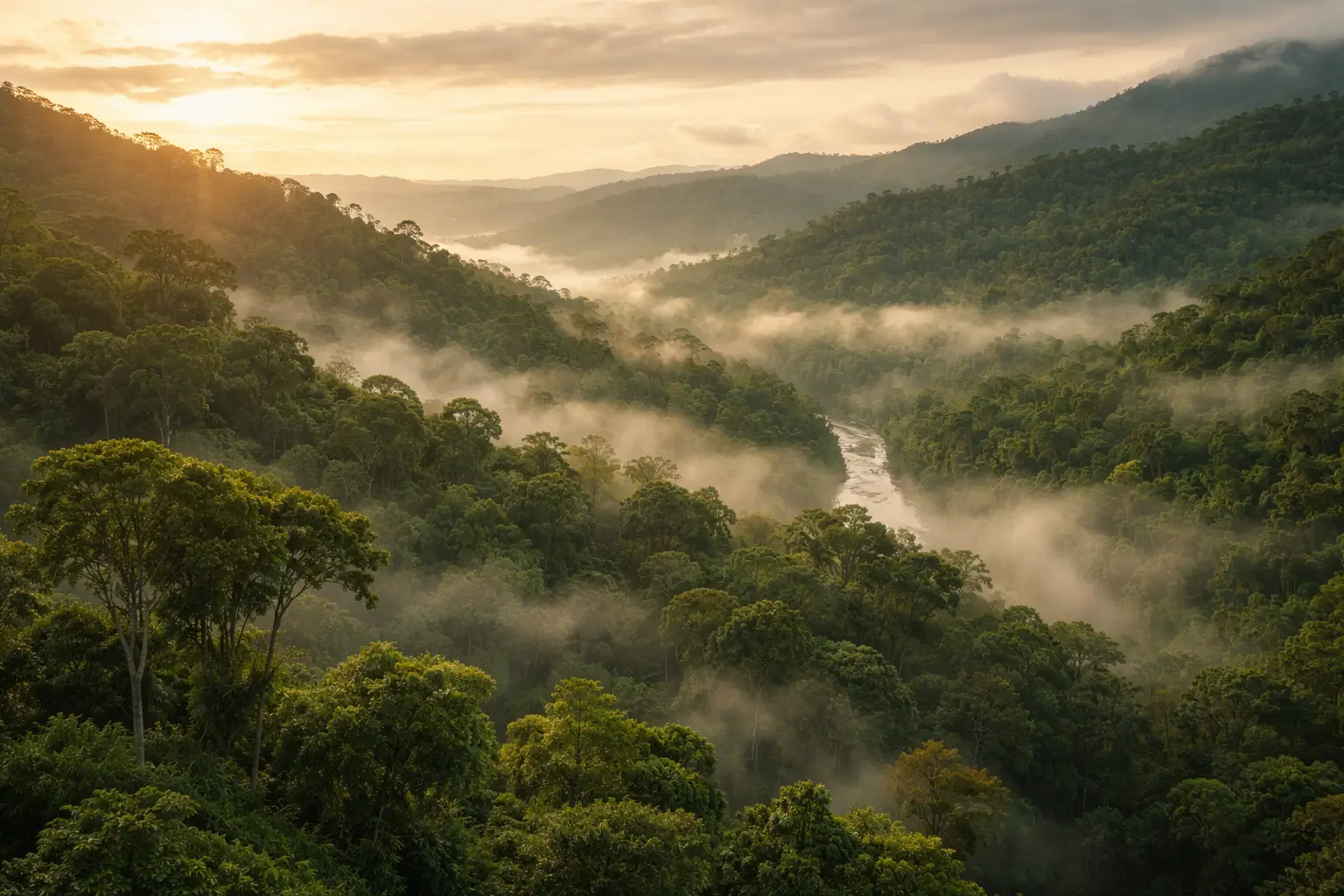
The Awa people have lived for centuries in the dense tropical forests along the border of northern Ecuador and southern Colombia.
Their history is closely tied to the land, rivers, and ecosystems of this region.
Origins and migration patterns
The Awa are part of a wider Indigenous population historically linked to the Andean and Pacific regions of north-western South America.
Over time, many communities settled in forested areas between the Andes and the Pacific lowlands, where the landscape provided both protection and natural resources.
Most Awa communities live in Colombia’s Nariño region and Ecuador’s Esmeraldas and Carchi provinces.
Traditional lifestyle and cultural practices
The Awa have traditionally lived in close relationship with the forest environment.
Their communities rely on small-scale farming, hunting, fishing, and gathering, supported by strong knowledge of local ecosystems.
Storytelling, music, and oral histories help preserve knowledge about the land, animals, and ancestral heritage, ensuring these traditions continue across generations.
The role of language in their identity
For the Awa people, language is a vital part of cultural identity. Awa Pit carries traditional knowledge, stories, and ways of understanding the natural world.
Many cultural ideas and environmental knowledge are expressed most clearly through language.
More about Awa Pit
Awa Pit is the traditional language of the Awa people and an important part of daily life in many Awa communities.
It belongs to the Barbacoan language family, a small group of endangered languages spoken in parts of Colombia and Ecuador.
Like many Indigenous languages of the region, Awa Pit developed within forest communities where language, culture, and environment are closely connected.
Linguistic features of Awa Pit
Awa Pit has a sound system and grammar that differ significantly from Spanish and other dominant regional languages.
Words are often built through combinations of smaller elements that modify meaning, allowing speakers to describe actions, places, and relationships in precise ways.
Many terms describe plants, animals, landscapes, and environmental features that are central to everyday life in the forest.
Comparison with other languages in the region
Awa Pit is related to other languages in the Barbacoan family, such as Guambiano (Misak) and Cha’palaachi.
These languages share certain grammatical patterns and historical roots, although each has developed its own vocabulary and pronunciation over time.
In comparison with Spanish, Awa Pit follows different sentence structures and linguistic patterns. This makes it distinct not only culturally but also linguistically within the region.
Unique expressions and idioms in Awa Pit
Like many Indigenous languages, Awa Pit contains expressions that reflect cultural values and ways of seeing the world.
Certain phrases emphasise community, respect for elders, and harmony with nature.
Many idioms also relate to the forest environment, drawing on imagery from animals, rivers, and plants.
Current Status of Awa Pit
Awa Pit remains an important language for many Awa communities, but it faces increasing challenges.
Like many Indigenous languages in South America, it exists alongside dominant national languages, which can influence how often it is used in daily life.
Number of speakers and demographic trends
Awa Pit is spoken by several thousand people. This is primarily within Awa communities in southern Colombia and northern Ecuador. In many rural areas, the language is still used in homes and community settings.
However, younger generations are often exposed more frequently to Spanish through education, media, and work opportunities
As a result, some children grow up bilingual, and in certain cases, Spanish becomes the dominant language in everyday communication.
Factors contributing to the decline of the language
Several factors contribute to the vulnerability of Awa Pit. Migration to towns and cities can reduce opportunities for daily use, while formal education systems often prioritise Spanish over Indigenous languages.
Economic pressures and social integration can also encourage younger speakers to adopt Spanish more frequently.
This can weaken intergenerational transmission if the language is not actively taught and used within families.
Impact of globalization and modernization
Globalisation and modern communication have brought both challenges and opportunities for Awa Pit.
Increased access to technology, media, and external cultural influences often strengthens the presence of dominant languages.
At the same time, modern tools can also support language preservation.
Digital documentation, community-led education programmes, and cultural initiatives are helping some communities record and promote the language.
Cultural Significance of Awa Pit
For the Awa people, Awa Pit is more than a language. It is a way of passing down culture, knowledge, and identity from one generation to the next.
Through everyday speech, stories, and traditions, the language helps preserve the community’s connection to its history and the forest environment in which the Awa have lived for centuries.
Role of language in storytelling and oral traditions
Storytelling plays an important role in Awa culture.
Elders share traditional stories, myths, and lessons with younger generations, often using Awa Pit to convey meaning and cultural values.
These stories explain the origins of the community, describe relationships with the natural world, and teach moral lessons.
Connection between language and cultural practices
Many cultural practices within Awa communities are closely tied to language.
Ceremonies, daily activities, and traditional knowledge about the forest are often described and taught using Awa Pit.
Certain ideas and expressions are difficult to translate directly into other languages. This makes Awa Pit especially important for maintaining cultural traditions and shared community identity.
Preservation of history and knowledge through Awa Pit
Awa Pit also acts as a storehouse of historical and environmental knowledge.
Over generations, the language has preserved detailed information about local plants, animals, landscapes, and survival practices.
Continuing to speak and teach Awa Pit, the Awa community helps safeguard this knowledge and ensure that their cultural heritage remains alive for future generations.
Threats to Awa Pit
Although Awa Pit continues to be spoken in many Awa communities, the language faces a range of challenges that threaten its long-term survival.
These pressures come from both external influences and internal changes within the community.
This enables a moment to reflect broader trends that affect many Indigenous languages around the world.
External pressures: colonisation, urbanisation, and education systems
Historical colonisation and the expansion of national societies introduced dominant languages such as Spanish. This gradually became the primary language in schools, government institutions, and public life.
Urbanisation has also encouraged migration away from traditional territories.
When Awa families move to towns or cities, Spanish often becomes the main language used in education, work, and social interaction. As a result, opportunities to use Awa Pit in daily life can become more limited.
Internal challenges: generational language shift and assimilation
Within some communities, younger generations are increasingly growing up bilingual or primarily speaking Spanish.
This shift can happen when children spend more time in Spanish-speaking schools or when parents prioritise Spanish for economic and educational opportunities.
If fewer children learn Awa Pit as their first language, the number of fluent speakers may gradually decline. This can weaken the natural transmission of the language between generations.
The impact of language loss on the Awa community
The loss of a language affects far more than communication. For the Awa people, Awa Pit carries cultural traditions, ancestral knowledge, and a unique way of understanding the natural world.
If the language disappears, important stories, ecological knowledge, and cultural expressions may also be lost.
Protecting Awa Pit therefore, plays a vital role in preserving the identity, heritage, and collective memory of the Awa community.
Efforts for Revitalisation
Despite the challenges facing Awa Pit, many efforts are underway to protect and strengthen the language.
Communities, educators, and researchers are working together to ensure that the language continues to be spoken and valued by future generations.
Community initiatives to preserve Awa Pit
Awa communities have played a leading role in preserving their language.
Local schools and community programmes often promote the teaching of Awa Pit alongside Spanish, helping younger generations maintain a connection to their linguistic heritage.
Cultural activities, storytelling sessions, and community gatherings also encourage the use of the language in everyday life.
Collaborations with linguists and cultural organisations
Researchers and cultural organisations have worked with Awa communities to document and study the language.
Linguists often collaborate with local speakers to create dictionaries, grammar guides, and educational resources.
These partnerships help preserve linguistic knowledge while supporting community-led initiatives to keep Awa Pit alive.
Case Studies of Successful Language Revitalisation
Across the world, several endangered languages have been successfully revitalised through strong community action, education programmes, and supportive policies.
These examples show that language decline is not always permanent. With the right strategies and commitment, communities can strengthen and restore their linguistic heritage.
Examples from other endangered languages
A well-known example is Māori in New Zealand, where language immersion schools and media in Māori helped increase the number of speakers after decades of decline.
Community-driven initiatives such as language nests (kōhanga reo) encouraged children to grow up hearing and speaking the language.
Another example is Welsh in Wales, where education policy, bilingual signage, and Welsh-language media have supported a steady increase in speakers.
These initiatives demonstrate how coordinated cultural and educational efforts can help sustain minority languages.

Lessons learned and applicable strategies for Awa Pit
Successful revitalisation efforts often share similar strategies.
These include introducing the language in schools, creating accessible learning materials, and encouraging families to speak the language at home.
Documentation also plays an important role. Dictionaries, recorded stories, and teaching resources help preserve linguistic knowledge while supporting language learning for younger generations.
Importance of community involvement and support
One of the most important factors in language revitalisation is community involvement.
When local communities lead the effort, language preservation becomes part of everyday life rather than only an academic project.
Community pride, cultural events, and the active use of the language in homes and public spaces can significantly strengthen a language’s future.
How to Support Awa Pit and the Awa People
Protecting endangered languages such as Awa Pit requires awareness, respect, and support from both local communities and the wider global public.
While the future of the language ultimately depends on the Awa people themselves, individuals and organisations around the world can still play a meaningful role in supporting language preservation and cultural recognition.
Ways individuals can contribute to language preservation
One of the most effective ways to support endangered languages is by supporting Indigenous rights and cultural initiatives.
This can include donating to organisations that work with Indigenous communities or supporting projects focused on language documentation and education.
Individuals can also help by learning about the language, sharing information about it, and supporting academic or cultural work that records and preserves endangered languages.
Importance of raising awareness and advocacy
Raising awareness about languages like Awa Pit helps highlight the broader issue of global language loss.
Thousands of languages are at risk of disappearing, and greater awareness can encourage governments, educators, and cultural organisations to support preservation efforts.
Advocacy can also promote respect for Indigenous cultures and the importance of linguistic diversity in protecting cultural heritage.
Resources for learning about Awa Pit and its culture
While learning resources for Awa Pit are limited, information can be found through linguistic research projects, Indigenous rights organisations, and academic publications focusing on languages of Colombia and Ecuador.
Exploring these resources helps people better understand the Awa community, their culture, and the importance of protecting their language for future generations.
- https://glottolog.org/resource/languoid/id/awap1235
- https://www.ethnologue.com/language/auc
- https://endangeredlanguages.com/lang/290
- https://www.olac.org/language/auc
- https://archive.org/search.php?query=awapit
- https://www.sil.org/resources/archives/language/auc
Awa Pit Language FAQs
What is the Awa Pit language?
Awa Pit is an Indigenous language spoken by the Awa people in the forest regions of southern Colombia and northern Ecuador. It belongs to the Barbacoan language family and plays an important role in preserving the cultural traditions, history, and environmental knowledge of the Awa community.
Where is Awa Pit spoken?
Awa Pit is mainly spoken in rural communities in the Nariño region of Colombia and the Esmeraldas and Carchi provinces of Ecuador. These areas are located between the Andes mountains and the Pacific coastal lowlands, where many Awa communities have lived for generations.
Is Awa Pit an endangered language?
Awa Pit is considered vulnerable or endangered because many younger speakers increasingly use Spanish in education, media, and public life. Although thousands of people still speak the language, its long-term survival depends on continued use and transmission within families and communities.
Why is Awa Pit important to the Awa people?
The language carries traditional knowledge, cultural values, and oral history passed down through generations. Many stories, environmental terms, and cultural expressions are best understood through Awa Pit, making it an essential part of Awa identity and heritage.
Are there efforts to preserve Awa Pit?
Yes. Community-led education programmes, linguistic research, and digital documentation projects are helping to record and teach the language. These initiatives aim to support younger generations in learning Awa Pit and keeping the language alive for the future.