
|
Getting your Trinity Audio player ready...
|
TL;DR: Amurdak is a critically endangered Aboriginal language from northern Australia that was traditionally spoken in Arnhem Land and around Croker Island. After the death of its last fluent speaker, the language now survives mainly through recordings and linguistic research.
Languages don’t just disappear overnight. Most fade slowly, losing speakers generation by generation until only fragments remain.
Amurdak, an Aboriginal language from northern Australia, came dangerously close to that fate when its last fluent speaker passed away in the early 21st century.
Thanks to linguistic documentation and cultural efforts, Amurdak survives in recordings and research. Offering a powerful reminder of how fragile and valuable linguistic diversity truly is.
Importance of preserving Aboriginal languages
Aboriginal languages are more than ways of speaking. They carry history, identity, and generations of knowledge about land, culture, and community.
Preserving these languages helps protect traditions, strengthen cultural identity, and ensure that valuable knowledge is not lost to time.
- Cultural identity: Language connects people to their heritage, traditions, and community identity.
- Traditional knowledge: Many Aboriginal languages contain detailed knowledge about land, animals, plants, and survival in local environments.
- History and storytelling: Oral traditions, stories, and songs pass history and cultural values from one generation to the next.
- Community strength: Revitalising languages can strengthen community pride and social cohesion.
- Global linguistic diversity: Preserving Aboriginal languages helps protect the world’s cultural and linguistic diversity.
Historical Context
Amurdak is one of the many Aboriginal languages that once formed part of the rich linguistic mosaic of northern Australia.
Like many Indigenous languages in the region, it developed over thousands of years as communities passed down knowledge, stories, and cultural traditions through speech.
Origins of the Amurdak language
Amurdak is an Aboriginal language traditionally spoken in northern Australia, particularly in the Northern Territory.
Linguists classify it within the Iwaidjan language family, a small group of related languages spoken in Arnhem Land.
Like other Aboriginal languages, Amurdak evolved through long periods of oral transmission, with knowledge passed between generations through conversation, storytelling, and cultural practices.
Geographic distribution and cultural significance
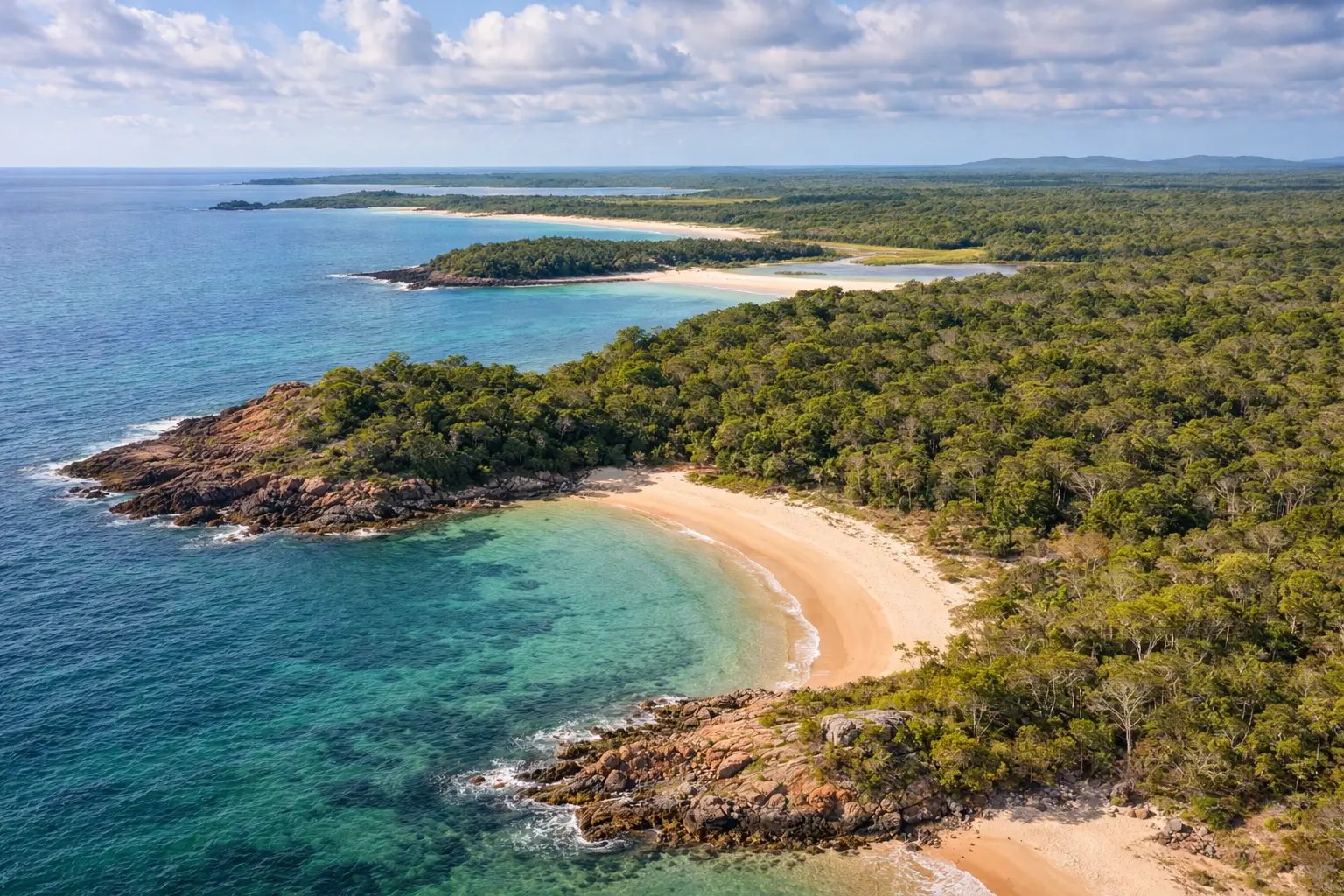
Historically, Amurdak was spoken in the north-western Arnhem Land region, especially around coastal areas and nearby islands such as Croker Island.
For the communities who spoke it, Amurdak was not just a communication tool. It was a way of understanding and describing their environment and cultural identity.
Historical speakers and communities
Amurdak was traditionally spoken by Aboriginal communities living in small, interconnected groups across the Arnhem Land region.
However, during the 20th century, factors such as displacement, mission settlements, and the increasing dominance of English and other regional languages led to a sharp decline in fluent speakers.
By the early 2000s, only a very small number of elders remained who could speak the language fluently.
Linguistic Features
Like many Aboriginal languages of northern Australia, Amurdak has a sound system and grammatical structure that differ greatly from English.
Studying these features helps linguists understand how the language worked in everyday life and how knowledge was communicated across generations.
Phonetics and phonology of Amurdak
Amurdak includes several consonant sounds produced with different tongue positions, such as dental, alveolar, and retroflex consonants, which are common across many Australian Aboriginal languages but unfamiliar to English speakers.
Its vowel system is relatively small but flexible, often relying on subtle pronunciation differences.
Examples:
- Different “d” sounds depending on tongue placement (dental vs retroflex).
- Clear consonant articulation that supports oral storytelling traditions.
- Short vowel systems similar to other Arnhem Land languages.
Grammar and syntax
Amurdak grammar relies heavily on suffixes attached to words to indicate tense, possession, and relationships between words.
These grammatical markers carry meaning, word order can be more flexible than in English. This allows speakers to emphasise important information depending on context.
Examples:
- Suffixes used to mark tense or possession.
- Flexible sentence structures compared with English’s strict subject–verb–object order.
- Words that change form depending on who is performing an action.
Unique vocabulary and expressions
Much of Amurdak vocabulary reflects the local environment and cultural life of northern Australia.
Words often describe specific plants, animals, landscapes, and kinship relationships that are central to Aboriginal communities.
Examples:
- Terms for local wildlife and plant species found in Arnhem Land.
- Words connected to seasonal changes and land management practices.
- Kinship vocabulary describing complex family and community relationships.
Current Status of Amurdak
Like many Indigenous languages around the world, Amurdak has faced significant challenges over the past century.
Once spoken within small Aboriginal communities of northern Australia, the language gradually declined as social, cultural, and political pressures reshaped everyday life.
Number of speakers today
Amurdak is now considered critically endangered and possibly dormant.
The last widely recognised fluent speaker, Charlie Mangulda, passed away in the early 2010s. Since then, the language has survived primarily through linguistic recordings, documentation, and research created by linguists working with the community.
While there may be people who remember words or phrases, there are currently no confirmed fluent speakers using Amurdak in daily conversation.
Factors contributing to language decline
During the 20th century, many Aboriginal communities experienced displacement, mission settlements, and government assimilation policies, which often discouraged the use of Indigenous languages.
English became dominant in education and administration, while larger regional languages were sometimes used for communication between communities.
Over time, younger generations began speaking these languages instead of Amurdak.
Comparison with other endangered languages
Amurdak’s situation reflects a broader global pattern of language loss.
Across Australia alone, hundreds of Aboriginal languages have disappeared or become critically endangered since European colonisation.
Linguists estimate that more than half of the world’s roughly 7,000 languages could disappear within the next century if current trends continue.
Cultural Significance
For Aboriginal communities, language is far more than a tool for communication. It carries identity, history, and a deep connection to land and culture.
The Amurdak language once played an important role in expressing community knowledge, traditions, and relationships within the Arnhem Land region.
Role of Amurdak in Aboriginal identity
Languages like Amurdak are closely tied to the identity of the communities that speak them.
They reflect how people understand their land, family relationships, and cultural responsibilities.
Speaking the language reinforces a sense of belonging and connection to ancestors who passed knowledge down through generations.
Examples:
- Language used to describe kinship relationships and family roles.
- Words that connect people to specific places, territories, and ancestral lands.
- Cultural identity expressed through language in ceremonies and community life.
Connection to traditional stories and practices
Amurdak would have been used to pass down oral traditions, stories, and cultural teachings.
Storytelling is a central part of many Aboriginal cultures, helping preserve knowledge about the environment, history, and spiritual beliefs.
Examples:
- Dreaming stories explaining the origins of landscapes and natural features.
- Oral histories describing community events and ancestral journeys.
- Knowledge shared about hunting, land care, and seasonal changes.
Impact of language loss on cultural heritage
When a language disappears, much more than vocabulary is lost.
Unique ways of understanding the world, cultural traditions, and knowledge systems can fade as well.
For communities connected to Amurdak, the loss of fluent speakers represents a significant cultural shift, making documentation and preservation efforts even more important.
Examples:
- Traditional ecological knowledge is becoming harder to pass on in its original form.
- Cultural stories and expressions lose meaning when translated into other languages.
- Younger generations have less direct access to ancestral knowledge and language traditions.
Efforts in Language Revitalisation
Although Amurdak has very few, if any, fluent speakers today, efforts have been made to document and preserve the language for future generations.
Linguists, cultural organisations, and Aboriginal communities have worked together to record vocabulary, grammar, and cultural knowledge linked to the language.
Community initiatives and programmes
Communities and cultural organisations have played an important role in preserving knowledge connected to Amurdak.
Even when a language is no longer spoken daily, communities can keep elements of it alive through education and cultural activities.
Examples:
- Cultural programmes that teach younger generations about traditional languages and heritage.
- Community projects that record stories, songs, and cultural knowledge linked to the language.
- Language awareness initiatives in schools and cultural centres across Arnhem Land.
Role of technology in preservation
Technology has become a valuable tool for preserving endangered languages.
Digital recording, archiving, and online databases allow linguists and communities to store and share linguistic material that might otherwise be lost.
Examples:
- Audio recordings of speakers preserved in linguistic archives.
- Digital language databases such as AIATSIS and other research archives.
- Online resources that help researchers and communities study and access documented vocabulary and grammar.
Case Studies
Although Amurdak itself has very few surviving speakers today, lessons from other Aboriginal language revitalisation efforts offer hope and guidance.
Across Australia, communities, educators, and linguists have worked together to bring endangered languages back into classrooms, homes, and cultural spaces.
These examples highlight how documentation, community leadership, and education can help languages survive even after long periods of decline
Successful revitalisation projects
Several Aboriginal languages once thought to be nearly lost have seen renewed use through dedicated revitalisation programmes.
These projects often combine community leadership with educational resources and linguistic research.
Examples:
- Kaurna (South Australia): Revived using historical records and linguistic research, and now taught in schools and used in public events.
- Noongar (Western Australia): Community-led initiatives have produced dictionaries, language classes, and media content in the language.
- Gamilaraay (New South Wales): Educational programmes and learning materials have helped reintroduce the language to younger generations.
Personal stories from Amurdak speakers
Much of the documented knowledge of Amurdak comes from work with the language’s last fluent speakers.
Elders shared vocabulary, pronunciation, and cultural knowledge with linguists and researchers, helping ensure that the language could be preserved in recordings and written documentation.
Examples:
- Recordings of speakers sharing traditional vocabulary and pronunciation.
- Contributions from elders who worked with linguists to document grammar and word lists.
- Cultural knowledge recorded alongside language materials to preserve stories and traditions.
Lessons learned from other Aboriginal languages
Revitalisation projects across Australia show that even languages with very few speakers can still play an important cultural role.
The most successful efforts tend to focus on community involvement, education, and accessible learning resources.
Examples:
- Creating school programmes and language classes for younger generations.
- Producing dictionaries, learning materials, and audio recordings.
- Encouraging the use of Indigenous languages in media, cultural events, and public spaces.
Challenges Ahead
Despite growing awareness about the importance of Indigenous language preservation, many Aboriginal languages still face significant challenges.
Languages like Amurdak are particularly vulnerable because they have very few speakers and limited opportunities for daily use.
Ongoing threats to language survival
One of the biggest challenges for endangered languages is the lack of fluent speakers and opportunities to use the language regularly.
When a language is no longer spoken in homes or communities, it becomes much harder to pass down to future generations.
Examples:
- Very small or ageing speaker populations.
- Younger generations primarily using English or dominant regional languages.
- Limited teaching materials or formal language education programmes.
Societal attitudes towards Indigenous languages
For much of the 20th century, Indigenous languages were often discouraged or undervalued within mainstream society.
Although attitudes have improved in recent decades, historical stigma and limited public awareness can still affect language revitalisation efforts.
Examples:
- Past policies that discouraged Aboriginal language use in schools.
- Misconceptions that Indigenous languages are less useful than global languages.
- Growing modern movements that now promote respect for Indigenous cultures and languages.
Need for policy support and funding
Language preservation often requires sustained funding and institutional support.
Documentation projects, educational programmes, and community initiatives depend on resources that are not always consistently available.
Examples:
- Funding for linguistic documentation and research projects.
- Government support for language teaching in schools and cultural centres.
- Grants and programmes that help communities develop learning materials and digital archives.
The Role of Education
Education plays a key role in preserving and revitalising endangered languages.
For languages like Amurdak, education provides a pathway for younger generations to reconnect with their linguistic and cultural heritage.
Incorporating Amurdak in school curricula
Introducing Indigenous languages into school programmes can help raise awareness and support long-term preservation.
Even basic lessons can help students understand the cultural and historical importance of the language.
Examples:
- School lessons introducing basic vocabulary and pronunciation.
- Cultural studies programmes that explore local Aboriginal languages and traditions.
- Educational materials developed with community input and linguistic research.
Importance of teaching younger generations
For any language to survive, younger generations must have opportunities to learn and use it.
Teaching children and young adults about their ancestral language helps strengthen cultural identity and encourages continued interest in language preservation.
Examples:
- Youth programmes that introduce language through storytelling and cultural activities.
- Educational resources designed for students and young learners.
- Language learning is integrated with traditional knowledge about land and culture.
Community workshops and language classes
Community-led learning initiatives are often some of the most effective ways to preserve endangered languages.
Workshops, cultural gatherings, and language classes allow people to learn together and share knowledge across generations.
Examples:
- Local workshops teaching pronunciation, vocabulary, and traditional expressions.
- Cultural events where language is used in songs, stories, and ceremonies.
- Community-led classes supported by linguists and educational organisations.
Learn More About the Amurdak Language
- AIATSIS Austlang Database – Amurdak (N14):
https://collection.aiatsis.gov.au/austlang/language/n14 - Endangered Languages Project – Amurdak:
https://www.endangeredlanguages.com/lang/3075 - Glottolog – Amurdak Language Profile:
https://glottolog.org/resource/languoid/id/amur1241 - PARADISEC Archive – Amurdak Recordings and Materials:
https://catalog.paradisec.org.au - AIATSIS Collection Search – Amurdak Language Materials: https://collection.aiatsis.gov.au
- Living Archive of Aboriginal Languages:
https://livingarchive.cdu.edu.au
Amurdak Language FAQs
What is the Amurdak language?
Amurdak is an Aboriginal language from northern Australia, traditionally spoken in Arnhem Land and around Croker Island in the Northern Territory. Indigenous communities used Amurdak for everyday communication and cultural traditions, and the language belongs to the Iwaidjan language family.
Is the Amurdak language still spoken today?
Linguists consider Amurdak critically endangered and possibly dormant. The last widely recognised fluent speaker, Charlie Mangulda, passed away in the early 2010s, and the language now survives mainly through recordings and linguistic research.
Why is the Amurdak language important?
Amurdak reflects the cultural knowledge, traditions, and identity of the communities that once spoke it. Preserving the language helps protect unique perspectives on land, history, and Indigenous culture.
Where was the Amurdak language traditionally spoken?
Aboriginal communities historically spoke Amurdak in north-western Arnhem Land, particularly around Croker Island and the Cobourg Peninsula in Australia’s Northern Territory.
Are there efforts to preserve the Amurdak language?
Yes. Linguists and cultural organisations have documented vocabulary, pronunciation, and stories, storing them in digital archives and language databases to preserve the language for future generations.