
|
Getting your Trinity Audio player ready...
|
TL;DR: Aka is the traditional language of the BaAka rainforest communities of Central Africa, carrying centuries of cultural knowledge, storytelling, and ecological wisdom while facing modern challenges from globalisation and language shift.
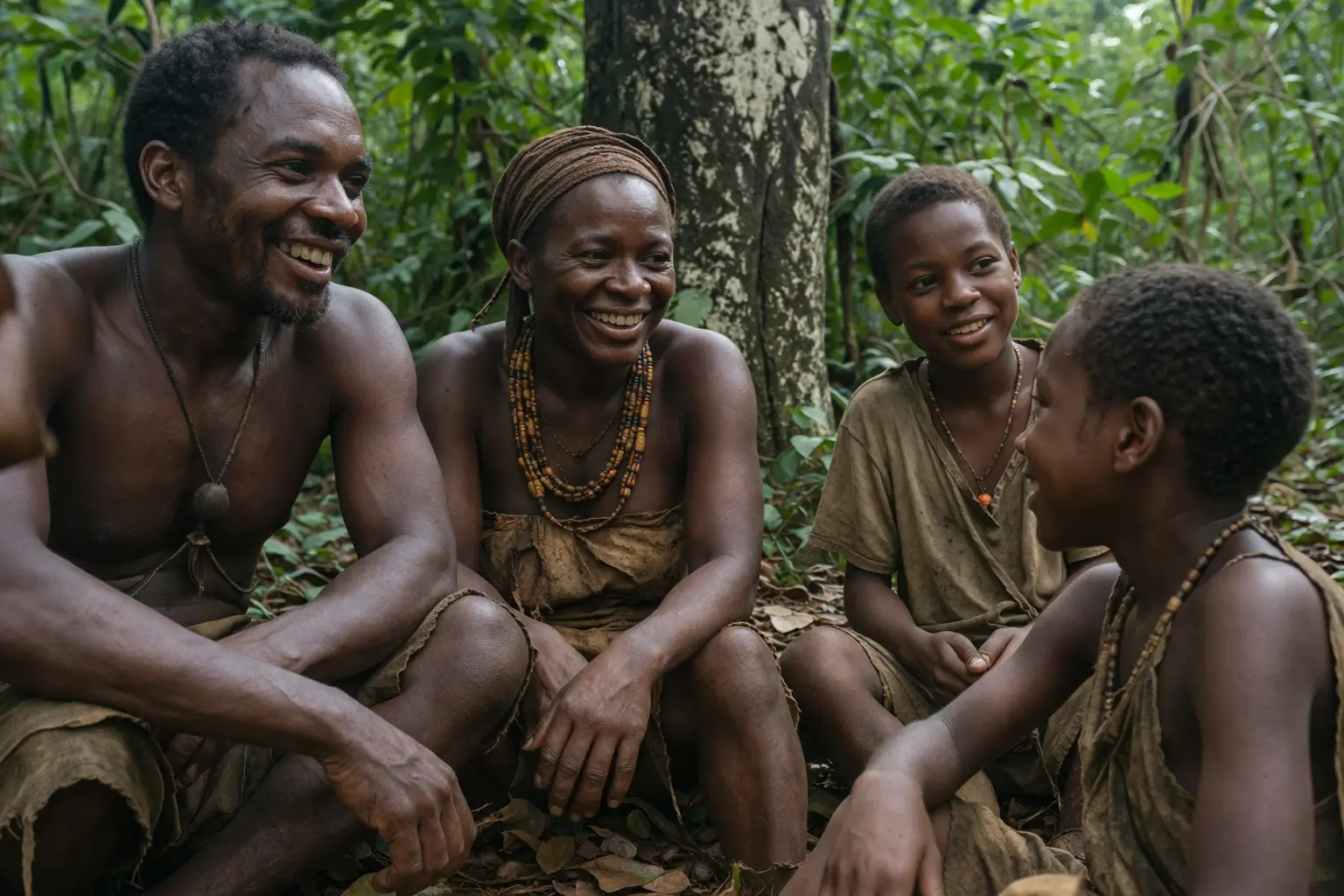
Deep in the rainforests of Central Africa, the Aka language has been spoken for generations by the BaAka people, one of the region’s most well-known forest communities.
More than just a means of communication, Aka reflects a way of life shaped by the rhythms of the forest, strong community ties, and rich oral traditions.
Who are the BaAka people?
The BaAka people are an Indigenous forest-dwelling community who live primarily in the Congo Basin rainforests of the Central African Republic and the Republic of the Congo.
They are part of a wider group often referred to as the forest peoples of Central Africa, sometimes historically labelled “Pygmy” groups, though many communities prefer to identify by their own names, such as BaAka or Aka.
Historical Context
The history of the Aka language is closely tied to the history of the BaAka people themselves.
As forest communities moved, traded, and interacted with neighbouring groups over generations, their language evolved alongside their culture and way of life.
Origins of the BaAka people
The BaAka are among the long-established forest peoples of the Congo Basin.
For thousands of years, they have lived in the rainforests of Central Africa as hunter-gatherers, developing deep knowledge of the land, wildlife, and plants.
Their small, mobile communities traditionally moved between forest camps following seasonal resources.
This close relationship with the rainforest shaped their culture, traditions, and the language they use to describe the world around them.
Historical development of the Aka language
The language developed through everyday life within BaAka communities.
The culture relies heavily on oral traditions, and the language has been passed down through conversation, storytelling, music, and communal activities.
Many words reflect the realities of forest life, including hunting practices, natural resources, and social relationships.
Influence of surrounding cultures and languages
Although the BaAka have maintained a distinct identity, they have long interacted with neighbouring farming communities.
These relationships created opportunities for trade, cooperation, and cultural exchange.
As a result, Aka has absorbed some vocabulary and influences from nearby Bantu languages.
Linguistic Features of Aka
Like many Indigenous languages of Central Africa, Aka has developed features that reflect the environment, culture, and communication needs of the BaAka people.
Its sound system, grammar, and vocabulary all show how language adapts to everyday life within forest communities.
Phonetics and phonology: unique sounds and pronunciation
Aka has a rich sound system that includes a variety of consonants, vowels, and tonal patterns.
Tone can change the meaning of a word, meaning that pronunciation and pitch play an important role in communication.
Some sounds are shared with neighbouring Central African languages, while others are distinctive to Aka.
Grammar and syntax: sentence structure and rules
Aka grammar is relatively flexible, but like many languages in the region it often follows a subject–verb–object word order.
Verbs can change depending on tense, aspect, and context, while particles and markers help clarify relationships between words.
Much of the structure supports clear communication in spoken conversation, which is the primary way the language is used.
Vocabulary: key terms and expressions in Aka
A large portion of Aka vocabulary reflects the natural environment of the Congo Basin rainforest.
Many words relate to animals, plants, hunting tools, forest navigation, and community life. There are also terms tied to social relationships, storytelling, and cultural practices.
The BaAka rely heavily on oral knowledge, and https://en.wikipedia.org/wiki/Baka_people_(Cameroon_and_Gabon)vocabulary often carries layers of meaning connected to tradition, shared experience, and the surrounding landscape.
The Role of Aka in BaAka Culture
For the BaAka people, language is far more than a tool for communication.
Aka carries knowledge, traditions, and community identity, helping preserve ways of life that have developed over generations in the Congo Basin rainforest.
Importance of language in storytelling and oral traditions
Storytelling plays a central role in BaAka culture, and the language is the medium through which these stories are shared.
Through myths, folktales, and historical narratives, elders pass down knowledge about the forest, community values, and ancestral traditions.
Use of Aka in rituals and ceremonies
Aka is also used during important rituals and ceremonies within BaAka communities.
Songs, chants, and spoken traditions accompany events such as celebrations, healing rituals, and community gatherings.
These ceremonial uses of language reinforce social bonds and maintain connections to spiritual beliefs and traditional practices.
Social Structure and Language Use
Language plays an important role in shaping social life within BaAka communities.
The way Aka is spoken reflects relationships, social roles, and everyday interactions within the group.
How Aka reflects social relationships within the BaAka community
Aka helps express respect, cooperation, and social bonds within BaAka society.
The language is used to show relationships between family members, elders, and younger generations, helping reinforce community structure.
In many situations, tone, word choice, and forms of address reflect social roles, ensuring that communication remains respectful and culturally appropriate.
Variations in language use among different age groups and genders
Like many languages, Aka can vary slightly depending on the speaker. Elders often use more traditional vocabulary and expressions that reflect long-standing cultural knowledge.
Younger speakers may incorporate influences from neighbouring languages or national languages used in education and trade.
These variations show how the language continues to evolve across generations.
Language Preservation Efforts
Like many Indigenous languages around the world, Aka faces challenges as social, economic, and cultural changes reshape life in Central Africa.
Despite these pressures, communities, researchers, and organisations are working to help preserve and strengthen the language for future generations.
Current challenges facing the Aka language
One of the main challenges for Aka is the growing influence of national and regional languages such as French and various Bantu languages.
These languages are often used in schools, government, and trade, which can reduce opportunities for younger BaAka speakers to use Aka regularly.
Urban migration, changing lifestyles, and increased contact with outside communities can also lead to language shift, especially among younger generations.
Initiatives and programmes aimed at preserving and revitalising Aka
Several initiatives aim to document and support the language.
Linguists and cultural organisations have worked with BaAka communities to record vocabulary, grammar, songs, and oral traditions.
Elders and local leaders often encourage younger generations to continue speaking Aka through storytelling, cultural activities, and traditional knowledge sharing.
Aka in 2026
The Aka language, like many endangered languages, exists within the changing world.
Globalisation, migration, and increased interaction with other cultures have all influenced how and where the language is used today.
Influence of globalisation on the Aka language
Globalisation has brought greater contact between BaAka communities and the wider world.
Access to modern education, media, and national economies often introduces dominant languages such as French and regional lingua francas.
While these connections can create new opportunities, they can also reduce the everyday use of Aka. Particularly among younger speakers who may rely more on widely spoken languages.
Interaction with other languages and cultures
The BaAka have long interacted with neighbouring farming communities and regional populations.
Through trade, cooperation, and social relationships, the language has absorbed influences from surrounding Bantu languages.
The impact of migration and urbanisation on language use
Migration to towns and cities has also affected how Aka is spoken.
In urban environments, speakers often use national or regional languages for work, education, and daily communication.
As a result, Aka may be used less frequently outside traditional communities.
The BaAka People’s Connection to Nature
For the BaAka people, the rainforest is not just a place to live; it is the foundation of their culture, knowledge, and identity
The Aka language reflects this deep connection to the natural world, with many words, expressions, and stories shaped by life in the Congo Basin.
How the Aka language reflects the BaAka’s relationship with their environment
The Aka language contains many expressions that describe the forest and the ways people interact with it.
Communication often includes references to landscapes, animal behaviour, seasonal changes, and natural resources.
The BaAka rely closely on the rainforest for survival, and language helps organise and transmit knowledge about how to live sustainably within this environment.
Vocabulary related to flora, fauna and traditional ecological knowledge
Aka vocabulary includes a wide range of words linked to plants, animals, and forest resources.
Many terms describe edible plants, medicinal herbs, hunting tools, and animal species found in the Congo Basin.
This specialised vocabulary reflects generations of ecological knowledge
Through language, BaAka communities share practical knowledge about food sources, medicine, and navigation within the forest.
Personal Stories and Anecdotes
Beyond its linguistic structure, the language carries deep emotional and cultural meaning for the BaAka people.
Personal stories from speakers highlight how language connects individuals to their community, their traditions, and their sense of identity.
Testimonials from BaAka speakers about their experiences with the Aka language
Many BaAka speakers describe Aka as the language of home, family, and shared experience.
It is the language used when telling stories around the fire, singing traditional songs, and passing knowledge from elders to younger generations.
For many, speaking Aka represents a connection to their ancestors and a way of keeping cultural traditions alive.
Anecdotes illustrating the emotional and cultural significance of language
Stories from BaAka communities often emphasise how language carries memories and shared history.
A simple phrase or song can recall childhood experiences in the forest, community gatherings, or important cultural moments.
These anecdotes show that Aka is not just a communication tool but a living record of collective experience.
Aka Language FAQs
Where is the Aka language spoken?
The Aka language is spoken mainly in the rainforests of Central Africa, particularly in the Central African Republic and the Republic of the Congo. It is used by the BaAka people, forest-dwelling communities who have lived in the Congo Basin for generations.
Who speaks the Aka language?
Aka is spoken by the BaAka people, an Indigenous hunter-gatherer community known for their deep knowledge of the rainforest. The language is used in daily life, storytelling, music, and traditional cultural practices.
Is Aka an endangered language?
Aka is considered vulnerable to language shift because many speakers also use national or regional languages such as French and nearby Bantu languages. However, it is still actively spoken in many BaAka communities.
Why is the Aka language important?
Aka carries important cultural knowledge, traditions, and ecological understanding developed by the BaAka people over generations. Preserving the language helps protect this knowledge and maintain the community’s cultural identity.
Are there efforts to preserve the Aka language?
Yes. Linguists, cultural organisations, and BaAka communities have worked to document vocabulary, stories, and songs in Aka. Community storytelling, education initiatives, and digital recordings also help support the preservation of the language.