
|
Getting your Trinity Audio player ready...
|
TL;DR: Chamicuro, an Arawakan language of the Peruvian Amazon, is now dormant, with only a handful of elderly speakers recorded in recent decades.
In the heart of the Peruvian Amazon, a language is on the brink of silence.
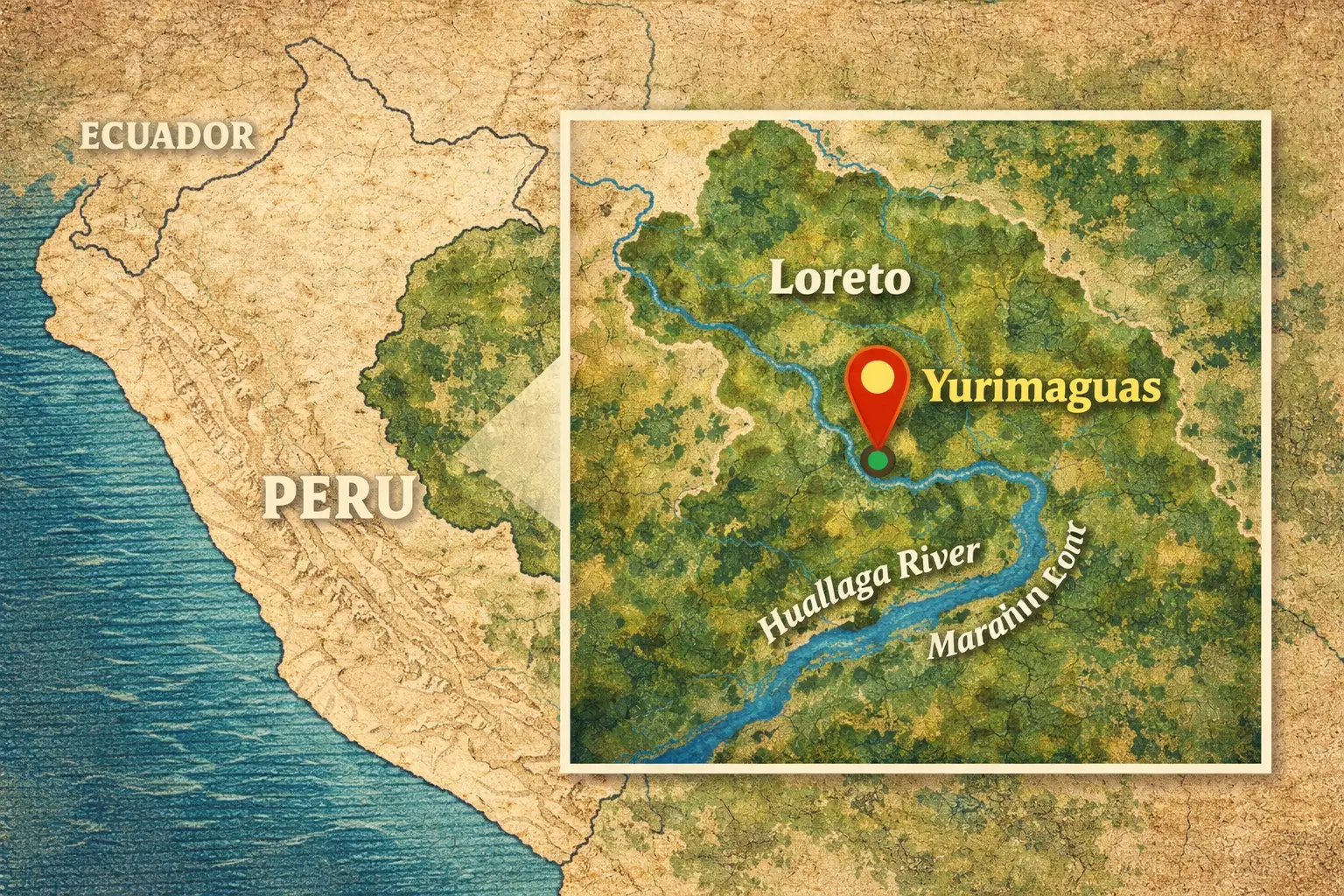
Chamicuro, an Arawakan language once spoken along the Huallaga River, now survives in the voices of only a few elders.
With it fades generations of rainforest knowledge, cultural memory, and a worldview shaped far beyond Spanish influence.
When Chamicuro disappears, it won’t just be a language we lose. It will be an entire way of seeing the Amazon.
Importance of indigenous languages in cultural identity
Indigenous languages are more than tools for communication. They are the backbone of cultural identity.
They carry origin stories, ecological knowledge, social structures, and ways of thinking that cannot be fully translated into dominant national languages.
Why Indigenous languages matter for cultural identity:
- They preserve ancestral knowledge: including oral histories, medicinal practices, and environmental wisdom.
- They shape worldview: grammar and vocabulary influence how communities understand time, nature, and relationships.
- They strengthen community bonds: shared language reinforces kinship, tradition, and collective memory.
- They protect cultural autonomy: language is a foundation of self-determination and political recognition.
- They sustain identity across generations: passing on a language keeps heritage alive in a rapidly globalising world.
Historical Background
To understand Chamicuro, you have to understand the people behind it. This language did not emerge in isolation.
It developed within a rainforest world shaped by rivers, trade routes, kinship networks, and later, colonial disruption.
Its history is inseparable from the broader story of Indigenous resilience in the Peruvian Amazon.
Origins of the Chamicuro people
The Chamicuro people are part of the wider Arawakan linguistic family, one of the most widespread language families in South America.
Historically settled along tributaries of the Huallaga River, they lived in small, river-based communities where mobility, trade, and intergroup contact were central to survival.
Their identity was rooted in territory. The forest was not just home, but history, livelihood, and spiritual landscape.
Historical context of the Chamicuro language
Before Spanish colonisation, Chamicuro flourished as a fully functional community language, passed naturally from generation to generation.
Missionary activity, forced resettlement, disease, and integration into Spanish-speaking society gradually reduced its domains of use.
Over time, Spanish replaced Chamicuro in education, administration, and commerce, accelerating language shift and leaving only a few fluent speakers today.
Traditional practices and lifestyle of the Chamicuro community
Chamicuro life was deeply connected to the rainforest.
Daily survival, social structure, and spiritual belief were shaped by the rivers, forests, and seasonal rhythms of the Amazon and their language reflected this close relationship with nature.
- Fishing and river-based living: Rivers were central for food, transport, and trade.
- Small-scale agriculture: Crops like cassava and plantain supported community life.
- Forest knowledge: Deep understanding of medicinal plants, wildlife, and seasonal cycles.
- Oral storytelling traditions: History, myths, and moral lessons passed down verbally.
- Collective decision-making: Community cohesion was maintained through shared leadership and kinship ties.
Linguistic Features of Chamicuro
Chamicuro isn’t just culturally important. It’s linguistically fascinating.
As part of the Arawakan language family, it has structural patterns that differ markedly from Spanish and English.
Its sounds, grammar, and vocabulary reflect an Amazonian worldview shaped by landscape, movement, and relationships.
Phonetics and phonology
Available descriptions suggest that Chamicuro has a relatively small sound inventory, typical of many Amazonian languages.
- Five-vowel system: Chamicuro has been described as using five core vowels (a, e, i, o, u). Similar in number to Spanish, though their exact phonetic qualities may differ.
- Consonant system typical of the region: Stops (p, t, k), nasals (m, n), and other common consonants are attested in documentation.
- No extremely complex consonant clusters reported: Existing records suggest relatively straightforward syllable structures. Though detailed phonotactic analysis is limited.
- Stress patterns under-documented: There is limited publicly available analysis of stress assignment, so strong claims about prosody would be speculative.
Grammar and syntax
Chamicuro shares structural characteristics with other Arawakan languages, particularly in how it marks grammatical relationships.
- Agglutinative morphology: Words are formed by adding prefixes and suffixes to roots, each carrying specific grammatical meaning.
- Possession marking: Like many Arawakan languages, possession (especially of body parts and kinship terms) is expressed through affixes attached directly to nouns.
- Verbal morphology: Verbs carry grammatical information through affixation, though the full extent of agreement marking is not extensively documented in widely available sources.
- Morphology over word order: Grammatical roles appear to be marked primarily through affixes rather than strict word order, though detailed syntactic descriptions remain limited.
Unique vocabulary and expressions
What makes Chamicuro especially significant is its lexicon. A reflection of Amazonian ecology and social structure.
- Environmental terminology: Documented vocabulary includes terms relating to forest life, river systems, and subsistence practices.
- Kinship terminology: As in many Indigenous South American languages, kinship distinctions are culturally important and linguistically encoded.
- Culturally embedded concepts: Certain meanings are deeply tied to traditional lifeways and do not map neatly onto Spanish equivalents.
- Oral transmission: Much vocabulary was historically preserved through oral storytelling rather than written tradition.
Current Status of the Chamicuro Language
Chamicuro is now at (or extremely close to) the “post-transmission” stage: it’s no longer being passed to children, and most daily life happens in Spanish.
In fact, Ethnologue classifies Chamicuro as dormant (no longer used as a first language).
Number of speakers and demographic trends
Reliable, recent counts are hard because the speaker community is tiny and ageing, but every credible source points to the same trend: only elderly speakers remain (if any fluent speakers remain at all).
- Speaker numbers are extremely low: past published figures include single digits (e.g., 8 speakers reported in 2008).
- No intergenerational transmission: the language is not being acquired by children, which is why it’s described as dormant rather than “endangered but stable”.
- Speakers are elderly: archival notes describe contact with elderly speakers in places linked to the Chamicuro community (e.g., Pampa Hermosa / Yurimaguas area).
Factors contributing to language decline
Chamicuro’s decline follows a familiar Amazonian pattern: pressure from dominant languages + disrupted community life + fewer places where the heritage language is “needed”.
- Spanish dominance in education, work, and public life: Spanish becomes the default for school, services, and opportunity, shrinking Chamicuro’s domains.
- Language shift inside families: once parents switch to Spanish with children, the chain breaks in a single generation.
- Small population + dispersal: tiny speaker base + movement away from traditional communities accelerates decline.
- Late documentation: much recording happened after speaker numbers had already collapsed, meaning less time for revitalisation to take root.
Comparison with other endangered languages in the region
Chamicuro sits in a regional “critical zone” where several Amazonian languages are down to only a few speakers — and some have already crossed into extinction.
- Taushiro (Peruvian Amazon): 1 speaker: widely cited as critically close to extinction.
- Resígaro (Peru): 1 speaker: often referenced as having a single remaining fluent speaker after 2016.
- Iñapari (Peru): ~4–5 speakers: a comparable Arawakan case: elderly speakers, no children learning it.
- Omurano (Loreto, Peru): extinct: a reminder of what “end stage” looks like when a language is lost
Cultural Significance of Chamicuro
Chamicuro is more than a linguistic system. It is a cultural archive. Like many Indigenous Amazonian languages, it encodes memory, territory, kinship, and worldview.
Even as speaker numbers have declined, its cultural importance remains profound. Both for the Chamicuro people and for Peru’s wider Indigenous heritage.
Role of language in cultural heritage
Language is one of the strongest carriers of heritage. In small Indigenous communities, especially, it holds knowledge that is not always written down.
- Preserves ancestral knowledge: Ecological understanding, subsistence practices, and social norms are embedded in vocabulary and expressions.
- Maintains continuity with the past: Language connects present generations to their ancestors.
- Supports cultural autonomy: A distinct language reinforces a distinct cultural identity within a multilingual nation.
- Encodes traditional categories: Local ways of classifying plants, animals, and social relationships are reflected in linguistic structure.
When a language declines, these systems of knowledge become harder to transmit.
Traditional stories, songs, and oral histories
Chamicuro, like many Amazonian languages, was historically transmitted through oral tradition rather than written texts.
- Myths and origin stories: Narratives explaining the origins of the people, landscape, and spiritual world.
- Moral and social teaching: Stories used to teach values, behaviour, and communal responsibility.
- Songs and ritual speech: Oral forms tied to community gatherings and traditional practices.
- Memory as preservation: Cultural knowledge depended on repetition and intergenerational storytelling.
Because documentation began late, not all oral traditions were fully recorded. This means some cultural content may already be lost.
Connection between language and identity
For Indigenous communities, language is not just communication. It belongs.
- Marker of group identity: Speaking Chamicuro historically signalled membership in the community.
- Sense of place: Language reflects a deep relationship with a specific Amazonian territory.
- Intergenerational bond: Elders passing on language reinforces family and cultural continuity.
- Psychological significance: Maintaining a heritage language supports dignity and cultural pride.
Even when a language becomes dormant, its symbolic power remains strong. For communities seeking cultural revitalisation, language often becomes a central focus of identity renewal.
Threats to the Chamicuro Language
Chamicuro did not decline in isolation. Its erosion reflects wider social, economic, and environmental pressures affecting Indigenous communities across the Amazon.
When the conditions that sustain a language disappear, the language itself struggles to survive.
Impact of globalisation and modernisation
Modernisation reshapes how communities live, work, and communicate, often narrowing the space for smaller languages.
- Schooling in dominant languages: Education systems prioritise Spanish, reducing exposure to Chamicuro.
- Migration and urbanisation: Movement to towns and cities weakens traditional community networks.
- Media and technology: Television, radio, and digital content overwhelmingly operate in global languages.
- Economic integration: Participation in national markets favours widely spoken languages over local ones.
Influence of dominant languages (Spanish and Portuguese)
In Peru, Spanish is the primary driver of language shift. Portuguese influence is less direct in the Chamicuro case but part of the broader Amazonian linguistic landscape.
- Spanish as the language of opportunity: Employment, government services, and formal education function in Spanish.
- Intergenerational shift: Parents often prioritise Spanish to improve their children’s socioeconomic prospects.
- Stigma and marginalisation: Indigenous languages have historically been undervalued, accelerating abandonment.
- Reduced everyday usage: As Spanish becomes dominant at home and in public life, heritage language fluency declines rapidly.
Once children stop learning the language naturally, decline accelerates within a single generation.
Environmental changes and their effects on the community
Language and environment are deeply connected in Amazonian cultures. When landscapes change, so do cultural practices.
- Deforestation and habitat loss: Environmental disruption affects traditional livelihoods tied to land and river systems.
- Changing subsistence patterns: Shifts away from traditional fishing and agriculture reduce contexts where Indigenous terminology is used.
- Community displacement: Environmental or economic pressures can fragment small populations.
- Loss of ecological knowledge: As traditional practices decline, specialised vocabulary linked to flora, fauna, and seasonal cycles becomes less relevant.
For languages like Chamicuro, survival depends not only on speakers, but on the continued vitality of the cultural and environmental systems that sustain them.
Efforts for Revitalisation
Revitalising a language like Chamicuro is uniquely challenging.
With extremely few, and possibly no fully fluent, speakers remaining, the focus shifts from everyday community transmission to documentation, archiving, and symbolic cultural recovery.
While large-scale revival is difficult at this stage, preservation efforts still matter deeply.
Community initiatives to preserve the language
Even when fluency declines, community identity does not disappear.
- Cultural reaffirmation: Recognition of Chamicuro as part of community heritage strengthens identity.
- Archival engagement: Recorded word lists, texts, and linguistic materials become tools for cultural memory.
- Intergenerational awareness: Elders’ knowledge, even if partial, contributes to documentation and remembrance.
- Symbolic revival: Use of traditional names, terms, and references helps maintain cultural visibility.
In cases like Chamicuro, revitalisation often begins with reclaiming pride before rebuilding fluency.
Role of NGOs and governmental support
External institutions play a crucial role, especially when speaker numbers are critically low.
- Linguistic documentation projects: Researchers and organisations (such as SIL and university teams) have recorded vocabulary and grammatical descriptions.
- Peruvian Indigenous rights frameworks: Peru recognises Indigenous languages as part of its national heritage, supporting broader preservation policies.
- Cultural heritage initiatives: Government and NGOs may fund documentation, archiving, and awareness programmes.
- Academic collaboration: Linguists help preserve recorded materials for future generations.
For dormant languages, documentation can be the foundation for any future revival attempt.
Educational programmes and resources for language learning
Because Chamicuro has not been transmitted to children in recent decades, formal education in the language is extremely limited. However, preservation resources still exist.
- Published linguistic descriptions and word lists: These serve as reference material for researchers and community members.
- Archived recordings: Audio documentation preserves pronunciation and speech patterns.
- Cultural education in Spanish: Even where fluency cannot be restored, teaching about the language maintains awareness.
- Digital preservation potential: Modern tools offer new opportunities to archive and share historical material.
At this stage, Chamicuro revitalisation is less about immediate fluency and more about safeguarding cultural memory.
The Role of Technology in Language Preservation
When a language reaches the brink of dormancy, technology often becomes its last line of defence.
While Chamicuro no longer has a large living speech community, digital tools now play a crucial role in documenting, safeguarding, and potentially reactivating its linguistic heritage.
Digital tools and platforms for language documentation
For critically endangered languages, documentation is the foundation of any future revitalisation effort.
- Audio archiving: Recorded speech preserves pronunciation, rhythm, and vocabulary.
- Digital dictionaries and databases: Word lists and grammatical notes can be stored and shared globally.
- University repositories: Academic institutions host scanned texts, field notes, and linguistic analyses.
- Open-access archives: Online platforms allow communities and researchers to access materials remotely.
In the case of Chamicuro, much of what survives exists because it was recorded and archived before speaker numbers collapsed.
Social media and its impact on language use
For languages with active speakers, social media can revitalise everyday use. For dormant languages like Chamicuro, its role is more symbolic but still meaningful.
- Raising awareness: Posts, articles, and short videos increase visibility.
- Cultural pride campaigns: Highlighting Indigenous identity strengthens recognition.
- Community reconnection: Descendants can rediscover linguistic heritage online.
- Educational micro-content: Even a single shared word can spark interest in preservation.
Digital visibility does not equal fluency, but it can support identity renewal and public recognition.
Online resources for learning Chamicuro
Unlike widely spoken languages, Chamicuro does not currently have mainstream learning platforms or structured courses.However, some resources exist through academic documentation.
- Published linguistic descriptions: Grammar sketches and vocabulary lists provide foundational material.
- Archived recordings: Audio documentation offers rare examples of authentic speech.
- Research papers and fieldwork notes: These serve as primary sources for learners and scholars.
- Digital preservation projects: Future initiatives could convert archived material into interactive formats.
At this stage, technology’s role is preservation-first.
But history shows that even dormant languages can inspire revival movements when documentation, community will, and digital tools come together.
The Importance of Language Diversity
Language diversity is not just a cultural asset. It is a form of human knowledge.
Each language encodes unique systems of classification, memory, and meaning. When a language disappears, we lose more than words; we lose a distinct way of interpreting the world.
Benefits of preserving indigenous languages
Indigenous languages carry intellectual, ecological, and social value that extends far beyond their speaker communities.
- Cultural continuity: They preserve history, identity, and intergenerational knowledge.
- Cognitive diversity: Different grammatical systems reflect different conceptual frameworks.
- Ecological knowledge: Indigenous languages often encode detailed environmental understanding.
- Social resilience: Language maintenance strengthens community cohesion and pride.
- Academic insight: Linguists gain data that expands our understanding of human language structure.
Preservation is not nostalgia. It is protection of irreplaceable human heritage.
The role of Chamicuro in the broader context of linguistic diversity
Chamicuro represents one small but significant part of the Arawakan language family and the wider Amazonian linguistic landscape.
- Part of a major South American language family: Its structure contributes to comparative Arawakan research.
- A case study in language endangerment: Its decline illustrates how quickly transmission can collapse.
- A record of Amazonian life: Even archived vocabulary preserves insights into traditional lifeways.
- A reminder of urgency: Languages with only a handful of speakers highlight the fragility of linguistic diversity.
Even when dormant, Chamicuro contributes to our understanding of how languages evolve, shift, and disappear.
How language preservation contributes to biodiversity
Linguistic and biological diversity often overlap geographically. Regions with the greatest ecological richness, like the Amazon, also tend to have the highest language diversity.
- Environmental knowledge systems: Indigenous languages encode plant, animal, and seasonal knowledge.
- Place-based classification: Local naming systems reflect fine ecological distinctions.
- Sustainable practices: Traditional terminology often relates to long-standing resource management systems.
- Cultural–ecological connection: When communities maintain language, they often maintain land-based traditions.
While preserving a language does not automatically protect an ecosystem, both are interconnected.
Chamicuro Language FAQs
What is the Chamicuro language?
Chamicuro is an Indigenous Arawakan language historically spoken in the Peruvian Amazon, particularly near the Huallaga River. It is now considered dormant, meaning it is no longer being passed down as a first language.
How many people still speak Chamicuro?
Speaker numbers have been extremely low for decades, with reports in the 2000s suggesting only a handful of elderly speakers. Today, there is no confirmed evidence of active intergenerational transmission.
Why did Chamicuro decline?
Its decline was driven by Spanish dominance in education and public life, migration, social pressure to assimilate, and the breakdown of intergenerational transmission within families. Once children stopped learning it, the language quickly moved toward dormancy.
Why is Chamicuro important if so few people speak it?
Even with very few speakers, Chamicuro preserves unique cultural, ecological, and linguistic knowledge. It contributes to our understanding of Amazonian history, Arawakan languages, and the broader importance of linguistic diversity.
Can Chamicuro be revitalised?
Large-scale revival is challenging due to the limited number of speakers, but documentation, digital archives, and cultural initiatives can preserve and potentially reactivate aspects of the language in the future.