
|
Getting your Trinity Audio player ready...
|
TL;DR: Archi is an extremely complex and highly endangered language spoken in a small village in Dagestan, notable for its dense grammar, rich case system, multiple noun classes, and highly detailed verb forms that can encode entire sentences into single words, while its unique sound system and flexible syntax push the limits of linguistic structure.
Archi is often described as one of the world’s most intricate languages. This is because of the extraordinary amount of information packed into its grammar. Spoken by a small community in the Caucasus region of Russia. It pushes the limits of what linguistic structure can look like.
Its verbs can encode many layers of agreement, tense, aspect, and spatial meaning at once. While its nouns operate within a rich case system. Far from being an academic curiosity. Archi shows how human languages can develop extreme precision.
What is the Archi language?
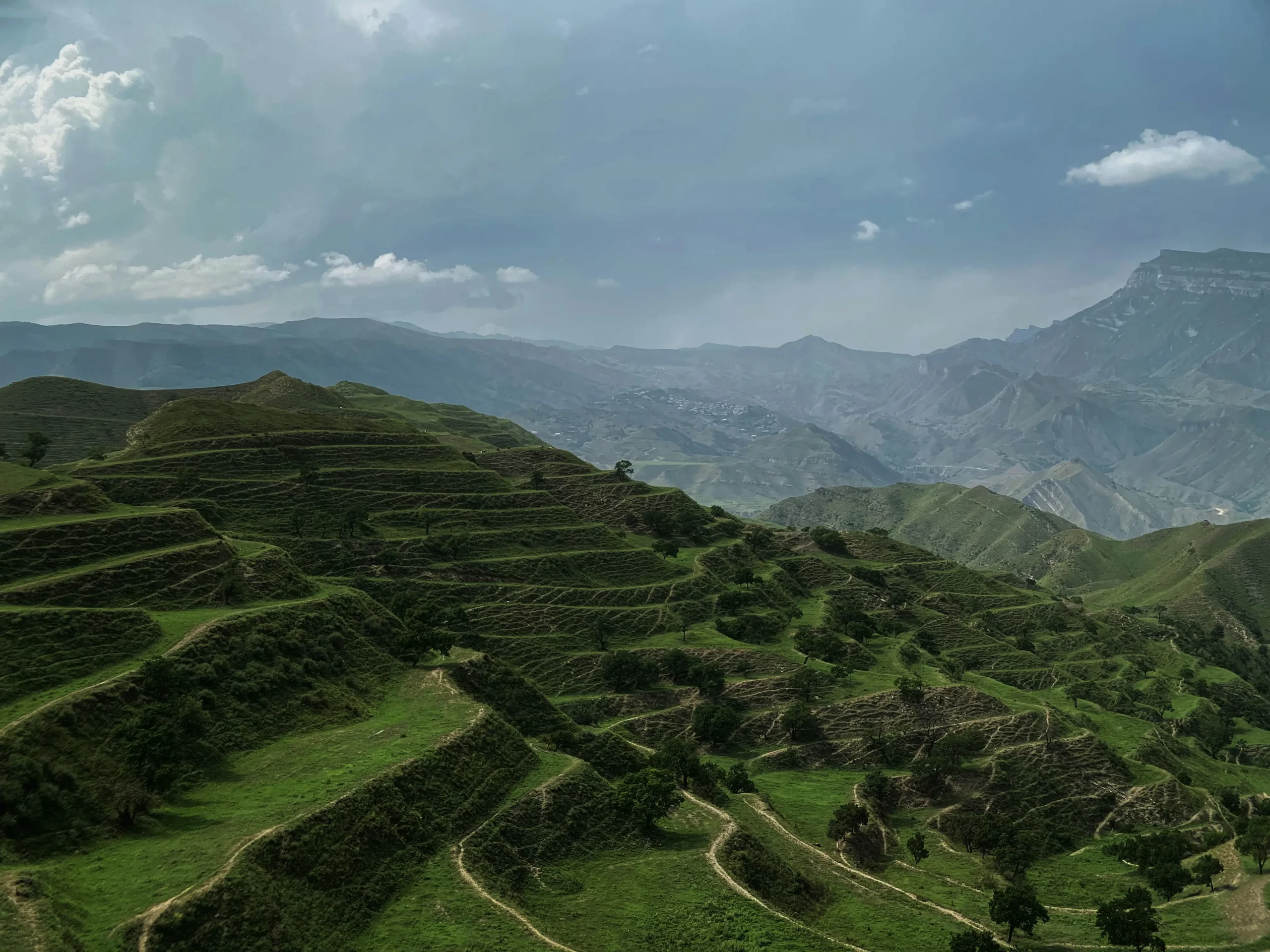
The Archi language is a Northeast Caucasian language. Spoken in the village of Archib in Dagestan, in the Caucasus. Despite having only a few hundred speakers, it is one of the most complex languages ever recorded.
Archi is famous for its extreme morphology. Verbs can carry many layers of agreement, tense, aspect, and spatial meaning at once.
While nouns belong to numerous classes and take a wide range of case endings. A single Archi word can express what would must an entire sentence in many other languages.
Importance of studying highly intricate languages
Studying intricate languages reveals how far human language can go. Their dense grammar shows how meaning can be packed into words with exceptional precision. Challenging simplified views of linguistic structure.
These languages are vital for linguistic research. Allowing scholars to test theories of grammar, cognition, and language learning. Using complex, real-world systems.
They also preserve unique cultural knowledge. Studying them helps protect forms of linguistic intelligence that might otherwise be lost.
Historical Context of Archi
The Archi language did not develop in isolation or by accident.
Its remarkable complexity is the result of centuries of different subjects. Including history, geography, and cultural continuity. In one of the world’s most dense regions.
Origins and development of the Archi language
The Archi language belongs to the Northeast Caucasian (Lezgic) language family. A group known for intricate grammatical systems.
It developed through long-term oral transmission within a stable, close-knit community. Allowing complex patterns of morphology and agreement to accumulate rather than simplify.
Little pressure to standardise or streamline the language. Archi retained and refined detailed grammatical structures over generations.
Geographic distribution and cultural significance
The Archi language is spoken in the village of Archib in Dagestan, within the Caucasus.
The region’s rugged terrain limited contact with outside groups. Helping preserve linguistic distinctiveness.
Archi plays a central role in local identity, oral tradition, and daily life. Functioning as a marker of community belonging as much as communication.

Influence of historical events on the language’s complexity
Historical isolation, combined with limited political or administrative interference. This allowed the Archi language to evolve without heavy external simplification.
Unlike languages shaped by empires, mass literacy, or standardised education. Archi developed, favouring precision over ease.
Phonetic Complexity
The Archi language is not only grammatically dense but also phonetically demanding.
Its sound system contains contrasts and articulations that are rare globally. Making Archi a key case study in how human speech sounds can be organised.
Unique sounds and phonemes found in Archi
The Archi language is known for its large consonant inventory. It includes ejectives, uvulars, pharyngealised sounds, and contrasted fricatives and affricates
Many of these sounds differ by subtle articulatory features. Allowing Archi to distinguish meaning through small phonetic changes.
Vowel length and quality also play an important role. Adding further layers of precision.
Comparison with phonetic systems in other languages
Compared to spoken languages such as English or Spanish. The Archi language uses far more consonantal distinctions.
English relies on stress and word order to convey meaning. Archi often encodes meaning in sound contrasts.
Even within the Caucasus. Archi stands out for the density and complexity of its phoneme system. Pushing the upper limits of known human sound inventories.
Challenges Archi presents for non-native speakers
For non-native learners, the Archi language poses significant challenges. Many sounds have no direct equivalents in other languages. Making perception and pronunciation difficult.
Distinguishing between similar consonants. It requires precise control of airflow and articulation. Small errors can change the meaning.
These challenges highlight how specialised the Archi sound system is. Shaped by generations of native use rather than ease of acquisition for outsiders.
Archi Grammatical Structure
The Archi language is renowned for a grammatical system of extraordinary depth.
Its structure allows speakers to encode precise relationships. It enables actions and perspectives into word forms. Making grammar the core engine of meaning.
Noun Classes in the Archi Language
In the Archi language, noun classes act as a grammatical backbone.
- Each noun belongs to a specific class
- Classes are reflected in:
- Verb agreement
- Adjectives
- Demonstratives
- A change in noun class changes agreement markers across the sentence
Teaching example (conceptual):
- man → class A → verb takes class A agreement
- stone → class B → same verb changes form
This means verbs adapt to the noun, not the other way around.
Case System and the Meaning
The Archi language uses cases to encode relationships. Those that many languages express with prepositions.
Cases can mark:
- Subject and object roles
- Location (in, on, under)
- Direction (to, from, towards)
- Source and goal
- Orientation and proximity
Core Components of Archi Grammar
| Grammatical Feature | How It Works in the Archi Language | Why It Matters |
| Noun classes (genders) | Archi has multiple noun classes based on semantic properties such as animacy, shape, and function. | These classes control agreement across verbs, adjectives, and modifiers. |
| Case system | Nouns take numerous case endings that mark grammatical roles and spatial relations. | Case marking replaces rigid word order and prepositions. |
| Agreement | Verbs and modifiers agree with noun class, number, and sometimes case. | This creates tight grammatical cohesion within sentences. |
| Word order | Relatively flexible due to heavy morphological marking. | Meaning remains clear even when word order changes. |
Inflectional and derivational patterns
The Archi language relies on inflexion to convey meaning.
Prefixes, suffixes, and internal changes mark case, number, and agreement. While derivational processes create new words and nuanced meanings from existing roots
These layered patterns enable Archi to build complex ideas without expanding sentence length. Favouring compact but information-rich forms.
Complexity of verb forms, agreement, and tense
Verbs in the Archi language are especially complex. A single verb can agree with many noun classes. It can encode tense, aspect, mood, and spatial orientation.
Rather than relying on auxiliary verbs or rigid syntax, Archi integrates this information into the verb itself.
This makes verbal forms expressive. Also, among the most challenging aspects of the language to analyse and learn.
Archi Vocabulary
The vocabulary of the Archi language. It reflects both its extreme grammatical precision and the environment in which it developed.
Rather than relying on a vast number of simple roots. Archi builds expressive power through structured word formation, compounding, and grounded meanings.
Scope and sources of Archi’s extensive lexicon
The Archi language draws much of its lexicon from inherited Northeast Caucasian roots. Refined through centuries of continuous use.
Vocabulary is specific. With many words encoding distinctions that other languages express through phrases or context.
This results in a lexicon that is not large in raw word count. But rich in semantic detail. Especially in areas related to space, action, and social interaction.
Use of compound words and idiomatic expressions
Compounding plays a central role in the Archi language. Words are often formed by combining roots to create precise, context-sensitive meanings.
These compounds can describe actions, tools, or states with great efficiency.
Idiomatic expressions are also common, embedding cultural assumptions or shared knowledge. Meaning that full comprehension requires familiarity. With both the language and the community that uses it.
Influence of environment and culture on vocabulary development
The Archi language vocabulary has been shaped. It is by its mountainous environment and traditional way of life. There are fine-grained terms for landscape features. Movement across terrain, weather conditions, and everyday activities tied to rural life.
Social relations, customs, and oral traditions further influence lexical development. Ensuring that vocabulary remains aligned with lived experience rather than abstract categorisation.
Syntax and Sentence Construction
Syntax in the Archi language means learning how meaning is organised. It is through morphology rather than fixed sentence patterns.
Archi syntax prioritises grammatical marking over word order. Giving speakers flexibility without sacrificing clarity.
Sentence structure and word order
The Archi language follows a subject–object–verb (SOV) order. This order is not rigid.
Grammatical roles are marked through case endings and agreement. So nouns remain identifiable even when moved.
Teaching point:
If you can recognise case markers, you can identify who is doing what. Regardless of position in the sentence.
Learners should focus on:
- Identifying case endings on nouns
- Tracking verb agreement with noun classes
- Reading meaning from morphology, not position
Use of clauses, embedding, and subordination
The Archi language forms complex sentences through clause chaining. Embedding rather than heavy use of conjunctions.
Subordinate clauses are often created using non-finite verb forms. Such as participles or converbs. Which attach more information to the main clause.
Key learning features:
- Relative clauses precede the noun they change
- Subordinate actions are marked on verbs, not separate words
- Tense and aspect relationships are encoded morphologically
This creates compact sentences where many events are grammatically linked.
Syntactic variability and its linguistic implications
The Archi language encodes roles and relationships within words. Syntax becomes flexible.
Speakers can rearrange sentence elements to highlight new information. They maintain narrative flow or add emphasis without introducing ambiguity.
For learners and linguists, this variability shows that:
- Word order is a communicative choice, not a fixed rule
- Grammar can prioritise meaning over linear structure
- Archi represents a morphology-driven model of syntax
Studying Archi syntax teaches learners to read sentences from the inside out. Making it a powerful example of how language structure can differ while remaining precise and efficient.
Archi Language Sociolinguistic Factors
The Archi language is not only a grammatical system. Also, a social practice shaped by community life, identity, and external pressures.
Understanding how Archi is used helps explain both its resilience and its vulnerability.
Role of Archi in community identity
For its speakers, the Archi language functions as a core marker of local identity.
It signals belonging to the Archi community. Also carrying shared history, oral traditions, and cultural knowledge.
Speaking Archi is tied to family life and intergenerational continuity. Reinforcing social bonds and maintaining a sense of distinction within the wider region.
Language use across different social contexts
The Archi language is used in informal local contexts. Such as the home, village interactions, and community gatherings.
Formal domains include education, administration, and media. Speakers often shift to more dominant regional or national languages.
Impact of globalisation and language shift
Globalisation has reduced the functional range of the Archi language. Increased mobility and schooling in dominant languages. Digital communication have led many younger speakers to use Archi less.
As a result, fluency may become passive rather than active. Without sustained community support and documentation.
This shift places long-term pressure on the language. Highlighting the importance of sociolinguistic awareness in language preservation efforts.
Preservation and Documentation Efforts
Efforts to preserve and document the Archi language focus on safeguarding. It safeguards one of the most complex languages ever described. While recognising the realities facing a very small speech community.
Current status of the Archi language
The Archi language is spoken by a limited number of people. Within a single village community. According to the 2020 census, 1,712 people speak the Archi language. But, this has more than likely decreased.
It continues to be used in everyday local contexts. Especially among older speakers, but transmission to younger generations is fragile.
Archi is best described as severely endangered. Still alive, but vulnerable to gradual decline if intergenerational use weakens further.
Ongoing initiatives for preservation and revitalisation
Preservation efforts for the Archi language currently prioritise accurate documentation over broad revitalisation.
Given the small size of the speech community. The focus has been on recording the language as it is used.
Key initiatives include:
- In-depth linguistic fieldwork with native speakers
- Comprehensive grammatical descriptions of Archi
- Detailed phonological analysis of its sound system
- Lexical documentation captures specific vocabulary
- Audio and text records of natural speech and narratives
Importance of documentation for future generations
For the Archi language, documentation is especially critical. Its extreme grammatical and phonetic complexity. This means that losing fluent speakers would result in the loss of linguistic knowledge. Knowledge that cannot be reconstructed.
High-quality recordings, annotated texts, and grammatical descriptions ensure that future generations. Both within the community and in the wider linguistic field, one can study, understand, and revitalise the language.
Documentation preserves not just words. But an entire system of human expression at the outer limits of linguistic structure.
Comparisons with Other Intricate Languages
Placing the Archi language alongside other complex languages helps linguists understand. Not just how Archi works. But how diverse human language systems can be.
Similarities and differences with other complex languages
Like several other morphologically rich languages. The Archi language encodes meaning into word structure rather than relying on strict word order.
But, Archi stands out for the density of its systems. Extensive noun classes, extreme agreement patterns, and an articulated sound system.
Some languages may be complex in one area, such as verb morphology or phonetics. Archi combines high complexity across many domains at once.
Insights gained from studying Archi
Studying the Archi language alongside other intricate languages. It reveals that complexity is not uniform or hierarchical.
Languages do not all become complex in the same way. Archi shows how grammar can prioritise precision and compactness. Offering an alternative model to languages that spread meaning across longer phrases or fixed syntax.
These comparisons challenge assumptions about what is “normal” or “efficient” in language design.
Archi Language FAQs
What makes the Archi language so complex?
The Archi language combines extreme grammatical features. Including many noun classes, rich case marking, dense verb agreement, and a complex sound system.
Where is the Archi language spoken?
The Archi language is spoken in a single village community in Dagestan, in the Caucasus region, by only a few hundred people.
Is the Archi language still spoken today?
Yes, but the Archi language is severely endangered. With fluent use concentrated among older speakers.
Why do linguists study the Archi language?
The Archi language pushes the limits of linguistic theory. It provides real-world data on extreme grammatical and phonetic complexity.
Can non-native speakers learn the Archi language?
In theory, yes, but the Archi language is difficult to learn. Without immersion due to its unfamiliar sounds and dense morphology.