
|
Getting your Trinity Audio player ready...
|
TL;DR: Talysh is a north-western Iranian language spoken along the southern Caspian Sea in Iran and Azerbaijan, deeply tied to the cultural identity, folklore, and history of the Talysh people.
On the southern shores of the Caspian Sea, between northern Iran and southern Azerbaijan, a quiet linguistic treasure still survives.
Talysh is rarely mentioned in mainstream discussions of world languages. It has no global media presence and little institutional support. Yet for centuries, it has carried the stories, songs, and identity of the Talysh people.
Rooted in the north-western Iranian branch of the Indo-European family, Talysh shares ancient connections with Persian and Kurdish, but it remains distinctly its own.
Today, this hidden language stands at a crossroads.
Talysh language and its significance
Spoken along the southern shores of the Caspian Sea in northern Iran and southern Azerbaijan, Talysh is part of the north-western Iranian branch of the Indo-European family. Though related to Persian and Kurdish, it has its own distinct sounds, vocabulary, and grammar.
More than just a regional language, Talysh carries the oral traditions, folklore, and cultural identity of its people. It preserves centuries of history and local knowledge tied to the Caspian landscape.
Today, like many minority languages, Talysh faces pressure from dominant national languages. Making its preservation vital for both cultural heritage and linguistic diversity.
Importance of exploring lesser-known languages in cultural heritage
Around the world, thousands of languages exist beyond the global spotlight.
While major languages dominate media, education, and international communication, smaller and lesser-known languages hold equally powerful stories about who we are and where we come from.
- They preserve unique worldviews: Each language encodes distinct ways of understanding nature, time, relationships, and community.
- They safeguard oral history: Folktales, songs, proverbs, and ancestral knowledge often exist only in the original language.
- They strengthen cultural identity: For many communities, language is the strongest link to heritage and belonging.
- They protect traditional knowledge systems: Indigenous and regional languages often carry ecological, agricultural, and medicinal knowledge.
- They enrich global diversity: Linguistic variety reflects the depth and complexity of human civilisation.
- They challenge cultural homogenisation: In a globalised world, supporting minority languages helps resist cultural erasure.
Historical Background
To understand the Talysh language, we need to look beyond vocabulary and grammar.
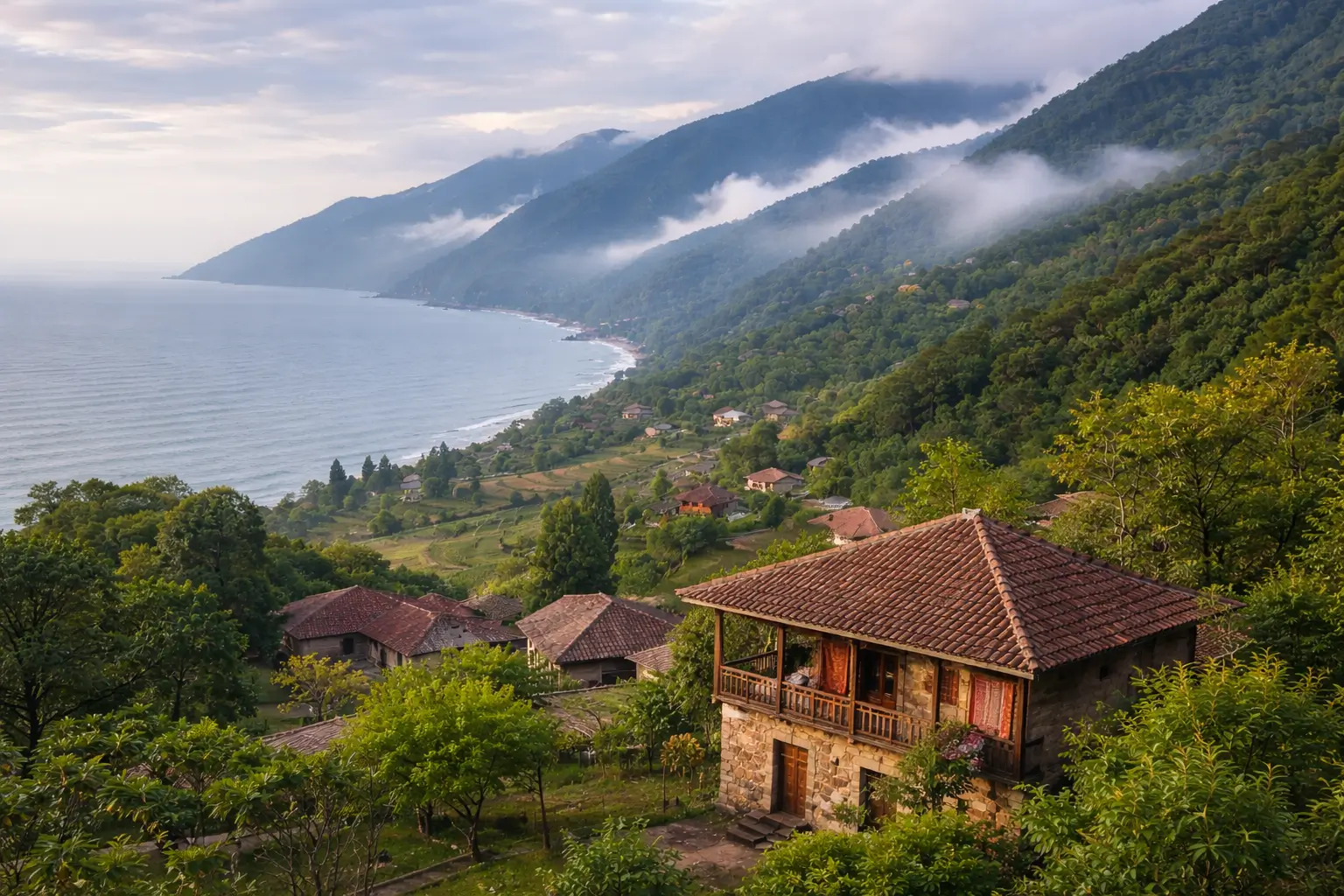
Its story is woven into the forests, mountains, and coastal plains of the southern Caspian Sea. A region shaped by migration, empire, trade, and cultural exchange for thousands of years.
The history of Talysh is not only linguistic. It is deeply connected to the resilience of the Talysh people and the shifting political landscapes of northern Iran and southern Azerbaijan.
Origins of the Talysh language
The Talysh language belongs to the north-western branch of the Iranian languages, part of the wider Indo-European family. Linguistically, it shares ancient roots with languages such as Persian and Kurdish, but it developed along its own path.
Scholars trace its origins back to Old Iranian dialects spoken in the region long before the rise of modern nation-states.
Over centuries, geographic isolation in the Caspian lowlands and the foothills of the Alborz mountains allowed Talysh to preserve archaic features that disappeared in other Iranian languages.
Historical context of the Talysh people in the Caspian Sea region
The Talysh people have lived for centuries along the southwestern coast of the Caspian Sea. Their homeland stretches across what is now northern Iran and parts of southern Azerbaijan.
Borders shifted repeatedly, but rural Talysh communities often maintained their language through strong local traditions and close-knit social structures.
Agriculture, fishing, and trade shaped daily life, while oral storytelling and folk poetry kept cultural memory alive.
Even during periods of political change or assimilation pressure, the language continued to be spoken within families and villages.
Influence of neighbouring cultures and languages
No language develops in isolation. Talysh has long existed alongside Persian, Azerbaijani Turkish, and other regional languages, and this contact has left clear traces.
From Persian, it absorbed administrative and literary vocabulary. From Azerbaijani Turkish, especially in northern areas, it adopted loanwords and certain phonetic influences. Trade and migration further enriched its lexicon.
Geographic Distribution
The Talysh language is closely tied to landscape.
Its survival is not just cultural. It is geographical. Mountains, forests, and coastal plains have all played a role in shaping where Talysh is spoken and how it has endured over time.
Its geographic distribution helps explain both its resilience and its challenges today.
Regions where Talysh is spoken
Talysh is spoken along the southwestern coast of the Caspian Sea, primarily in:
- Northern Iran: especially in Gilan and Ardabil provinces
- Southern Azerbaijan: particularly in the Lankaran, Astara, and Lerik regions
These areas form a continuous cultural zone despite modern political borders.
The language is most commonly spoken in rural towns and villages, where traditional community life remains stronger.
Demographics of Talysh speakers
Estimates of the number of Talysh speakers vary, largely because census data does not always record minority languages clearly.
Most estimates suggest there are several hundred thousand speakers, with the majority living in Iran. In Azerbaijan, speaker numbers are smaller but still significant in certain districts.
However, the key demographic issue is not total numbers. It is generational transmission.
The role of geography in language preservation
Geography has historically protected Talysh.
The dense forests of the Caspian region and the foothills of the Alborz mountains created natural pockets of relative isolation.
This limited outside influence and allowed local dialects to develop and survive for centuries. But modern transportation, urban migration, and digital media are reducing that isolation.
While geography once shielded the language, preservation today depends more on community effort, education, and cultural pride than on physical landscape alone.
Linguistic Features
Talysh is more than a regional variant of a larger language. It has its own structure, sound system, and identity.
While it shares historical roots with other Iranian languages, it preserves features that make it linguistically distinctive within the Caspian region.
Unique characteristics of the Talysh language
Talysh belongs to the north-western Iranian branch of the Indo-European family, but it retains several archaic traits that have disappeared in modern Persian.
Some key features include:
- Distinct vowel and consonant patterns that differ from both Persian and Azerbaijani
- Ergative tendencies in past constructions in certain dialects. A feature also seen in some Kurdish varieties
- Rich verb morphology, with clear tense and aspect distinctions
- Postpositions instead of prepositions in many structures
Comparison with other languages in the region
Talysh sits at a linguistic crossroads. It shares deep historical roots with some neighbouring languages, while differing completely from others.
Understanding how it compares to Persian and Azerbaijani Turkish helps clarify what makes Talysh distinct and why bilingualism is so common in the Caspian region.
| Feature | Talysh | Persian | Azerbaijani Turkish |
| Language Family | Northwestern Iranian (Indo-European) | Southwestern Iranian (Indo-European) | Turkic |
| Mutual Intelligibility with Talysh | — | Not mutually intelligible | Not mutually intelligible |
| Core Grammar Structure | Iranian grammatical system; retains archaic traits | Simplified modern Iranian structure | Agglutinative Turkic structure |
| Verb System | Rich morphology; complex tense/aspect forms | Developed but more standardised | Agglutinative verb endings |
| Vocabulary Origins | Iranian base with Persian & Azerbaijani loanwords | Iranian base with Arabic influence | Turkic base with Persian & Arabic influence |
| Typical Bilingualism | Often bilingual in Persian or Azerbaijani | Rarely bilingual in Talysh | Rarely bilingual in Talysh |
Dialects and variations within Talysh
Talysh is not uniform. It is typically divided into:
- Northern Talysh (mainly in Azerbaijan)
- Central Talysh
- Southern Talysh (primarily in Iran)
These dialects differ in pronunciation, vocabulary, and certain grammatical forms. Geographic separation and political borders have contributed to these variations.
The dialectal diversity reflects the mountainous terrain and village-based settlement patterns that shaped the language’s development.
Cultural Significance
Language is more than communication. It is memory, belonging, and continuity.
For the Talysh people, their language is a living link to ancestry, land, and shared experience along the southern shores of the Caspian Sea.
Despite political borders and social change, Talysh remains a powerful marker of cultural identity.
The role of Talysh in the identity of the Talysh people
Speaking Talysh is a way of affirming cultural roots.
In many villages, it is still the language of home, family, and everyday life. It shapes humour, storytelling, and the way emotions are expressed. Even for bilingual speakers, switching to Talysh often feels more personal and intimate.
Where minority languages face pressure, continuing to speak them becomes an act of cultural resilience.
Folklore, music, and oral traditions associated with the language
Much of Talysh culture lives in stories and songs.
Folktales, proverbs, and epic narratives have been passed down orally for generations. These stories reflect the forests, mountains, and agricultural life of the Caspian region.
Music plays a central role. Traditional Talysh songs express love, loss, history, and community values. The rhythm and sound of the language are woven into these performances, giving them a depth that cannot be fully translated.
Oral tradition has long been the heart of cultural preservation
Talysh in literature and the arts
Although primarily oral in the past, Talysh has increasingly appeared in written and artistic forms.
Poets, writers, and cultural activists have worked to document the language and promote literacy. Local publications and educational materials help bring Talysh into modern contexts.
In theatre, music, and visual arts, the language continues to represent cultural pride.
Current Status of the Talysh Language
Today, the Talysh language stands at a delicate point in its history. It is still spoken across the Caspian region, but like many minority languages, its long-term future depends on how it adapts to modern social and political realities.
Number of speakers and trends in language use
Estimates suggest there are several hundred thousand Talysh speakers, with the majority living in northern Iran and smaller communities in southern Azerbaijan.
In rural areas, Talysh remains strong as a home language. Children often grow up hearing and speaking it within family settings.
However, in urban environments, usage tends to decline as Persian (in Iran) and Azerbaijani (in Azerbaijan) dominate education, media, and public life.
Challenges faced by the Talysh language in modern society
Talysh faces several challenges common to minority languages:
- Limited presence in formal education: National languages are prioritised in schools, leaving little structured space for Talysh literacy.
- Urban migration: Movement to cities often accelerates language shift toward dominant languages.
- Media and digital dominance: Most television, online content, and official communication occur in Persian or Azerbaijani.
- Political and social pressures: Minority languages sometimes receive limited institutional recognition or support.
Efforts for revitalisation and preservation
Despite these pressures, efforts to preserve Talysh are ongoing.
Cultural organisations and community activists have worked to:
- Publish books and poetry in Talysh
- Promote local radio and media content
- Develop educational materials
- Document dialects and oral traditions
Digital platforms are also playing a growing role. Social media, online forums, and community initiatives allow speakers to connect across borders and strengthen linguistic identity.
Education and Language Transmission
For any minority language, survival depends on one simple question: are children still learning it?
For Talysh, education, both formal and informal, plays a central role in whether the language continues to thrive or gradually fades.
Language transmission does not happen automatically. It requires intention, pride, and opportunity.
Role of education in maintaining the Talysh language
Formal education systems in the region primarily operate in Persian (in Iran) and Azerbaijani (in Azerbaijan). This means Talysh is rarely used as a medium of instruction.
When a language is absent from schools, literacy in that language often remains limited. Children may grow up speaking Talysh at home but lack the ability to read or write it confidently.
Community initiatives and programmes for language teaching
In the absence of widespread institutional support, communities often take the lead.
Cultural groups and local activists have worked to:
- Organise informal language classes
- Publish children’s books and poetry
- Host cultural events where Talysh is spoken publicly
- Use social media to promote language awareness
Importance of intergenerational transmission
The most important factor in language survival is intergenerational transmission.
If parents speak Talysh consistently to their children, the language remains alive. If communication shifts entirely to dominant national languages, transmission weakens.
Grandparents telling stories, parents singing traditional songs, everyday conversations at home. These moments form the foundation of linguistic continuity.
Talysh in the Digital Age
For much of its history, Talysh survived through oral tradition and close-knit communities.
Today, however, the digital world is reshaping how minority languages live, grow, and connect across borders.
Technology presents both risk and opportunity, but for Talysh, it may be one of the most important tools for survival.
Impact of technology on language preservation
Modern technology can accelerate language loss when dominant languages overwhelm media, education, and online spaces. Younger generations naturally consume content in widely used national or global languages.
Yet technology can also reverse decline.
Digital recording tools allow oral traditions to be documented. Online dictionaries and language archives make resources accessible beyond local communities.
Online resources and platforms for learning Talysh
Although resources remain limited compared to major languages, online materials are gradually emerging.
These include:
- Community-run websites and forums
- Digital dictionaries and vocabulary lists
- YouTube channels featuring cultural content
- Academic documentation projects
Even small collections of accessible material can have a large impact.
For younger speakers especially, seeing their language represented online reinforces its relevance in modern life.
Social media and its role in promoting the language
Social media has become one of the most powerful tools for minority language visibility.
Platforms like Instagram, Facebook, and YouTube allow users to share short videos, traditional songs, poetry, and everyday conversations in Talysh. This public use challenges the idea that the language belongs only in private or rural spaces.
When speakers post in Talysh, they normalise it. When communities engage with that content, they strengthen identity.
The Future of Talysh
The future of Talysh is not fixed.
Like many minority languages, its path will depend on community commitment, generational transmission, and the broader social environment in which it exists.
While challenges remain, there are also clear opportunities for renewal.
Predictions for the future of the Talysh language
The future of Talysh will depend less on numbers alone and more on usage patterns, generational transmission, and public visibility. While challenges remain, its survival is not predetermined.
- Rural strength may continue: Talysh is likely to remain strongest in villages and smaller communities where it is still used daily at home.
- Urban decline is possible without intervention: In cities, dominant national languages may continue to replace Talysh in education, work, and media.
- Generational gaps could widen: Older speakers may remain fluent, while younger generations risk becoming passive speakers unless active transmission continues.
- Cultural identity offers protection: Languages tied to strong ethnic identity often endure, especially when communities value and defend them.
- Thriving depends on visibility: The key question is not survival alone, but whether Talysh can remain relevant in modern life.
Potential for growth and revitalisation
Despite pressures, Talysh has real opportunities for renewal. Revitalisation does not require isolation from modern society.
- Digital platforms can expand reach: Social media, online dictionaries, and digital archives increase accessibility and visibility.
- Community-led education makes a difference: Informal classes, children’s materials, and cultural events strengthen language confidence.
- Youth engagement is crucial: When younger generations reconnect with their heritage, they often become active promoters of the language.
- Growth in written usage matters: Books, poetry, journalism, and online content can elevate Talysh beyond home use.
- Modernisation supports survival
Revitalisation means allowing the language to evolve. Adapting vocabulary and usage for contemporary life.
Talysh Language FAQs
What language family does Talysh belong to?
Talysh belongs to the north-western branch of the Iranian languages, which are part of the wider Indo-European language family. It is historically related to Persian and Kurdish but has developed its own distinct structure and vocabulary.
Where is the Talysh language spoken today?
Talysh is spoken along the southern shores of the Caspian Sea, primarily in northern Iran (Gilan and Ardabil provinces) and southern Azerbaijan (especially the Lankaran region).
How many people speak Talysh?
Estimates suggest there are several hundred thousand speakers, with the majority living in Iran. However, precise figures vary due to limited census data on minority languages.
Is Talysh endangered?
Talysh is considered vulnerable in many areas. While it remains strong in some rural communities, urban migration and the dominance of national languages have reduced usage among younger generations.
What is being done to preserve the Talysh language?
Community initiatives, cultural publications, digital platforms, and informal language teaching programmes are helping promote and preserve Talysh. Increased online visibility and intergenerational transmission are key to its future survival.