
|
Getting your Trinity Audio player ready...
|
The effective creation of language documentation is essential for understanding how linguists document languages, which is a question at the heart of preserving the world’s cultural and linguistic diversity. The field of linguistics offers various methodologies for how linguists document languages comprehensively.
Documenting a language, especially one that is endangered or unwritten. This requires a careful blend of fieldwork, technology, and collaboration with native speakers. These records become the foundation for grammar descriptions, dictionaries, and educational materials. It also helps with long-term preservation.
In this guide, you’ll discover the key techniques linguists use. Including:
- the tools that make accurate documentation possible,
- and the best practices that ensure ethical, community-centred research.
Importance of language documentation
Language documentation matters because it protects knowledge that would otherwise vanish. When a language disappears, entire worldviews, oral traditions and ecological insights disappear with it. Creating recordings, word lists, and grammar notes. They ensure these voices remain accessible for future generations.
- For communities, documentation supports revitalisation and strengthens cultural identity
- For researchers, it offers vital data on how human language works.
And beyond academia, it informs education, cultural rights and heritage projects. In short: linguists documenting languages preserve far more than words.
What is the role of linguists?
Linguists play a central role in capturing and analysing. This preserves the world’s languages.
Their work goes far beyond collecting words. They record natural speech, document grammar and sound systems. It is used to create materials that form a lasting record of how a language is used.
Linguists ensure that documentation is accurate, ethical and beneficial. All to the people whose languages they study. This can involve training local speakers and supporting revitalisation efforts. Whilst helping develop resources for schools or cultural programmes.
Understanding Language Documentation
Language documentation is the process of capturing a language in use. Its sounds, structure, stories and cultural context. So that it can be preserved, studied, and, when necessary, revitalised.
It is one of the most important branches of modern linguistics. Especially as many languages face rapid decline. Creating permanent, high-quality records is important. It helps linguists safeguard knowledge that might otherwise disappear forever.
What is language documentation?
Language documentation refers to the systematic recording, analysis and archiving of a language.
This includes:
- audio and video recordings
- transcriptions
- translations
- word lists
- grammar notes
- cultural insights.The goal is to create a rich, representative record of how speakers actually use the language in everyday life.
Historical context and significance
While early linguists often focused on grammar and vocabulary, the modern field of language documentation emerged in the late 20th century. It was in response to the growing recognition of global language endangerment.
Researchers realised how languages were disappearing. The focus shifted toward creating comprehensive, multimedia documentation that preserves not just linguistic forms. Also, the cultural practices surrounding them.
Goals of language documentation
The goals of language documentation are both scientific and community-centred. At its core, it aims to:
- Preserve linguistic knowledge for future generations
- Support language revitalisation and education within communities
- Provide researchers with reliable data for studying human cognition, grammar, and language change
- Capture cultural knowledge embedded in storytelling, song, ritual and daily conversation
- Produce archival resources that remain accessible long-term
Techniques Used by Linguists
Documenting a language requires a combination of observational, technical and analytical methods.
Linguists use many techniques to capture how a language is spoken in real-life situations. To build accurate records that reflect both structure and cultural context.
Fieldwork and participant observation
Fieldwork is the backbone of language documentation.
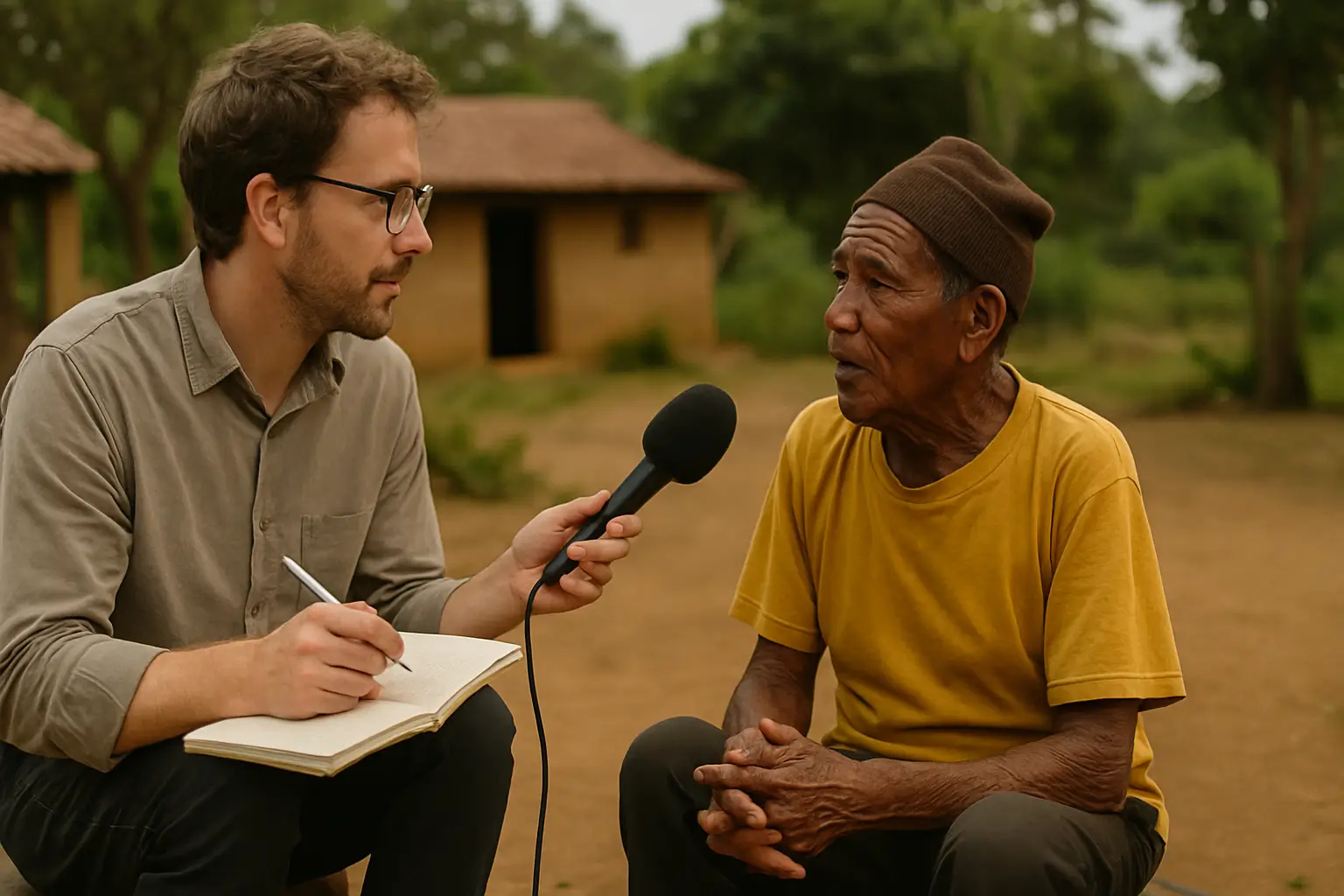
Linguists spend time within the community, observing natural speech and everyday interactions.
Through participant observation, taking part in daily activities, conversations and cultural events. They gain an authentic understanding of how the language functions in real contexts.
Audio and video recording
High-quality audio and video recordings provide the most reliable evidence of a language in use.
They capture pronunciation, tone, gesture and conversational flow. Allowing linguists to analyse subtle features that might otherwise be missed.
These recordings form the foundation for later transcription, translation and archiving.
Transcription and translation methods
Once recordings are collected, linguists transcribe the speech. They often use the International Phonetic Alphabet to represent sounds accurately.
They then translate and annotate these texts. Not only that, but they add cultural notes, grammatical explanations and contextual details.
This creates a detailed, searchable record that other researchers can use. Community members can use it too.
Elicitation techniques
Elicitation is a key technique in language documentation. Helping linguists gather precise information that may not appear naturally in everyday conversation
It complements spontaneous speech data and fills important gaps. It helps create an understanding a language’s structure.
- Asking speakers targeted questions to uncover features such as:
- verb conjugations
- noun classes
- word order
- vocabulary sets
- Using picture prompts, storyboards or structured questionnaires to guide responses
- Combining elicited material with natural speech data to create a more complete and accurate description of the language
Tools for Language Documentation
Modern language documentation relies on a mix of digital tools and specialised equipment. All this helps linguists capture, analyse and store linguistic data efficiently.
These tools improve accuracy, streamline workflows and ensure that documentation is preserved for long-term access.
Software for transcription and analysis
Linguists use dedicated software to transcribe, annotate and analyse recordings. Popular programmes such as:
- ELAN
- Praat
- FLEx
They allow researchers to segment audio, add translations, mark grammatical features and build searchable datasets.
Recording devices and technology
High-quality audio recorders, microphones and portable cameras. They are essential for capturing clear speech and visual context.
Noise-reducing microphones and lightweight field recorders. They help ensure that even subtle sounds are documented.
Video adds valuable cues such as gesture, facial expression and interaction.
Online databases and repositories
Once materials are collected, they are often stored in digital archives like:
These repositories preserve recordings, transcriptions and metadata. While providing controlled access for researchers and community members.
They ensure language materials remain safe, searchable and usable for decades.
Mobile applications for fieldwork
Mobile apps have become useful for quick data collection and organisation in the field.
Tools like:
- Aikuma
- SayMore Mobile
- custom-built survey appsThey allow linguists to record speech, tag metadata, manage word lists and share files directly from a smartphone.
Their portability makes them ideal for remote or fast-paced field situations.
Ethical Considerations in Language Documentation
Ethics sit at the heart of language documentation.
Languages belong to the communities who speak them. Linguists must ensure that their work is transparent, respectful and aligned with local expectations.
Good documentation is not only accurate. It is collaborative and responsible.
Informed consent and community involvement
Linguists must get clear, informed consent before recording or sharing any linguistic material.
This means explaining the project’s goals, how the data will be used and who will have access.
Collaborative approaches, where community members help shape the direction and purpose of the work, strengthen trust and ensure the outcomes are beneficial.
Respecting cultural sensitivities
Every language carries cultural practices, taboos and knowledge that may must careful handling. Some stories, songs or rituals may be restricted or sacred.
Linguists need to understand and respect these boundaries. Adapting their methods when necessary and ensuring no material is recorded or published against community wishes.
Ownership and access to language data
Language data ultimately belongs to the community.
Ethical documentation ensures that speakers keep ownership. They control how their linguistic materials are stored, shared and used.
This may involve community-specific access permissions, shared copyright, or returning copies of recordings. It includes resources to local archives, schools or cultural institutions.
Collaborating with Language Communities
Strong collaboration with language communities is essential for meaningful, accurate and ethical documentation.
When linguists work alongside speakers, not as participants but as partners. The resulting records are richer. More grounded and more beneficial for long-term preservation.
Building trust and rapport
Effective documentation begins with relationships.
Linguists spend time getting to know community members. Participating in local activities and demonstrating genuine respect for cultural practices.
Trust encourages natural speech, open communication and long-term cooperation.
Engaging community members in the documentation process
Involving speakers in planning, recording, and decision-making. It ensures that the documentation reflects community priorities.
This can include choosing which stories to record, advising on sensitive material or helping define how the final materials will be used.
Community involvement leads to more accurate and meaningful outcomes.
Training local speakers as co-researchers
Empowering local speakers to take on research roles strengthens the documentation. It also shows the community’s ability to preserve its language.
Linguists may provide training in recording techniques, transcription, metadata collection or archiving. This shared expertise helps create sustainable language preservation efforts beyond the duration of a single project.
Challenges in Language Documentation
Documenting a language is rarely straightforward.
Linguists often work in complex social, cultural and logistical environments. The urgency of global language loss adds pressure.
These challenges shape how documentation is planned, carried out and sustained.
Language endangerment and extinction
Many languages have only a handful of fluent speakers left, often elderly.
This creates time-sensitive conditions: once speakers pass away, irreplaceable knowledge is lost.
Endangerment also affects language use. Younger generations may shift toward dominant languages. Reducing opportunities to record natural speech.
Limited resources and funding
Language documentation projects often operate with minimal financial support.
Fieldwork can be costly. Equipment needs regular updating. Long-term archiving requires stable infrastructure.
Limited funding restricts how much data can be collected and how communities can be involved.
Navigating linguistic diversity and variation
Languages are rarely uniform.
Dialects, speech styles, age differences and even individual variation can complicate documentation.
Linguists must decide how to represent this diversity while still creating clear, usable records. Balancing accuracy with practicality is an ongoing challenge.
Best Practices for Effective Documentation
High-quality language documentation depends on consistency, clarity and thoughtful planning.
Established best practices can help produce reliable records. Those that serve both academic goals and community needs.
Comprehensive planning and preparation
Effective projects begin long before any recording takes place.
Linguists outline their goals, identify key speakers, prepare ethical agreements. They gather the right equipment.
Once this is done, good planning will then help expect challenges. They streamline fieldwork and ensure that the documentation reflects community priorities.
Maintaining detailed records and metadata
Accurate metadata, includes:
- speaker information
- recording conditions
- Locations
- cultural context
Detailed notes make recordings meaningful, searchable and usable. Especially for future researchers and community members. Consistency in file naming and organisation also ensures long-term accessibility.
Regularly updating and sharing findings
Linguistic documentation is an ongoing process, and will continue to be updated and changed.
Linguists review, refine and expand their materials as new data emerges.
Sharing findings with communities, archives and fellow researchers keeps the work transparent. It helps support revitalisation, education and future linguistic studies.
Case Studies of Successful Language Documentation
Examining real-world documentation projects shows how powerful the process can be. For both linguistic research and community revitalisation.
These examples highlight what effective collaboration, careful planning and long-term commitment can achieve.
Examples of documented languages
Successful projects span many regions and language types.
- For instance, the documentation of Kusunda in Nepal. This captured the speech of one of the last fluent speakers. Preserving an unusual language isolate.
- The Warlpiri project in Australia created extensive multimedia archives. This now supports education and cultural programmes.
- Work on Hawaiian helped build modern teaching materials. This contributed to increased fluency among younger generations.
Impact on language preservation and revitalisation
Linguistic documenting can benefit in many ways. Clear audio and video recordings support classroom teaching. While dictionaries and grammars help create new learning resources.
Some communities have used documented materials to revive traditional songs, ceremonies and storytelling.
In several cases, documentation has strengthened cultural identity. It has motivated younger generations to reconnect with their heritage.
Lessons learned from successful projects
Across these projects, certain principles emerge:
- collaboration with communities leads to stronger, more meaningful outcomes
- comprehensive, high-quality data creates long-term value
- training local speakers ensures sustainability beyond the research phase
- ethical, transparent communication builds trust and avoids cultural harm
These lessons prove that successful documentation is not only about capturing language. It’s about empowering the people who speak it.