
|
Getting your Trinity Audio player ready...
|
TL;DR: Breton is a Celtic language of Brittany that was heavily suppressed under French nationalism, leading to a dramatic decline in speakers. Today, thanks to education, cultural activism and renewed pride, it survives in a fragile but determined revival
Breton is a Celtic language spoken in western France. not in Ireland or Scotland, but in Brittany.
Once the everyday voice of the region, it was later suppressed by policies that punished children for speaking it. It pushed French as the only “proper” language.
Yet Breton never vanished. It survived in homes, songs and community life.
Today, it remains a powerful reminder that even when a language is silenced. It does not easily disappear.
What is the Breton language?
Breton is a Celtic language spoken in Brittany, in the northwest of France. Despite being in France, it is not a Romance language like French. It belongs to the Brythonic branch of the Celtic language family, alongside Welsh and Cornish.
It arrived in Brittany between the 4th and 6th centuries. Brought by migrants from Britain fleeing Anglo-Saxon invasions.
Over time, it developed into its own distinct language with regional dialects, rich oral traditions, and a strong cultural identity.
Breton has its own grammar, vocabulary and pronunciation, quite different from French. For example:
- “Yes” can be expressed by repeating the verb (like Welsh).
- It uses initial consonant mutations (a common Celtic feature).
- Many everyday words have clear Celtic roots rather than Latin ones.
Importance of language in cultural identity
Language is more than a tool for communication. It carries history, memory, humour, belief systems and ways of seeing the world.
When a community speaks its own language, it is not just sharing words. It is expressing identity.
Why language matters for cultural identity:
- Preserves history and memory. Oral traditions, stories, and historical knowledge are passed down through language.
- Shapes worldview: The structure and vocabulary of a language influence how people describe nature, time, relationships and values.
- Strengthens community bonds: Shared language creates a sense of belonging and mutual understanding.
- Carries traditions and rituals: Songs, ceremonies, prayers and folklore. They often lose depth when separated from their original language.
- Builds intergenerational connection: Language links grandparents, parents and children through shared expression.
- Symbolises resilience: For many communities, maintaining their language is an act of cultural survival.
Historical Background of Breton
Breton’s story is one of movement, survival and adaptation. It did not originate in France at all, but across the Channel.
Over centuries, it evolved, connected with neighbouring cultures, and became the defining voice of Brittany. Understanding its history helps explain why it remains such a powerful symbol of identity today.
Origins and development of the Breton language
Breton emerged between the 4th and 6th centuries. Brittonic-speaking communities from southwestern Britain migrated to Armorica (modern-day Brittany). They brought their language with them, laying the foundations for what would become Breton.
Over time, Breton developed into a distinct language shaped by local life, contact with Latin, and later interaction with French.
It split into regional dialects, including Leon, Cornouaille, Trégor and Vannetais. Each has its own pronunciation and vocabulary quirks.
Connection to other Celtic languages
Breton belongs to the Brythonic branch of the Celtic family. Its closest relatives are Welsh and Cornish.
This shared ancestry shows up in grammar and sound patterns. Like Welsh, Breton uses initial consonant mutations, and many basic words have clear Celtic roots.
For example, the word for “head” in Breton (penn) resembles Welsh (pen).
Breton, Welsh and Cornish once formed a continuum of related speech across Britain and Brittany.
The role of Breton in medieval Brittany
In medieval Brittany, Breton was not a marginal language. It was the language of everyday life for much of the population and played a central role in regional identity.
Breton was used in oral storytelling, poetry and religious instruction. While Latin dominated official church and administrative documents, Breton thrived in spoken culture.
Medieval Breton literature, including saints’ lives and devotional texts. It shows that it was not a peasant tongue but a language capable of complex expression.
The Rise of French Nationalism
By the late 18th century, France was transforming. The French Revolution did not just reshape politics. It reshaped identity.
A new idea took hold: one nation, one people, one language. In that vision, regional languages like Breton were no longer cultural treasures. They were obstacles.
The impact of the French Revolution on regional languages
Before the Revolution, France was diverse. Large parts of the population did not speak French as their first language. Breton, Occitan, Basque, Alsatian and many others were the everyday voices of millions.
Revolutionary leaders believed linguistic unity was essential for political unity. If citizens were to understand laws, rights and republican ideals, they needed a common language
French became the language of citizenship. Regional languages were labelled patois. A term suggesting something inferior or backward.
Policies aimed at promoting French over regional languages
Throughout the 19th and early 20th centuries, the French state intensified its efforts to spread French nationwide.
Compulsory schooling became a key tool. Children were educated only in French, and in many schools. They were punished for speaking Breton.
Some were forced to wear symbols of shame if caught using their native language. The message was clear: French meant progress; Breton meant regression.
The perception of Breton as a threat to national unity
Breton was not merely seen as different. It was framed as dangerous. Authorities feared that strong regional identities might weaken loyalty to the French Republic.
In border regions and distinct areas like Brittany, language was associated with local autonomy, religion and tradition.
For centralised governments seeking uniformity, that diversity appeared destabilising.
Suppression of the Breton Language
Breton did not decline naturally. Its fall was accelerated by deliberate political and social pressure.
Across the 19th and 20th centuries, state policy, social stigma and institutional control pushed the language out of public life and into silence.
Educational policies and the banning of Breton in schools
Schools became the frontline of language suppression.
Under the French education reforms of the late 19th century, French was imposed as the sole language of instruction.
Children caught speaking Breton in the playground were punished, humiliated or made examples of. n some schools, pupils had to wear a token of shame if heard using Breton. Passing it on to the next child who “offended.”
The aim was not bilingualism. It was replacement.
Cultural repression and the decline of Breton speakers
As French became associated with education, employment and progress. Breton was portrayed as rural, old-fashioned and even embarrassing.
Public administration operated exclusively in French.
Media and official documents excluded Breton. Urbanisation and migration further accelerated language shift, especially after the Second World War.
By the mid-20th century, many parents stopped teaching Breton to their children. Not because they did not value it, but because they believed it would hold them back.
The role of the Church in language suppression
The Church’s role was complex.
Historically, Breton had been widely used in religious instruction, sermons and devotional life. For centuries, clergy relied on Breton to communicate with rural populations.
However, as the French state expanded and centralised authority, parts of the clergy aligned more closely with French-language norms.
Religious education increasingly shifted towards French, especially as schooling became secularised and standardised.
Modern-Day Breton: Current Status
Breton is no longer the everyday majority language of Brittany but it is far from extinct.
Today, it exists in a fragile but determined space: spoken mainly by older generations. Yet increasingly championed by young activists, teachers and learners who refuse to let it disappear.
Statistics on Breton speakers today
Estimates suggest there are around 200,000–250,000 speakers of Breton, though the vast majority are over the age of 60.
Fluent daily use has declined since the mid-20th century. When speaker numbers were significantly higher.
Encouragingly, thousands of children now learn Breton in bilingual and immersion schools. Particularly through the Diwan network.
While they may not always grow up in fully Breton-speaking households, these new learners represent a crucial lifeline for the language.
The impact of globalisation and urbanisation
Globalisation has reshaped linguistic landscapes everywhere, and Brittany is no exception.
Urbanisation pulled younger generations into French-speaking cities, where Breton had little public presence. National media, higher education and employment markets reinforced French as the language of opportunity.
At the same time, global culture, English-language media, digital platforms and international mobility added another dominant layer.
For minority languages like Breton, competing in a world of globalised communication is difficult.
The role of technology and social media in language preservation
Where earlier generations were punished for speaking Breton, today’s speakers can share it online.
Breton-language radio, podcasts and YouTube channels provide accessible content.
Social media platforms allow speakers and learners to connect, practise and promote the language beyond geographic boundaries.
Apps, online dictionaries and digital courses make learning Breton easier than ever before.
Government and Institutional Support
For much of modern history, Breton faced institutional resistance
Today, the landscape looks different. While challenges remain, public authorities and cultural bodies now play an active role in supporting the language.
Revival is no longer just grassroots; it has institutional backing.
Recent policies aimed at revitalising Breton
In recent decades, attitudes have shifted from rejection to cautious recognition.
- Official recognition at regional level: Breton is acknowledged as a regional language of Brittany.
- Language planning initiatives: Strategic plans aim to increase speaker numbers and daily usage.
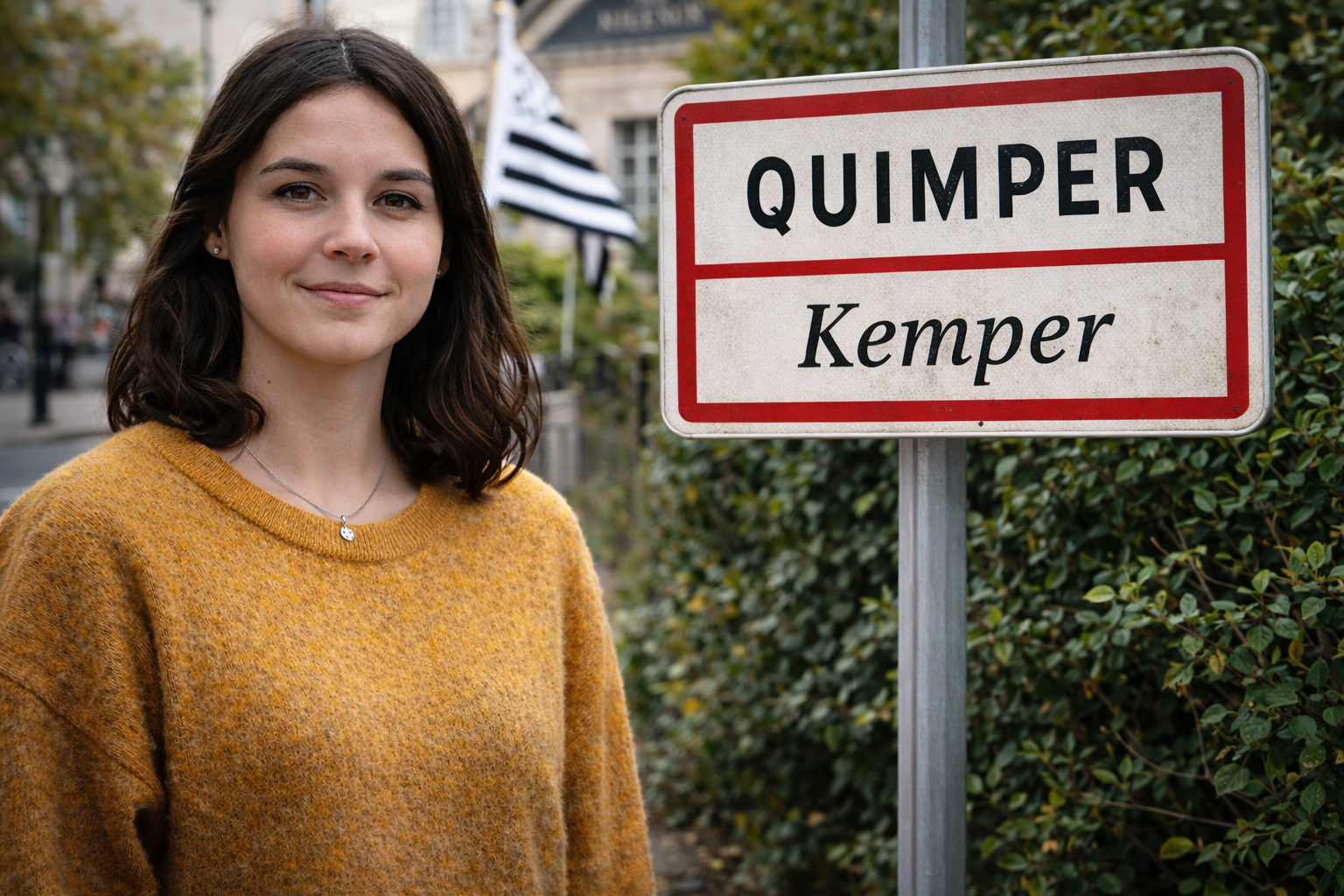
- Public visibility measures: Bilingual road signs and public information in Breton and French.
- Funding for cultural projects: Support for Breton-language media, publishing and events.
- Advocacy for stronger legal protection: Ongoing debates about expanding constitutional recognition of regional languages.
While Breton does not have full national co-official status, policy momentum has moved towards preservation rather than eradication.
The role of regional governments and cultural organisations
Local institutions have become key drivers of revival.
- Regional Council of Brittany initiatives: Funding language campaigns and educational development.
- Cultural associations: Community-led organisations promoting music, literature and public events in Breton.
- Media support: Breton-language radio stations and programming supported by regional bodies.
- Standardisation efforts: Linguistic organisations working on modern vocabulary and unified spelling.
- Public awareness campaigns: Promoting Breton as part of Brittany’s contemporary identity.
Educational programmes and bilingual schools
Education is at the heart of revitalisation.
- Diwan immersion schools: Breton-medium education from early childhood.
- Public bilingual streams: State schools offering Breton–French bilingual programmes.
- Teacher training initiatives: Expanding the number of qualified Breton-speaking educators.
- Adult learning courses: Evening classes and community programmes for new learners.
- University-level study: Academic research and degree programmes in Breton language and culture.
For the first time in generations, children are growing up literate in Breton. Education cannot undo the past, but it can shape the future.
The Global Perspective on Minority Languages
Breton’s story is not unique. Across the world, minority languages have faced pressure from centralised states, dominant national languages and global cultural forces.
Some have vanished. Others are fighting back. Looking beyond Brittany helps us understand both the risks and the possibilities.
Comparison with other minority languages facing similar challenges
From Europe to the Americas to Asia, many languages share a familiar pattern: suppression, decline, and revival efforts.
Languages such as Welsh, Irish, Basque and Māori have all experienced periods of state pressure or social stigma. In many cases:
- Children were discouraged or punished for speaking their native language.
- Economic opportunity became tied to the dominant national language.
- Urban migration weakened rural language strongholds.
- Speaker numbers declined sharply within just two or three generations.
Yet some of these languages have stabilised. It is even grown through strong policy support, education reform and community pride.
The importance of linguistic diversity in a globalised world
In a globalised world, dominant languages expand. English, Mandarin, Spanish and French connect billions but they also overshadow smaller tongues.
Linguistic diversity matters because:
- Languages carry unique knowledge: about ecology, medicine, history and worldview.
- They shape identity and belonging: offering communities a sense of continuity.
- They enrich global culture: through literature, music, philosophy and oral tradition.
- They expand human expression: each language offers different metaphors, sounds and structures.
Lessons learned from the Breton experience
Breton teaches several powerful lessons.
- Policy matters: government decisions can either speed up decline or support revival.
- Education is decisive: schools can silence a language, or bring it back.
- Stigma is destructive: once a language is framed as inferior, families stop transmitting it.
- Revival is possible: but it takes visibility, pride and long-term planning.
Perhaps the most important lesson is this: language loss is rarely accidental. It is shaped by power, perception and policy. And because it is shaped by choices, it can also be changed by them.
The Future of the Breton Language
Breton stands at a crossroads. It is no longer being actively suppressed, yet it remains fragile. Its future will not be decided by history alone, but by the choices made today, in classrooms, homes, media and policy. The next few decades will be critical.
Challenges ahead for the Breton language
Despite renewed interest, Breton faces serious structural hurdles.
The most pressing issue is demographics. Most fluent native speakers are elderly, and intergenerational transmission in the home is still limited.
Other key challenges include:
- Limited national legal recognition
- Shortage of qualified teachers
- Competition from French and global English
- Urban lifestyles reducing community language networks
- Perception gaps among younger families
Revival is harder than preservation. Once a language weakens, rebuilding daily use requires long-term commitment.
Opportunities for growth and revitalisation
The situation is not purely defensive. There are real opportunities for Breton to grow.
Bilingual education is expanding. Digital platforms make learning accessible worldwide. Cultural pride in Brittany has strengthened, and regional identity is celebrated rather than hidden.
Key opportunities include:
- Expanding immersion education (Diwan and bilingual streams)
- Developing modern media content in Breton
- Integrating Breton into public services and signage
- Supporting adult learners and family transmission
- Leveraging tourism and cultural branding
Breton does not need to replace French to survive. It needs stable, meaningful domains of use.
The role of younger generations in language preservation
Ultimately, the future belongs to young speakers.
When children learn Breton in school and continue using it socially, the language shifts from heritage symbol to living tool.
Teenagers using Breton online, in music or in everyday conversation normalise it in ways policy alone cannot.
Younger generations can:
- Reclaim Breton as a marker of pride, not stigma
- Use it creatively in music, film and digital spaces
- Speak it at home with future children
- Advocate for stronger institutional support
Languages survive when they are used naturally, not just protected.
Breton Language FAQs
Is Breton the same as French?
No. Breton is a Celtic language, closely related to Welsh and Cornish, while French is a Romance language derived from Latin. They belong to completely different language families and are not mutually intelligible.
How many people speak Breton today?
Estimates suggest around 200,000–250,000 people can speak Breton, though most fluent speakers are older. However, thousands of children are now learning it in bilingual and immersion schools.
Why was Breton suppressed in France?
During the rise of French nationalism, especially from the 19th century onward, the government promoted French as the single national language. Regional languages like Breton were seen as obstacles to unity and were discouraged.
Is Breton still being taught in schools?
Yes. Breton is taught in bilingual state schools and immersion schools such as the Diwan network. There are also adult classes and university programmes supporting the language.
Can Breton survive in the future?
Breton’s survival depends on continued education, daily use and support from younger generations. While it faces challenges, active revitalisation efforts give it a realistic chance of long-term survival.