
|
Getting your Trinity Audio player ready...
|
TL;DR: Aore is a small Oceanic language connected to Aore Island in Vanuatu. Like many Pacific languages, it reflects the region’s cultural traditions, community identity, and deep connection to the environment. Although influenced by larger languages such as Bislama, English, and French, efforts from communities and documentation help support its preservation and awareness.
Hidden among the islands of Vanuatu in the South Pacific, Aore is a small language with a distinctive story.
Spoken by a limited community, the language reflects the deep cultural heritage and linguistic diversity that define the region.
Aore offers a glimpse into the remarkable linguistic richness of the Pacific and highlights why preserving smaller languages matters.
Geographic Context
The South Pacific is one of the most linguistically diverse regions in the world.
Among the many languages spoken across its islands is Aore, a small language connected closely to the communities and landscapes of Vanuatu.
Location of Aore in the South Pacific
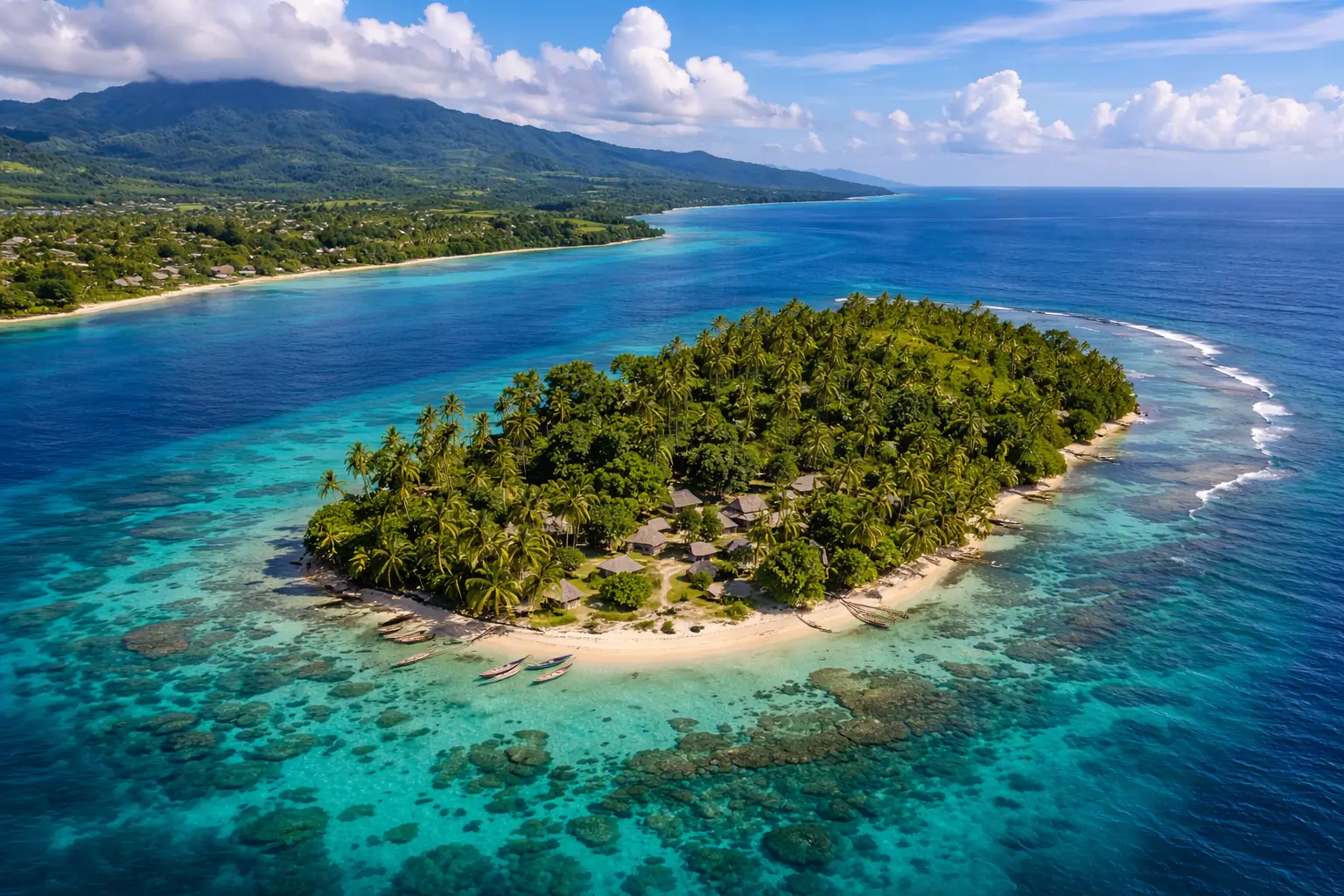
Aore is associated with Aore Island, located just off the coast of Espiritu Santo, the largest island in Vanuatu.
The country lies in the South Pacific Ocean, east of Australia and north-east of New Caledonia. Vanuatu is part of Melanesia, a region famous for its remarkable linguistic diversity.
The islands where Aore is spoken
Aore Island sits across a narrow channel from the town of Luganville on Espiritu Santo.
Although small, the island has long been connected to nearby communities through travel, trade, and shared traditions.
Like many Pacific languages, Aore developed within small island communities shaped by close social ties.
Cultural significance of the region
The islands of Vanuatu have strong traditions of storytelling, ceremony, music, and oral history.
Languages like Aore help preserve this knowledge by passing cultural practices and community values from one generation to the next. Even smaller languages play an important role in maintaining the region’s cultural identity.
Historical Background
Small island communities in the Pacific developed Aore within environments where language, culture, and daily life remained closely connected.
Its history reflects centuries of local tradition alongside more recent influences from colonial contact and global communication.
Origins of the Aore language
Aore belongs to the Austronesian language family. A large group of languages spoken across the Pacific and parts of Southeast Asia.
These languages spread across the region thousands of years ago through seafaring communities who settled the islands. Local communities developed their own distinct languages and dialects, including Aore.
Influence of colonisation and globalisation
European contact brought significant changes to the region.
Britain and France jointly governed Vanuatu during the colonial period and introduced languages such as English and French.
Later, Bislama, a widely used creole language in Vanuatu, became an important lingua franca, sometimes reducing the everyday use of smaller local languages.
Historical interactions with other languages
Communities in Vanuatu have long interacted through trade, migration, and marriage between islands.
These connections encouraged linguistic exchange, with neighbouring languages influencing vocabulary, pronunciation, and communication patterns. Aore developed within a multilingual environment typical of many Pacific island societies.
Linguistic Features
Like many languages of Vanuatu, Aore reflects the rich linguistic diversity of the South Pacific.
Its sounds, grammar, and vocabulary developed within a small island community where language is closely tied to everyday life, social relationships, and the surrounding environment.
Phonetics and phonology of Aore
Aore uses a relatively small set of consonants and vowels, a feature common in many Austronesian languages.
Speakers build words from simple syllable patterns, which gives the language a rhythmic and clear pronunciation.
Stress and vowel length can influence meaning, and many words flow naturally in spoken conversation.
Unique grammatical structures
Aore grammar focuses strongly on context rather than complex word endings.
Word order and particles help indicate tense, relationships, and emphasis.
Like many Pacific languages, it may also use inclusive and exclusive forms of “we,” allowing speakers to distinguish whether the listener is included in the group being referred to.
Vocabulary highlights and interesting expressions
Much of the Aore vocabulary reflects the island environment and daily community life.
Words related to the sea, land, weather, and family relationships are particularly important.
As with many small languages, expressions often carry cultural meaning that goes beyond direct translation, reflecting local traditions and shared knowledge.
Cultural Significance
In many Pacific island communities, language is deeply connected to culture, identity, and shared history.
The Aore language forms part of this cultural foundation, helping preserve traditions, social relationships, and knowledge passed down through generations.
Role of Aore in local traditions and customs
Languages like Aore are often used in storytelling, ceremonies, and everyday village life. Oral traditions remain an important way of sharing knowledge about history, family heritage, and the natural world.
Examples of how language is used in cultural traditions include:
- Traditional storytelling where elders share legends about ancestors, the sea, and island life.
- Ceremonial speech during community gatherings, marriages, or important cultural events.
- Songs and chants used in celebrations or cultural performances that preserve historical stories and values.
Connection between language and identity
For many communities in Vanuatu, language is a strong marker of local identity and belonging. Speaking a local language often reflects a person’s connection to their island, family lineage, and cultural heritage.
For example:
- People may identify themselves by the language they speak or the village they come from.
- Language helps reinforce community bonds and shared traditions.
- Local languages often carry knowledge about land, fishing areas, and natural resources that have been developed over generations.
Examples of cultural expressions in Aore
Although detailed documentation of Aore expressions is limited, many Pacific languages share similar types of cultural phrases and concepts.
Examples of culturally meaningful expressions may include:
Greetings focused on well-being
- Expressions equivalent to “peace to you” or “are you well?”, which emphasise community care and respect.
References to nature
- Phrases describing the sea, weather, or land, often used in everyday conversation and storytelling.
Collective community values
- Expressions highlighting cooperation, sharing, and family responsibility, reflecting the communal nature of island life.
Current Status
Like many small languages of the South Pacific, Aore exists within a multilingual environment where several languages are spoken side by side.
While local languages remain important to cultural identity, changing social and economic conditions have influenced how frequently they are used in everyday life.
Number of speakers and demographic trends
Precise data on the number of Aore speakers is limited, as smaller Pacific languages are not always well documented in national surveys.
However, languages spoken in small island communities like Aore are typically used by relatively small populations within local villages and nearby areas of Espiritu Santo.
In many cases:
- Older generations are the most fluent speakers.
- Younger people often grow up speaking multiple languages, including local languages and regional lingua francas.
- Migration to towns such as Luganville can reduce daily use of smaller languages.
Factors contributing to language vitality or endangerment
Several factors influence whether smaller languages like Aore remain strong or begin to decline.
Key influences include:
- Use of Bislama, the national creole language of Vanuatu, for communication between different communities.
- Education systems that often prioritise English or French.
- Urban migration, where younger generations may rely more on widely spoken languages.
- Globalisation and media, which increase exposure to dominant languages.
Efforts to preserve and promote Aore
Across Vanuatu, there has been growing recognition of the importance of protecting local languages and cultural heritage.
Efforts that support smaller languages include:
- Linguistic documentation by researchers who record vocabulary, stories, and pronunciation.
- Community storytelling and cultural activities that encourage younger generations to learn traditional languages.
- Educational programmes in some areas that promote local languages alongside national languages.
- Cultural preservation initiatives led by local communities and organisations.
Comparison with Other Languages
The islands of Vanuatu are among the most linguistically diverse places on Earth, with more than 100 languages spoken across the archipelago.
In this multilingual environment, languages like Aore exist alongside many neighbouring Oceanic languages, often sharing certain features while maintaining their own distinct identity.
Similarities and differences with neighbouring languages
Aore belongs to the broader Oceanic branch of the Austronesian language family, which includes many languages spoken across Vanuatu and the wider Pacific.
This shared origin ensures Aore likely has several similarities with nearby languages.
Common similarities include:
- Simple syllable structures, often using consonant–vowel patterns.
- Small vowel systems are usually based on five main vowel sounds.
- Inclusive and exclusive forms of “we”, which distinguish whether the listener is included.
- Strong oral traditions, where storytelling plays a central role.
Influence of other languages on Aore
Like many languages in Vanuatu, Aore exists within a multilingual society. Speakers often use several languages depending on the situation.
Languages that commonly influence local languages include:
- Bislama: the national lingua franca used for communication between communities.
- English: widely used in education, government, and international communication.
- French: another official language introduced during the colonial period.
Unique aspects that set Aore apart
Despite sharing characteristics with other Oceanic languages, Aore remains unique because it developed within a specific island community and cultural environment.
Distinctive aspects may include:
- Vocabulary tied to local geography, such as words describing reefs, forests, or island landscapes.
- Local storytelling traditions, where language preserves community history and myths.
- Pronunciation patterns or expressions specific to speakers from the Aore Island area.
Language Learning Resources
Aore is a small, locally spoken language, so educators and linguists have created fewer learning resources than for widely spoken global languages.
However, linguists, cultural organisations, and local communities in Vanuatu continue to document and preserve many of the country’s indigenous language.
Availability of learning materials for Aore
Formal textbooks or courses specifically for Aore are rare. Most available materials come from linguistic documentation, research papers, and cultural studies focusing on the languages of Vanuatu.
Examples of useful learning materials include:
- Linguistic fieldwork recordings documenting pronunciation and vocabulary.
- Academic papers and dictionaries related to Vanuatu’s Oceanic languages.
- Language documentation projects that record stories, conversations, and traditional knowledge.
Community initiatives for language education
Across Vanuatu, many communities are working to preserve local languages through cultural education and intergenerational learning.
Examples include:
- Community storytelling sessions, where elders share traditional stories with younger generations.
- Cultural festivals and events that promote local languages through music, dance, and storytelling.
- Village-based teaching, where children learn their heritage language from family members and community leaders.
Online resources and language apps
Although there are few dedicated apps for Aore itself, several online platforms provide information about Vanuatu languages and Pacific linguistics.
Examples include:
- The Endangered Languages Project, which documents lesser-known languages worldwide
- Academic language databases that include linguistic descriptions of Pacific languages
- University research archives containing recordings, dictionaries, and linguistic studies
The Future of the Aore Language
Younger generations will determine the future of Aore by continuing to speak and value the language.
Like many small languages of the South Pacific, Aore survives through strong community engagement, cultural pride, and the growing use of technology for language preservation.
Predictions for the language’s survival
Small languages can survive for generations when they remain part of daily life within families and communities.
However, increasing use of dominant languages such as Bislama, English, and French can reduce opportunities for younger speakers to use smaller local languages regularly.
Possible future outcomes include:
- Continued use within families and villages, allowing the language to remain active in the community
- Gradual decline if younger generations shift mainly to larger languages
- Revitalisation efforts, where communities actively promote learning and cultural use of the language
Role of technology in language preservation
Technology has already became an important tool in preserving smaller languages around the world.
Recording and sharing language data can help protect linguistic knowledge even when the number of speakers is small.
Examples of technological support include:
- Audio and video recordings of native speakers
- Digital dictionaries and vocabulary databases
- Online archives and linguistic research collections
- Educational content shared through websites and social media
Aore Language FAQs
What is the Aore language?
People on Aore Island in Vanuatu speak Aore, a small Oceanic language of the South Pacific. It belongs to the Austronesian language family and reflects the cultural traditions and island life of the communities in the Espiritu Santo region.
Where is the Aore language spoken?
Communities on Aore Island, located just off the coast of Espiritu Santo in Vanuatu, speak the Aore language. The area lies in Melanesia, a region known for its remarkable linguistic diversity and large number of locally spoken languages.
Is the Aore language endangered?
Like many small island languages, Aore may face challenges due to the widespread use of Bislama, English, and French in education, government, and regional communication. When younger generations use these larger languages more often, smaller languages can become less commonly spoken.
Why is the Aore language culturally important?
Aore carries cultural knowledge about local traditions, community life, and the natural environment. Through storytelling, ceremonies, and everyday communication, the language helps preserve cultural identity and shared history within the community.
Can people learn the Aore language online?
Researchers and language documentation projects provide limited information about Aore through linguistic studies and academic databases focused on the languages of Vanuatu and the South Pacific.