
|
Getting your Trinity Audio player ready...
|
TL;DR: Burushaski is a rare language isolate spoken in northern Pakistan. It has no proven relatives, making it one of the world’s great linguistic mysteries. Despite pressure from larger languages like Urdu and English, Burushaski remains a powerful marker of Burusho identity, culture, and history. Its future depends on whether younger generations keep speaking it.
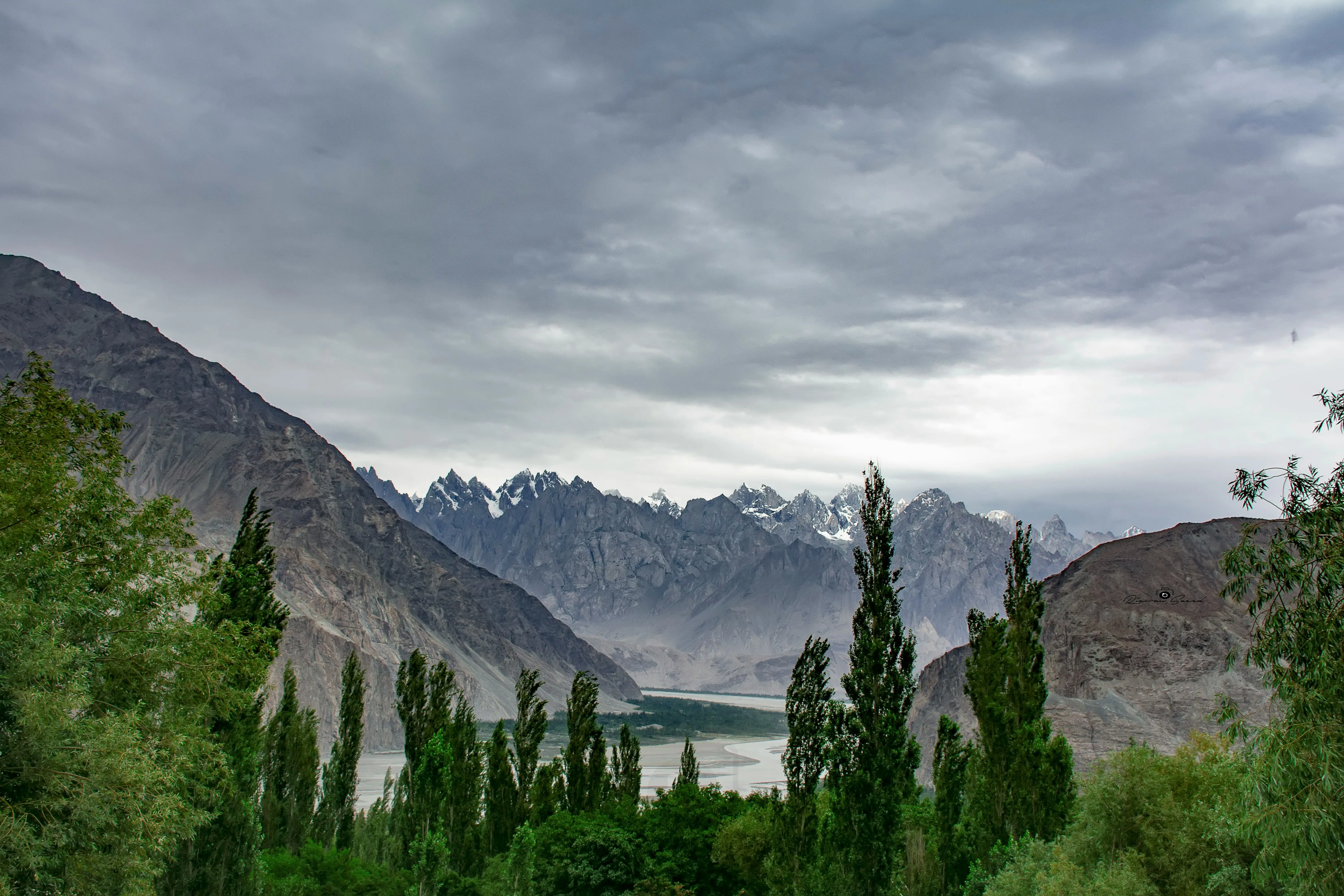
High in the mountains of northern Pakistan, there is a language that has puzzled linguists for generations: Burushaski.
Spoken in the Hunza, Nagar, and Yasin valleys, Burushaski is unlike the surrounding languages. It has no proven relatives, no clear linguistic family, and no easy place on the language map.
That is what makes it so fascinating.
More than a mystery, Burushaski is a living part of Himalayan identity, a language shaped by mountains, memory, and survival.
Burushaski language as an isolate
Burushaski is often described as a language isolate, which means it has no proven connection to any known language family.
This is what makes it so unusual. Many languages can be linked to wider groups, such as Indo-European, Turkic, or Sino-Tibetan. Burushaski, however, stands apart. Despite being surrounded by languages with traceable roots, it has not been convincingly shown to belong to any of them.
For now, Burushaski remains one of the world’s most fascinating linguistic mysteries: a language with deep regional roots, but no confirmed relatives.
Importance of studying unique languages
Studying unique languages like Burushaski helps us understand how diverse human language can be.
When a language has no proven relatives, it gives linguists a rare chance to study grammar, vocabulary, sounds, and meaning without fitting everything into an existing language family. This can reveal patterns that challenge what we think we know about how languages develop.
Unique languages also preserve cultural knowledge. They carry local history, oral traditions, place names, humour, identity, and ways of seeing the world that may not exist in the same form anywhere else.
Historical Background
Burushaski has a long and fascinating history, but much of it remains uncertain.
The language has no proven relatives; it is difficult to trace its development in the same way as languages from larger families.
This mystery is one of the reasons Burushaski continues to attract attention from linguists and researchers.
Origins of the Burushaski language
The exact origins of Burushaski are unknown. It is often described as a language isolate, meaning it has not been convincingly linked to any other language family.
Some researchers have suggested possible connections with other ancient or regional languages, but none of these theories has been widely accepted.
As a result, Burushaski is often seen as a rare linguistic survivor, a language that may preserve traces of an older linguistic landscape in the Himalayas.
Historical migration patterns of the Burushaski people
The Burusho people are mainly associated with the Hunza, Nagar, and Yasin valleys of northern Pakistan.
These mountainous areas have helped protect the language by creating natural barriers between communities. At the same time, the region has never been completely cut off.
Trade routes, migration, and contact with neighbouring groups have shaped the history of the Burusho people over time. This has allowed Burushaski to remain distinct while still absorbing outside influences.
Influence of neighbouring languages and cultures
Burushaski has been influenced by nearby languages such as Shina, Khowar, Urdu, and other regional languages. These influences are especially visible in borrowed words related to religion, trade, education, and modern life.
However, Burushaski has not simply blended into the languages around it. Its grammar and structure remain highly distinctive, which is why it continues to stand apart.
This mix of outside influence and internal strength is a key part of what makes Burushaski so important.
Linguistic Features
Burushaski is fascinating because it does not fit neatly into the patterns of surrounding languages. Its sounds, grammar, and structure make it stand out, even in a region known for linguistic diversity.
Burushaski’s unique phonetics and grammar
Burushaski has a rich sound system, with contrasts that can be difficult for outsiders to recognise at first. Like many languages of the region, it has been shaped by contact with neighbouring languages, but its deeper structure remains highly distinctive.
- Its grammar is especially interesting. Burushaski uses a complex system of noun classes, verb forms, and agreement patterns
- Verbs can carry a lot of information, including details about the subject, object, tense, and aspect.
This gives the language a layered structure that is very different from English and many widely studied European languages.
Comparison with other language families
Burushaski is surrounded by major language families, but it has not been proven to belong to any of them. This makes it difficult to classify and one of the reasons it remains so interesting to linguists.
- Indo-European languages: Nearby languages such as Urdu, Persian, and English belong to the Indo-European family, but Burushaski has no confirmed connection to them.
- Turkic languages: Some Turkic languages have influenced parts of Central and South Asian history, but Burushaski is not considered part of the Turkic family.
- Sino-Tibetan languages: Although Sino-Tibetan languages are found across parts of Asia, Burushaski has not been proven to belong to this group either.
- Dravidian languages: Some researchers have suggested possible links between Burushaski and Dravidian languages, but these ideas remain unproven.
- Local neighbouring languages: Burushaski has borrowed words from languages such as Shina, Khowar, and Urdu, but borrowing does not mean shared ancestry.
Notable linguistic characteristics that set it apart
Burushaski stands out because its structure is unusually complex and does not fit neatly into the patterns of nearby languages.
- Language isolate status: Burushaski has no proven relatives, making it difficult to place within any known language family.
- Complex noun classes: Instead of a simple masculine/feminine system, Burushaski groups nouns into several categories, including human beings, animals, objects, and abstract ideas.
- Rich verb structure: Burushaski verbs can carry a lot of information, including who is doing the action, who is receiving it, and when or how the action happens.
- Distinctive sound system: The language includes sounds and sound patterns that can be challenging for learners who are unfamiliar with the region’s languages.
- Heavy use of agreement: Words in a sentence often change depending on the noun class, number, and role of the people or objects involved.
- Strong regional identity: Its grammar and vocabulary have absorbed outside influence, but Burushaski has still kept a clear identity of its own.
Dialects of Burushaski
Burushaski is not spoken in the same way everywhere. Like many languages, it has regional varieties that reflect the history, geography, and identity of different communities.
Description of the main dialects: Northern and Southern
Burushaski is commonly divided into two main dialect groups: Northern Burushaski and Southern Burushaski.
Northern Burushaski is mainly associated with the Hunza and Nagar valleys, while Southern Burushaski is linked more closely with the Yasin valley.
These varieties are closely related, but they are not identical. Differences in pronunciation, vocabulary, and local usage give each dialect its own character.
Variations in vocabulary and pronunciation
The main differences between Burushaski dialects are often found in everyday words and pronunciation. Speakers from one valley may use slightly different terms, sounds, or expressions compared with speakers from another.
These differences do not usually make communication impossible, but they do show how the language has developed in separate mountain communities.
The geography of the region has helped preserve these local forms, allowing each dialect to maintain its own flavour.
Cultural significance of dialectal differences
Dialect differences are not just linguistic. They are also cultural. The way people speak Burushaski can reflect where they are from, their community identity, and their connection to a particular valley.
For Burusho communities, these dialects help preserve local memory, oral traditions, and a sense of belonging.
Each variety adds depth to the language as a whole, showing that Burushaski is not a single fixed form, but a living language shaped by the people and places that keep it alive.
The Role of Burushaski in Cultural Identity
Burushaski is more than a way to communicate. For its speakers, it is a marker of belonging, memory, and shared identity. It connects people to their valleys, families, traditions, and history.
How language shapes cultural identity among the Burushaski speakers
For Burushaski speakers, the language helps define who they are and where they come from.
It carries local expressions, ways of speaking, humour, values, and community knowledge that are difficult to translate fully into another language.
Speaking Burushaski can also strengthen a sense of connection between generations.
When children learn the language from parents and grandparents, they are not only learning words. They are inheriting a link to their community’s past.
Traditional practices and oral literature in Burushaski
Burushaski plays an important role in oral traditions, including stories, songs, proverbs, folk memories, and local histories. These forms of expression help preserve cultural knowledge and pass it from one generation to the next.
Traditional practices are also closely tied to language.
Ceremonies, seasonal customs, family histories, and community storytelling often carry meanings that are strongest when expressed in Burushaski. Through these traditions, the language becomes a living archive of Burusho culture.
The impact of globalisation on language preservation
Globalisation has brought new pressures to Burushaski-speaking communities. Wider use of Urdu, English, and other dominant languages can make Burushaski less visible in education, media, work, and digital spaces.
This does not mean the language is disappearing overnight, but it does create challenges. If younger generations use Burushaski less often, especially outside the home, the language may lose ground over time.
Current Status of Burushaski
Burushaski is still actively spoken, but its future faces growing pressure from larger regional and global languages.
It remains an important community language in northern Pakistan, especially in Hunza, Nagar, and Yasin, but its long-term survival depends on whether younger generations continue to use it in daily life.
Number of speakers and demographic trends
Estimates for the number of Burushaski speakers vary.
Some sources place the figure at around 90,000 speakers, while others suggest closer to 100,000–120,000 speakers, mainly in Gilgit-Baltistan, Pakistan. There are also much smaller Burushaski-speaking communities outside this core region, including in parts of Kashmir.
Many speakers also use Urdu, English, Shina, Khowar, or other regional languages, especially in education, work, media, and public life.
Challenges facing the language in the modern world
Burushaski faces many of the same pressures as other smaller languages. These include:
- Dominance of Urdu and English in education, government, media, and employment.
- Migration and urbanisation, which can reduce everyday use of the language outside traditional communities.
- Limited presence in schools, meaning children may speak Burushaski at home but study mainly in other languages.
- Low digital visibility, with fewer online resources, apps, learning tools, and media compared with larger languages.
- Generational language shift, where younger speakers may understand Burushaski but use it less often in daily communication.
Efforts for language preservation and revitalisation
Efforts to preserve Burushaski include linguistic documentation, community awareness, digital writing tools, songs, educational resources, and research into its dialects and structure.
Scholars have also studied Burushaski because of its status as a language isolate, helping to record its grammar, vocabulary, and oral traditions.
Community-led preservation is especially important. When families, schools, writers, musicians, and local organisations use Burushaski in everyday life, they help keep the language visible and meaningful.
Burushaski in the Digital Age
The digital age gives Burushaski both a challenge and an opportunity. Larger languages dominate the internet, but technology also gives smaller languages new ways to be recorded, shared, and taught.
The role of technology in language documentation
Technology plays an important role in documenting Burushaski.
Audio recordings, digital dictionaries, online archives, and video content can help preserve pronunciation, vocabulary, stories, songs, and everyday speech.
This matters because a language is not just a list of words
To preserve Burushaski properly, researchers and communities need to record how it is actually spoken: its sounds, expressions, grammar, oral traditions, and regional dialects.
Online resources and platforms for learning Burushaski
Burushaski still has far fewer online learning resources than major world languages, but useful materials do exist.
These include:
- digital dictionaries,
- research collections,
- grammar notes,
- community pages,
- videos,
- and language-related social media groups.
Resources such as online Burushaski dictionaries and digital library collections are especially valuable because they make the language searchable and easier to study.
However, Burushaski needs more accessible, beginner-friendly resources. Apps, children’s materials, YouTube lessons, podcasts, and structured online courses could all help make the language more visible and easier.
Social media’s impact on language use among younger generations
Social media can have a powerful effect on how younger speakers use Burushaski. Platforms such as Facebook, YouTube, WhatsApp, TikTok, and Instagram can give the language a place in everyday life.
When young people post, message, sing, joke, or create content in Burushaski, they help keep the language active beyond the home.
Social media can also increase pressure from dominant languages such as Urdu and English. If young speakers mostly use those languages online, Burushaski may become less common in public and digital spaces.
The future of Burushaski in the digital age depends on visibility.
Comparative Studies
Burushaski has no confirmed relatives, although it has attracted many attempts to compare it with other languages.
These studies are important, but they are also difficult. Similar words or grammar patterns can sometimes come from borrowing, contact, or coincidence rather than shared ancestry.
Research on Burushaski’s relationship with other languages
Researchers have proposed different theories about Burushaski’s origins. Some have explored possible links to Indo-European languages, while others have examined connections to older or broader language groupings.
However, none of these proposals has become the accepted view among linguists.
Burushaski is still generally treated as a language isolate, meaning its relationship to other languages remains unproven.
Insights from linguistic studies and theories
Researchers look closely at its words, sounds, pronouns, grammar, and verb patterns to see whether they reveal a hidden connection to another language family.
But this is not simple. Burushaski has existed for centuries in a multilingual region, alongside languages such as Shina, Khowar, Urdu, and Persian-influenced varieties.
That is why linguists have to be careful.
A few similar words are not enough to prove a relationship. To link Burushaski to another language family, researchers would need strong, repeated evidence across its sounds, grammar, and core vocabulary.
The significance of Burushaski in the field of linguistics
Burushaski matters because it refuses to fit neatly into the usual language family tree.
As a language isolate, it gives linguists a rare chance to study a language without a proven connection to any other known family. Its unusual grammar, complex verb system, and distinct noun classes make it especially valuable for understanding just how varied human language can be.
It also helps researchers explore bigger questions: how languages survive, how they change through contact, and how communities preserve identity across generations.
In that sense, Burushaski is not just important because it is mysterious. It is important because it shows how much of human language history is still waiting to be understood.
Future of Burushaski
The future of Burushaski is not fixed. Like many smaller languages, it faces pressure from larger languages, changing lifestyles, migration and education. But it is also still spoken, still valued, and still deeply connected to Burusho identity.
Predictions for the language’s survival and evolution
Burushaski is unlikely to disappear suddenly, especially while it remains part of family life and community identity in Hunza, Nagar, and Yasin. However, its long-term future depends on how strongly it is passed on to younger generations.
The language may also continue to change. As speakers use Urdu, English, and other regional languages alongside Burushaski, new words and expressions may enter everyday speech. This is not necessarily a sign of decline
Languages naturally evolve. The real concern is whether Burushaski remains actively used, not whether it stays unchanged.
The role of education and community initiatives
Education will play a major role in Burushaski’s future. If children only see Urdu or English as languages of learning, success, and opportunity, Burushaski may become limited to informal home use.
Community initiatives can help change this. Local classes, children’s books, songs, storytelling projects, dictionaries, digital resources, and cultural events can all make Burushaski more visible and valuable to younger speakers.
When speakers use Burushaski proudly in homes, schools, media, music, and online spaces, they give the language a future beyond documentation.
Burushaski Language FAQs
What Is Burushaski?
Burushaski is a language spoken mainly in the Hunza, Nagar, and Yasin valleys of northern Pakistan. It is best known for being a language isolate, meaning it has no proven relatives.
Where Is Burushaski Spoken?
Burushaski is mainly spoken in Gilgit-Baltistan, especially in the Hunza, Nagar, and Yasin regions. Smaller communities of speakers may also be found outside these areas.
Why Is Burushaski Considered a Language Isolate?
Burushaski is considered a language isolate because linguists have not proven that it belongs to any known language family. It has been compared with several language groups, but none of these links has been widely accepted.
Is Burushaski an Endangered Language?
Burushaski is still spoken by thousands of people, but it faces pressure from larger languages such as Urdu and English. Its future depends on whether it continues to be used by younger generations in homes, schools, and digital spaces.
Why Is Burushaski Important?
Burushaski is important because it preserves a unique part of Himalayan culture, identity, and linguistic history. Its unusual structure also helps linguists better understand the diversity of human language.