
|
Getting your Trinity Audio player ready...
|
TL;DR: The Baré language is on the brink of extinction, with few speakers left and little transmission to younger generations. Driven out by dominant languages and modern pressures, it risks taking culture and knowledge with it, unless urgent action is taken to preserve it.
Deep in the Amazon, a language is fading into silence.
The Baré language isn’t just words. It’s history, identity, and generations of knowledge rooted in the rainforest.
But today, it’s on the brink. As communities shift to dominant languages like Portuguese and Spanish, Baré is being spoken less, remembered less, and slowly lost.
This isn’t just language loss, it’s cultural erasure.
Here’s what Baré is, why it’s disappearing, and why it still matters.
Historical Background of the Baré Language
The Baré language didn’t just appear; it evolved alongside a people, a landscape, and a way of life.
Rooted in the Amazon, it reflects centuries of movement, trade, and cultural exchange. But history hasn’t been kind to it. Colonisation, language shifts, and external pressures have steadily pushed Baré to the margins.
Origins and development of the Baré language
Baré is part of the Arawakan language family, one of South America’s largest linguistic groups. It developed over generations along the Rio Negro, used daily for communication, storytelling, and survival.
But its decline began early. During colonial times, languages like Nheengatu took over as regional trade languages. Slowly, Baré speakers began switching, and the language started to fade.
The Baré people and their traditional lifestyle
The Baré people have long lived in sync with the Amazon, relying on rivers, fishing, and small-scale farming. Their knowledge of the environment was deep, and their language was how it was passed on.
Baré wasn’t just spoken. It was lived. As lifestyles changed through migration and modernisation, the language lost its place in everyday life.
Historical interactions with other tribes and external influences
The Baré regularly interacted with neighbouring tribes, sharing culture, trade, and language. These exchanges shaped Baré over time.
But the biggest impact came from outside. Colonisation introduced Portuguese and strengthened Nheengatu, often pushing endangered languages aside.
Over time, Baré was replaced, not naturally, but under pressure, accelerating its decline.
Linguistic Features of Baré
Baré isn’t just disappearing; it’s linguistically rich, with structures and sounds shaped by centuries of life in the Amazon.
Like many Indigenous languages, it encodes meaning in ways that don’t always map neatly onto English or Spanish, making it both fascinating and unique.
Phonetics and phonology
Baré has a relatively simple but distinctive sound system, with clear vowel contrasts and consonants typical of Arawakan languages
Its rhythm is smooth and flowing, often shaped by the patterns of spoken storytelling.
Subtle sound differences can change meaning, and pronunciation plays a key role in clarity. Like many endangered languages, these sounds risk being lost as fewer fluent speakers remain.
Grammar and syntax
Baré grammar is structured but flexible. It often uses prefixes and suffixes to modify meaning, rather than relying heavily on word order like English.
Verbs carry a lot of information, including tense, subject, and sometimes direction, meaning a single word can express what would take a full sentence in other languages. This makes Baré efficient, but also complex to learn without native exposure.
Unique vocabulary and expressions
Baré vocabulary is deeply tied to the natural world. There are specific terms for plants, animals, and environmental features that don’t have direct translations in global languages.
Many expressions are rooted in cultural practices, storytelling, and community life. When the language fades, these words, and the knowledge behind them, risk disappearing with it.
Current Status of the Baré Language
Baré is no longer a widely spoken, everyday language. What was once shared across communities is now fragile, with only a small number of speakers keeping it alive.
Today, its survival depends on a shrinking group, and the trends aren’t in its favour.
Number of speakers and demographic trends
The number of fluent Baré speakers is now very low, often estimated in the hundreds or fewer. Most are older adults, with little transmission to younger generations.
This age gap is critical. Without young speakers learning and using the language daily, Baré risks becoming dormant within a generation.
Geographic distribution of Baré speakers
Baré speakers mainly live along the Rio Negro region, across parts of Brazil, Venezuela, and Colombia. Communities are often remote, spread across river-based settlements.
However, migration to urban areas has reduced concentrated language use, making it harder for Baré to survive as a community language.
Factors contributing to language decline
Several forces have driven Baré’s decline. Dominant languages like Portuguese and Spanish dominate education, media, and economic life, pushing Baré aside.
Urbanisation, cultural assimilation, and limited institutional support have all played a role.
In many cases, younger generations grow up without learning Baré at all, not by choice, but by circumstance.
Cultural Significance of the Baré Language
Baré isn’t just a way to communicate; it’s a living archive of culture.
Every word carries meaning shaped by tradition, environment, and shared history. As the language fades, people lose not just speech, but identity, memory, and connection.
Role in storytelling and oral traditions
Baré has long been the language of stories. Myths, histories, and lessons passed down through generations. Oral traditions preserve knowledge that people never wrote down.
Storytelling isn’t just entertainment; it’s education, morality, and identity. When the language disappears, people lose these stories or strip them of their original meaning.
Connection to Baré identity and heritage
Language is central to who the Baré people are. It reflects how they see the world, relate to each other, and understand their place in it.
Losing the language weakens that connection. For many communities, reviving Baré isn’t just about words. It’s about reclaiming identity.
Impact on local customs and practices
Baré is embedded in daily life, from naming plants and animals to guiding rituals and traditions. It holds knowledge about the environment, survival, and cultural practices.
As the language declines, these customs become harder to maintain. What was once instinctive knowledge risks becoming forgotten history.
Threats to the Baré Language
Baré isn’t fading by accident; it’s being pushed out.
A mix of social, economic, and cultural pressures has made it harder for the language to survive in everyday life. Without intervention, these forces will continue to accelerate their decline.
Influence of globalisation and modernisation
Globalisation brings opportunity, but also pressure to conform. Portuguese and Spanish dominate education, media, and work, leaving little space for Baré.
As communities modernise, daily life shifts away from traditional settings where the language once thrived. Baré becomes less practical and less used.
Language shift among younger generations
Younger Baré generations are growing up speaking dominant languages first. In many cases, they never fully learn Baré at all.
This shift is critical. When children stop learning a language, its future becomes uncertain, no matter how strong it once was.
Socioeconomic factors affecting language use
Opportunity often shapes which languages people use. Speaking Portuguese or Spanish can mean better access to jobs, education, and mobility.
As a result, families may prioritise dominant languages over Baré. Not out of rejection, but necessity. Over time, this practical choice contributes to long-term language loss.
Efforts to Revitalise the Baré Language
Baré is endangered, but it still survives. Across the Amazon, efforts are growing to protect, document, and revive the language before it disappears.
These initiatives are often small, but they matter.
Community initiatives and grassroots movements
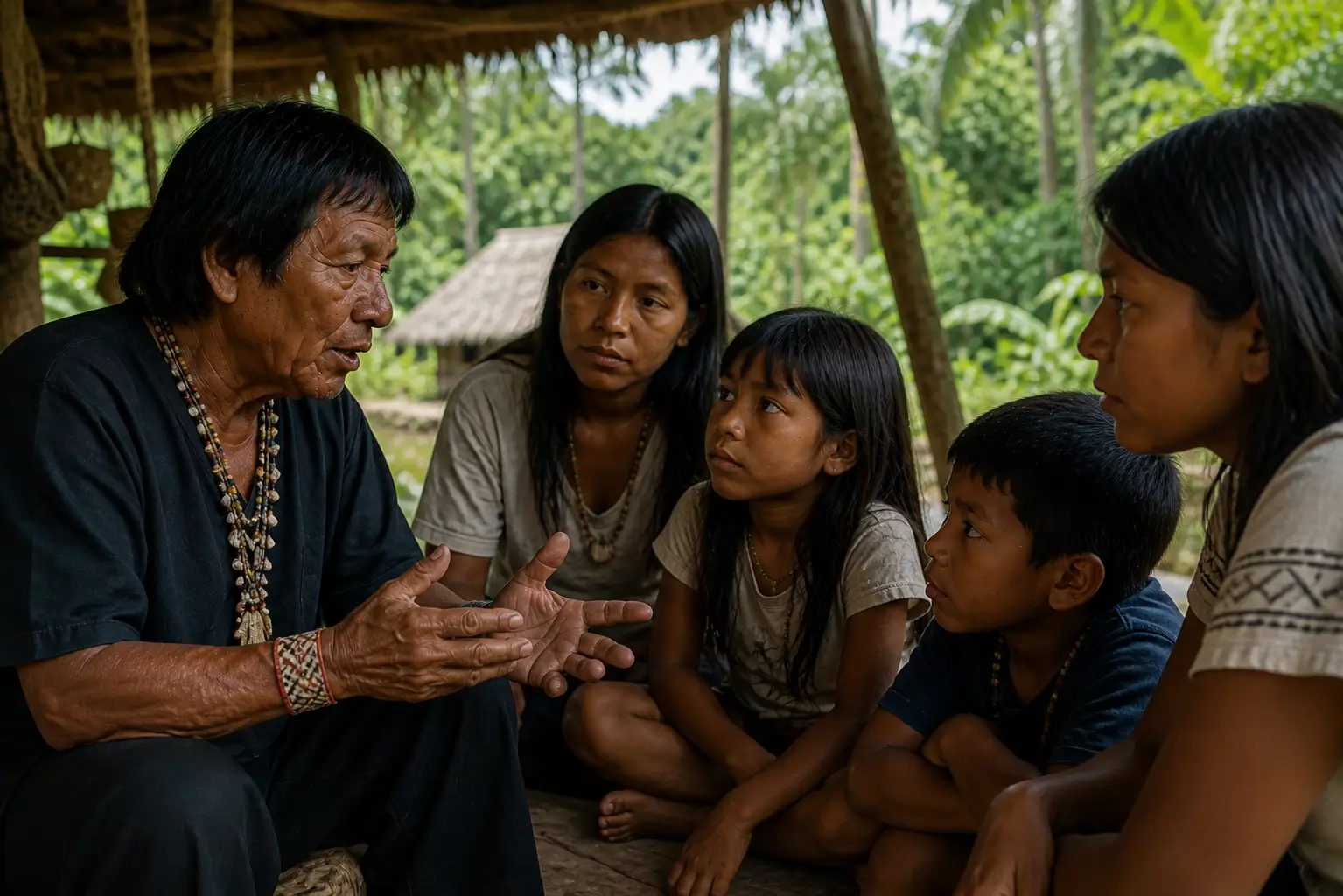
Revival starts with the people. In some Baré communities, elders are working to pass the language down through storytelling, informal teaching, and cultural activities.
These grassroots efforts are vital. Even small, local actions can keep the language alive in daily life, where it matters most.
Role of education in language preservation
Education is one of the strongest tools for language survival. Bilingual programmes and community-led teaching can help introduce Baré to younger generations.
When children learn a language in structured settings, it increases the chances of long-term use. Not just understanding, but speaking.
Collaboration with linguists and anthropologists
Researchers document Baré and help preserve it before it’s lost. Linguists and anthropologists work with communities to record vocabulary, grammar, and oral traditions.
This collaboration helps preserve the language in written and digital form, creating resources that future generations can learn from, even if fluent speakers become rare
How to Support the Baré Language
Saving a language doesn’t just happen in classrooms or research labs.
It happens through awareness, respect, and action. Even from a distance, there are real ways to support Baré and the people keeping it alive.
Raising awareness through social media and campaigns
Visibility matters. Sharing content about endangered languages, including Baré, helps bring attention to a crisis many people don’t even know exists.
Social media, blogs, and campaigns can amplify voices from within the community, turning a local issue into a global conversation.
Supporting indigenous rights and cultural preservation
Language survival is closely tied to the protection of rights. Supporting organisations that protect Indigenous land, culture, and autonomy helps create the conditions where languages like Baré can thrive.
Supporting communities helps their languages survive alongside them.
Engaging with Baré communities and initiatives
Direct engagement has the biggest impact. This can mean supporting community-led projects, donating to initiatives, or simply learning and sharing accurate information.
The key is respect. Real support means listening to Baré voices and backing efforts that come from within the community, not imposing solutions from the outside.
Baré Language FAQs
What is the Baré language?
The Baré language is an Indigenous Amazonian language from the Arawakan family, traditionally spoken by the Baré people along the Rio Negro region in Brazil, Venezuela, and Colombia.
Why is the Baré language endangered?
Speakers are shifting to Portuguese and Spanish, fewer children are learning Baré, and long-term effects of colonisation and modernisation have weakened its use, putting the language at risk.
How many people still speak Baré?
Only a small number of speakers remain, mostly older adults, with very few young people learning or using the language fluently.
Why is the Baré language important?
Baré carries cultural identity, preserves oral traditions, and conveys deep environmental knowledge that other languages cannot fully capture.
Can the Baré language be saved?
Yes, through community efforts, education, documentation, and global awareness, there is still a chance to preserve and revitalise the language.