|
Getting your Trinity Audio player ready...
|
TL;DR: FutureLearn offers structured, university-style language courses with strong educational content and some free access options. However, speaking practice and advanced courses are limited, so it works best as an introduction or a supplement to other language-learning tools.
Online language learning has exploded over the past decade, but not all platforms are created equal.
Some focus on quick vocabulary drills, while others aim to deliver a more structured, academic learning experience.
Founded by The Open University, the platform partners with universities and institutions around the world to offer structured courses across many subjects, including languages.
But how good are its language courses in practice
FutureLearn Language Courses
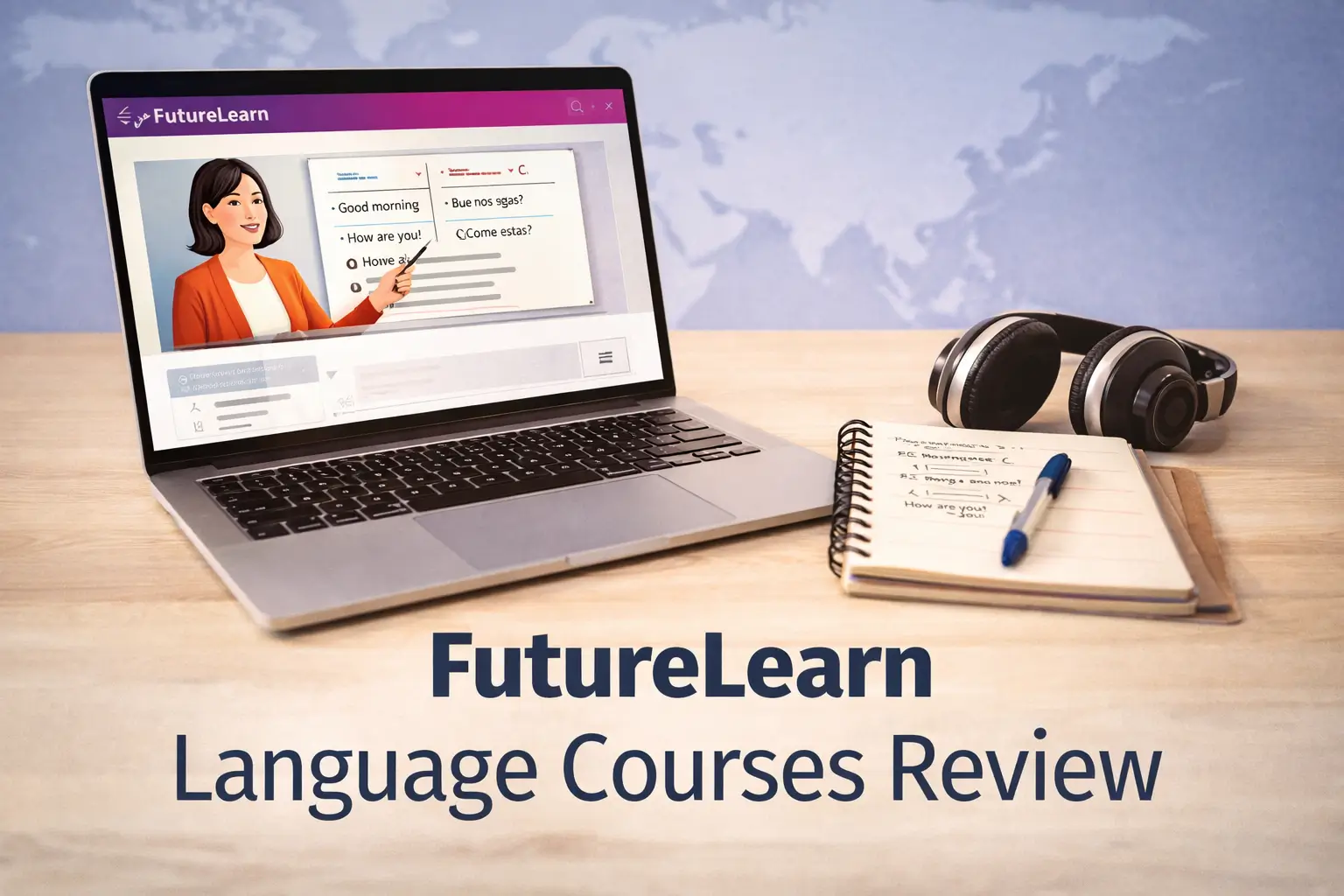
Unlike many language apps that focus on short daily exercises, FutureLearn courses are designed more like structured online classes.
They combine video lectures, reading materials, quizzes, and community discussions.
All this helps learners build a deeper understanding of the language and the culture behind it.
The types of language courses offered
Language courses on FutureLearn are typically created in partnership with universities, cultural institutions, and language specialists.
This gives many of the courses a more academic feel compared with typical language-learning apps.
Some are designed specifically for beginners, while others explore specialised topics such as language for travel, business communication, or cultural immersion.
Languages available for study
FutureLearn offers a smaller selection of languages than some dedicated language apps, but the courses are usually more structured and academically developed.
Common languages available on the platform include:
Course structure and duration
Most language courses on FutureLearn follow a weekly learning structure, similar to a short online university course.
A typical course may include:
- Short instructional videos
- Interactive quizzes and exercises
- Reading materials and explanations
- Discussion sections where learners can interact
Courses often run for 2–6 weeks, with a recommended study time of 2–4 hours per week.
Course Quality Assessment
When choosing an online language course, quality matters just as much as convenience.
Many courses are developed by universities and recognised institutions. This often leads to a more structured and academic learning experience compared with typical language-learning apps.
Evaluation of course content and materials
One of the strongest aspects of FutureLearn language courses is the overall quality of the learning materials.
Courses usually include a mix of:
- Short video lessons explaining key concepts
- Written explanations of grammar and vocabulary
- Interactive quizzes and comprehension checks
- Cultural insights and real-world examples
This combination helps learners understand not just what to say in a language, but why certain expressions are used.
Instructor qualifications and teaching methods
Most language courses on FutureLearn are taught by university lecturers, linguists, or experienced language educators.
Instructors typically guide learners through concepts step by step, explaining grammar, pronunciation, and cultural context along the way.
Teaching methods usually include:
- Video lectures introducing key language concepts
- Example dialogues and pronunciation practice
- Guided exercises and quizzes
- Discussion prompts that encourage reflection and interaction
User feedback and ratings
Learner feedback on FutureLearn language courses is generally positive, particularly when it comes to course quality and clarity of instruction.
Many users highlight:
- Clear explanations of grammar and vocabulary
- Well-structured lessons that are easy to follow
- Interesting cultural insights that add context to the language
However, some learners note that the platform can feel less interactive than dedicated language apps.
Learning Experience
A good language course isn’t just about the content. It’s also about how engaging and accessible the learning process feels.
The overall experience can determine whether learners stay motivated or lose interest after a few lessons.
Interactive features and engagement tools
Compared with many language apps, FutureLearn relies less on gamification and more on structured learning activities.
Courses typically include:
- Short instructional videos explaining language concepts
- Quizzes and comprehension checks
- Reading exercises and vocabulary explanations
- Reflection prompts to reinforce learning
These elements are designed to keep learners actively engaged rather than simply watching lectures.
While the platform does not include features like streaks, XP systems, or competitive leaderboards, it focuses instead on deeper understanding and gradual skill development.
Community support and peer interaction
One of the distinctive aspects of FutureLearn is its emphasis on community discussion.
Many lessons include a comment section where learners can:
- Share answers to questions
- Discuss language examples
- Ask for clarification from other learners or instructors
- Reflect on cultural topics related to the language
This creates a learning environment that feels closer to a collaborative classroom than a traditional self-study app.
Accessibility and user interface
The interface on FutureLearn is generally clean, simple, and easy to navigate.
Courses are organised into weekly sections, with each lesson presented as a step in a clear learning path. This structure makes it easy to track progress and return to previous lessons if needed.
The platform works across:
- Desktop browsers
- Tablets
- Mobile devices
Videos are typically short and easy to follow, and the overall layout prioritises readability and simplicity.
While it may not feel as dynamic as some mobile-first language apps, the straightforward design helps keep the focus on learning rather than distractions.
Value for Money
One of the biggest questions for any online learning platform is whether the courses actually justify the price.
With dozens of language apps and online courses available today, learners want to know what they’re getting for their money.
FutureLearn takes a slightly different approach from many subscription-based language apps.
Some content can be accessed for free, while paid options unlock certificates, long-term access, and additional course features.
Pricing structure of courses (free vs paid options)
Many courses on FutureLearn offer a free access option, which allows learners to explore the course content without paying.
Typical pricing options include:
- Free access: View most course materials during the course period
- Upgrade option: Usually around £39–£89 per course for unlimited access and a certificate
- FutureLearn Unlimited subscription: Around £249.99 per year, providing access to a wide range of courses on the platform
The free option makes it easy to test a course before committing to payment, which is a major advantage for learners who want to experiment with different subjects.
Comparison with other online language learning platforms
Compared with dedicated language apps, FutureLearn sits somewhere between a traditional course and a learning app.
| Platform | Typical Pricing Model | Key Focus |
| FutureLearn | Free access or paid course upgrade | Structured university-style courses |
| Duolingo | Freemium subscription | Gamified daily practice |
| Babbel | Monthly subscription | Structured language lessons |
| iTalki | Pay per lesson | Live tutoring with teachers |
Return on investment: skills gained vs cost
In terms of value, FutureLearn tends to deliver strong educational content for the price. This is when courses are created by recognised universities and institutions.
Learners often gain:
- A clear introduction to grammar and vocabulary
- Cultural insights related to the language
- Structured explanations that are easy to follow
- Certificates that can demonstrate learning progress
That said, the platform may not provide enough speaking practice on its own.
Many learners combine it with conversation apps, tutoring platforms, or immersion experiences to build real conversational fluency.
Flexibility and Convenience
One of the biggest advantages of online learning platforms is the ability to study whenever and wherever it suits you. For many learners, flexibility is just as important as course quality.
FutureLearn is designed to accommodate busy schedules by offering structured courses that can still be completed at your own pace.
Self-paced learning options
Although courses on FutureLearn follow a weekly structure, most learners are not required to complete lessons at a fixed time.
Each course is divided into weekly modules containing short lessons, videos, and activities.
Learners can move through these materials at their own pace within the course period, allowing them to adjust their study schedule around work, school, or other commitments.
Mobile accessibility and learning on-the-go
FutureLearn is accessible on a range of devices, making it relatively easy to study wherever you are.
Learners can access courses through:
- Desktop browsers
- Tablets
- Mobile devices
The platform also offers a dedicated mobile app through the FutureLearn, which allows learners to watch videos, read lesson materials, and participate in discussions on the go.
Time commitment and scheduling
Most language courses on FutureLearn are relatively short and manageable, making them suitable for learners with limited study time.
A typical course usually requires:
- 2–4 hours of study per week
- 2–6 weeks total course length
Lessons are broken into short segments, learners can easily fit them into small pockets of time throughout the week.
Additional Resources and Support
A strong language course doesn’t rely on lessons alone.
Supplementary materials, learner support, and recognised certification can all make a significant difference to the overall learning experience.
FutureLearn includes several additional resources designed to help learners reinforce what they’ve studied, interact with other students, and receive recognition for completing courses.
Availability of supplementary materials
Many language courses on FutureLearn include additional materials that support the core lessons and help learners practise new concepts.
These resources often include:
- Interactive quizzes and knowledge checks
- Reading materials and grammar explanations
- Discussion forums for lesson-related questions
- Cultural insights and examples of real-life language use
These materials help reinforce vocabulary, grammar, and comprehension, giving learners more opportunities to engage with the language beyond just watching video lessons.
Support services for learners (e.g. technical support, tutoring)
Learner support on FutureLearn mainly comes through course mentors, instructors, and technical assistance.
In many courses, mentors or educators monitor discussion sections and occasionally respond to questions from learners. This can help clarify difficult concepts or provide additional guidance during the course.
The platform also provides:
- Technical support for account or platform issues
- Help centre resources and FAQs
- Community discussion areas for peer assistance
Certification and accreditation options
One appealing feature of FutureLearn is the option to receive a certificate of achievement after completing a course.
When learners upgrade to the paid version of a course, they can usually receive:
- A digital certificate confirming course completion
- Long-term access to the course materials
- Evidence of participation that can be shared on professional profiles
Some courses are also created in collaboration with universities and educational institutions, which can add additional credibility to the certification.
Potential Drawbacks
While FutureLearn offers well-structured courses and strong academic content, it’s not a perfect solution for every language learner. Like most online platforms, it has certain limitations that are worth considering before enrolling.
Limitations of the courses
One common limitation of language courses on FutureLearn is that many of them focus primarily on introductory or beginner-level content.
While this makes the platform accessible to new learners, it can mean that advanced learners may struggle to find courses that go deep into complex grammar, advanced vocabulary, or specialised language skills.
Common criticisms from users
Although learner feedback is generally positive, some users highlight a few recurring criticisms of FutureLearn.
Common points include:
- Limited speaking practice compared with tutoring platforms or conversation apps
- Heavy reliance on videos and reading, which may feel passive for some learners
- Inconsistent course quality, depending on the university or institution providing the course
Considerations for specific learner needs
FutureLearn courses tend to work best for learners who enjoy structured, academic-style learning rather than fast-paced app-based practice.
However, they may be less suitable for learners who:
- Want intensive speaking practice with native speakers
- Prefer gamified learning apps with streaks and daily challenges
- Need a complete language-learning system from beginner to advanced levels
For many learners, the platform works best when combined with other tools such as conversation exchanges, tutoring platforms, or immersion-based practice.
FutureLearn Review FAQs
Is FutureLearn good for learning a language?
FutureLearn can be a good option for learners who prefer structured, university-style courses. The platform focuses on grammar explanations, cultural insights, and guided lessons rather than quick drills or gamified learning.
Are FutureLearn language courses free?
Many courses on FutureLearn offer free access to the core learning materials during the course period. However, learners usually need to pay for unlimited access, certificates, or additional course features.
Which languages can you learn on FutureLearn?
Languages available on FutureLearn commonly include English, Spanish, French, German, Italian, and Mandarin Chinese, although the exact selection varies depending on partnerships with universities and institutions.
Do FutureLearn language courses include certificates?
Yes. When learners upgrade to the paid version of a course on FutureLearn, they can usually receive a digital certificate of achievement after completing the course.
Is FutureLearn enough to become fluent in a language?
For most learners, FutureLearn works best as a supplementary learning tool. While it provides structured lessons and cultural insights, learners often need additional speaking practice, conversation partners, or tutoring to achieve full fluency.