|
Getting your Trinity Audio player ready...
|
TL;DR: Kallawaya isn’t a language for everyday life. It’s a language for healing. Spoken by itinerant healers in the Bolivian Andes, it exists to diagnose illness, prepare remedies, and protect centuries of medical knowledge. It’s not about communication. It’s about preservation.
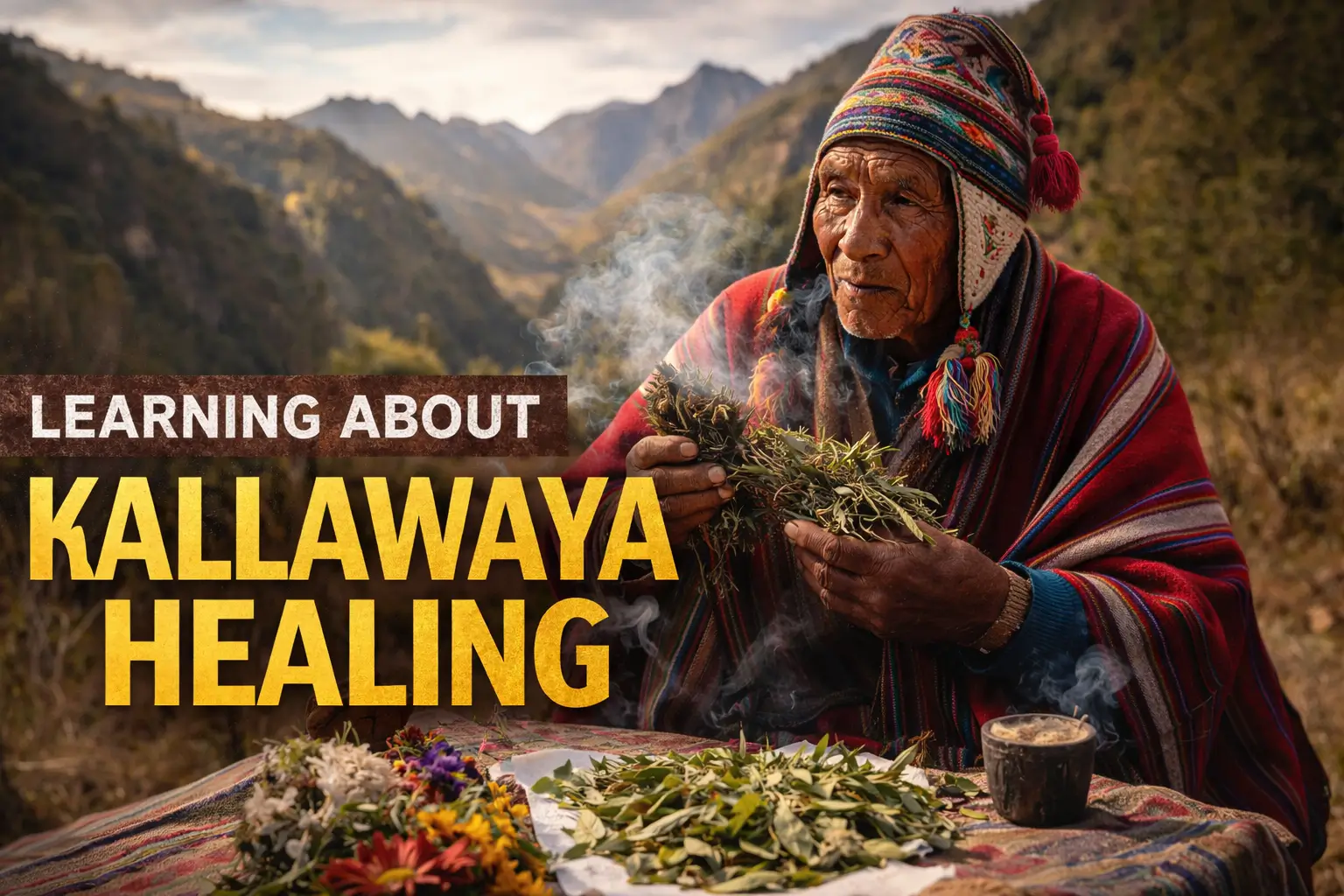
High in the Bolivian Andes, a language is spoken only to heal. This language is known as Kallawaya, and it plays a unique cultural role.
Kallawaya isn’t used for daily life, trade, or storytelling. It belongs to travelling healers who use it to diagnose illness and prepare herbal medicines. It protects centuries-old medical knowledge.
This is more than a rare tongue. Kallawaya shows how language can preserve knowledge, guard identity, and sustain an entire worldview.
Overview of Kallawaya and its significance in Andean culture
Kallawaya is a ritual language used by traditional healers in the Bolivian Andes. It was never meant for everyday speech. Its purpose is precise: healing, ceremony, and the protection of medical knowledge.
At its core, Kallawaya reflects an Andean worldview. Where health, nature, and spirituality are inseparable. Much of its vocabulary centres on medicinal plants and treatments. Shaped by centuries of close interaction with the Andean environment.
The Origins of Kallawaya
To understand Kallawaya, you have to start with the people who carried it and the mountains that shaped them.
Historical background of the Kallawaya people
The Kallawaya were itinerant healers from the high Andes of what is now Bolivia.
For centuries, they travelled vast distances across South America. Offering medical treatment based on an extensive knowledge of plants, rituals, and diagnosis
Their reputation spread far beyond their home region, earning them trust and protection. Wherever they went.
Connection to the Andean region and its geography
The Andes are not just a backdrop. They are the foundation of Kallawaya medicine.
Extreme altitudes, diverse ecosystems, and isolated valleys created a deep reliance on local plants and environmental knowledge.
Each journey exposed healers to new species, remedies, and techniques. Expanding their medical repertoire.
Evolution of the Kallawaya language and its cultural significance
Kallawaya evolved as a specialised ritual language. Drawing from Quechua and other regional tongues while remaining opaque to outsiders.
It wasn’t designed to grow casually or spread freely. It was refined, controlled, and passed down through apprenticeship.
Understanding the Kallawaya Language
It isn’t designed for storytelling, trade, or everyday conversation. Instead, it functions as a precise tool. One used to heal bodies, send knowledge, and protect tradition.
Characteristics of the Kallawaya language
Kallawaya functions as a specialised ritual register rather than a full community language.
It is used, often alongside Quechua or Aymara, and activated. Only in specific healing contexts. Its structure prioritises clarity for practitioners while remaining obscure to outsiders.
Unique vocabulary and expressions related to healing
Much of Kallawaya’s vocabulary centres on medicinal plants, symptoms, treatments, and ritual actions.
Words often carry layered meanings. Linking physical illness with spiritual imbalance or environmental factors.
Some expressions are inseparable from the act itself. Spoken as part of the treatment, not just about it.
The role of oral tradition in preserving the language
Kallawaya has been transmitted almost through oral tradition.
Knowledge passed from master healer to apprentice, memorised through repetition, practice, and ritual rather than written records.
This made learning slow, deliberate, and personal.
The Role of Kallawaya Healers
Kallawaya healers are not just practitioners. They are carriers of knowledge.
Their authority comes from lived experience, disciplined training, and a deep relationship with both language and land
Profile of a traditional Kallawaya healer (curandero/a)
A Kallawaya healer, often referred to as a curandero or curandera, is recognised not by titles but by skill and trust.
They diagnose illness using a combination of observation, ritual, herbal knowledge, and spoken formulae. Mastery of Kallawaya signals legitimacy. The language itself acts as proof of training and lineage.
Training and apprenticeship processes
Training is long and demanding. Apprentices learn through years of close observation, memorisation, and guided practice under an experienced healer.
Language, plants, routes, and rituals are taught in conjunction with one another. Never in isolation.
There are no shortcuts. Knowledge is revealed, ensuring respect for the tradition and preventing misuse.
The healer’s relationship with the community
Within the community, Kallawaya healers hold a position of responsibility rather than power.
They are consulted in times of illness, transition, and uncertainty. Acting as mediators between individuals, nature, and the spiritual world.
Trust is everything. A healer’s reputation depends not only on successful treatment. On discretion, ethics, and long-term commitment to communal wellbeing.
Healing Practices and Rituals
In the Kallawaya tradition, healing is never just physical. Treatment addresses the body, the spirit, and the relationship between the two. With language, plants, and ritual working together.
Common healing practices in the Kallawaya tradition
Kallawaya healing begins with diagnosis through observation, questioning, and ritual assessment.
Illness may be understood as physical imbalance, spiritual disruption, or environmental disharmony.
Treatments are tailored, combining herbal preparations with spoken formulae and ceremonial acts.
Use of medicinal plants and natural remedies
Medicinal plants sit at the heart of Kallawaya practice. Healers draw on extensive botanical knowledge, often using dozens of plant species for a single treatment.
Leaves, roots, bark, and resins are prepared as infusions, poultices, or powders. Depending on the condition.
This knowledge reflects generations of experimentation refined by geography, climate, and experience.
Rituals and ceremonies associated with healing
Rituals frame the healing process. Spoken invocations, offerings, and symbolic actions are used to restore balance and reinforce intention.
Language plays an active role here: words are believed to guide the treatment. Not go with it.
The Connection Between Language and Healing
Words are treated as tools, used to direct rituals, focus intention, and activate treatment.
To understand Kallawaya healing, you have to understand how speech itself becomes part of the medicine.
How language influences the healing process
Kallawaya is spoken at precise moments during diagnosis and treatment. Certain phrases guide the ritual, mark transitions, or signal the healer’s authority.
Speaking is considered as important as preparing the right remedy. Language helps align the physical and spiritual aspects of healing.
The significance of specific words and phrases in rituals
Specific words are chosen for their meaning, rhythm, and context. Some phrases are believed to activate remedies, protect the patient, or restore balance.
These expressions are learned and used sparingly, reinforcing their power.
Challenges Facing the Kallawaya Language
A language designed to be protected now faces a different kind of danger. The very secrecy that preserved Kallawaya for centuries. Making it fragile in the modern world.
Threats to the preservation of the Kallawaya language and culture
Kallawaya has never had many speakers, and today that number is shrinking fast.
Fewer young people enter traditional healing, apprenticeships are rare, and much of the knowledge remains unwritten.
As elder healers die, entire layers of language and practice risk disappearing with them.
Impact of globalisation and modernisation
Modern healthcare systems and urban migration. Dominant national languages have reduced the practical need for Kallawaya healing.
Younger generations are often encouraged to prioritise Spanish-language education and modern professions. Leaving little space for long, demanding traditional training.
Efforts being made to revitalise and protect the language
In response, cultural organisations, researchers, and Kallawaya communities themselves are working to document the language and preserve medicinal knowledge.
Educational initiatives, cultural recognition, and controlled documentation aim to protect Kallawaya without stripping it of its meaning.
The challenge is balance: safeguarding a living tradition without turning it into a museum piece.
The Modern Relevance of Kallawaya Healing
What was once hidden is now being re-examined. In a world searching for holistic, human-centred care, Kallawaya healing feels current.
Growing interest in traditional medicine in contemporary society
Across the globe, people are turning back to traditional medicine for approaches that treat the whole person, not just symptoms.
Concerns about over-medicalisation, rising stress, and chronic illness. It have renewed interest in plant-based remedies, ritual, and preventative care all central to the Kallawaya tradition.
Integration of Kallawaya practices into modern health care
In some contexts, elements of Kallawaya medicine are being studied. Alongside modern healthcare systems.
Researchers are documenting medicinal plants. While cultural initiatives promote respectful collaboration rather than replacement.
The aim isn’t to modernise Kallawaya but to recognise its insights without stripping away its cultural roots.
When integration works, it’s based on dialogue, not dominance.
How to Learn More About Kallawaya
Learning about Kallawaya is about understanding, not access. Because this is a protected healing tradition, meaningful learning focuses on context, culture. Preservation rather than direct participation.
Resources for further exploration
If you want to go deeper, focus on sources created with Indigenous communities, not about them from the outside. Strong starting points include:
- Ethnographic and academic books
- The Callawaya by Louis Girault. A foundational ethnographic study of Kallawaya healers and their medical tradition
- Andean ethnomedicine publications. From Latin American universities. (Universidad Mayor de San Andrés and Universidad Andina Simón Bolívar)
- Peer-reviewed journals on medical anthropology and Indigenous knowledge systems
- Documentaries and visual media
- Documentaries on Andean traditional medicine produced by Bolivian cultural institutions
- Public broadcaster features (BBC, ARTE, DW) covering Indigenous healing in the Andes
- Museum-recorded talks and short films linked to exhibitions on Andean cultures
- Museums and cultural institutions
- Museum of Ethnography and Folklore (MUSEF), La Paz
- National and regional museums in Bolivia with permanent Andean medicine collections
- Online archives and virtual exhibitions focused on Indigenous knowledge preservation
- Workshops and educational programmes
- Indigenous-led cultural workshops focused on Andean worldview and plant knowledge (non-clinical, non-ritual)
- University short courses in medical anthropology or Indigenous studies
- Public lectures and webinars hosted by linguistics and anthropology departments
Opportunities for cultural exchange and immersion
Cultural centres, heritage programmes, and community-run initiatives. The Andes offer ways to learn.
True immersion doesn’t mean performing rituals. It means listening, observing, and understanding how healing fits. One into daily life, community structure, and belief systems.
Encouragement to support Indigenous healing practices
Support efforts that protect Indigenous intellectual ownership and community control.
This can include backing preservation projects, sharing accurate information, and challenging the commercialisation of traditional medicine.
Supporting Kallawaya means helping the people, not extracting the practice.