|
Getting your Trinity Audio player ready...
|
TL;DR: Pimsleur is a premium, audio-first language app built for one thing: getting you speaking fast. Instead of tapping or reading, you learn through 30-minute daily conversations using spaced recall and constant verbal practice. It’s highly effective for pronunciation, listening, and real-world speaking confidence, but weaker on reading/writing and more expensive than apps like Duolingo or Memrise.
Pimsleur has been around for decades, but its audio-first method still stands out in a crowded app market. In this Pimsleur App Review, you’ll find that instead of tapping through gamified exercises, you’re guided through real spoken practice.
We examine how Pimsleur’s structured approach, spaced recall system, and daily 30-minute lessons work in practice, what you can expect from the app, and whether it delivers on its promise to help you speak.
What is Pimsleur?
Pimsleur is one of the most established audio-based language programmes. Designed to help learners speak without relying on screens or memorisation drills.
Its method focuses on natural conversation, strategic repetition, and spoken recall. Giving you a structured way to build real speaking ability from day one.
What is the Pimsleur approach to language learning?
Pimsleur uses guided audio lessons that place you directly into a conversational setting.
Instead of reading or tapping answers, you listen, repeat, and respond as if you were talking to a native speaker.
Each phrase is introduced in context and practised aloud so it becomes something you can say comfortably, not just recognise on a page.
Key principles: graduated interval recall and active participation
The method is powered by two core principles.
- Graduated interval recall spaces out each new word or structure. It uses carefully timed intervals to strengthen long-term retention.
- Active participation pushes you to speak out loud whenever prompted. Helping you recall phrases quickly and use them naturally.
This pairing creates a steady, intuitive learning flow that mirrors how we remember and produce language in real life.
Pimsleur structure and lesson content
Inside the pimsleur app, lessons are arranged into levels and units, each centred on a 30-minute audio session.
A typical lesson begins with a short dialogue, which you break apart and rebuild through step-by-step prompts. You practise pronunciation, form sentences, and answer questions aloud as the difficulty increases.
Extras such as flashcards, quizzes, reading practice, and cultural notes are available. The core experience remains firmly anchored in spoken, interactive learning
User Experience and Interface
A big part of Pimsleur’s appeal lies in how straightforward the app feels.
It’s built to support an audio-first learning style. The interface stays simple, clear, and distraction-free.
This helps you focus on listening, speaking, and progressing. Through each lesson without unnecessary clutter.
App design, layout, and ease of navigation
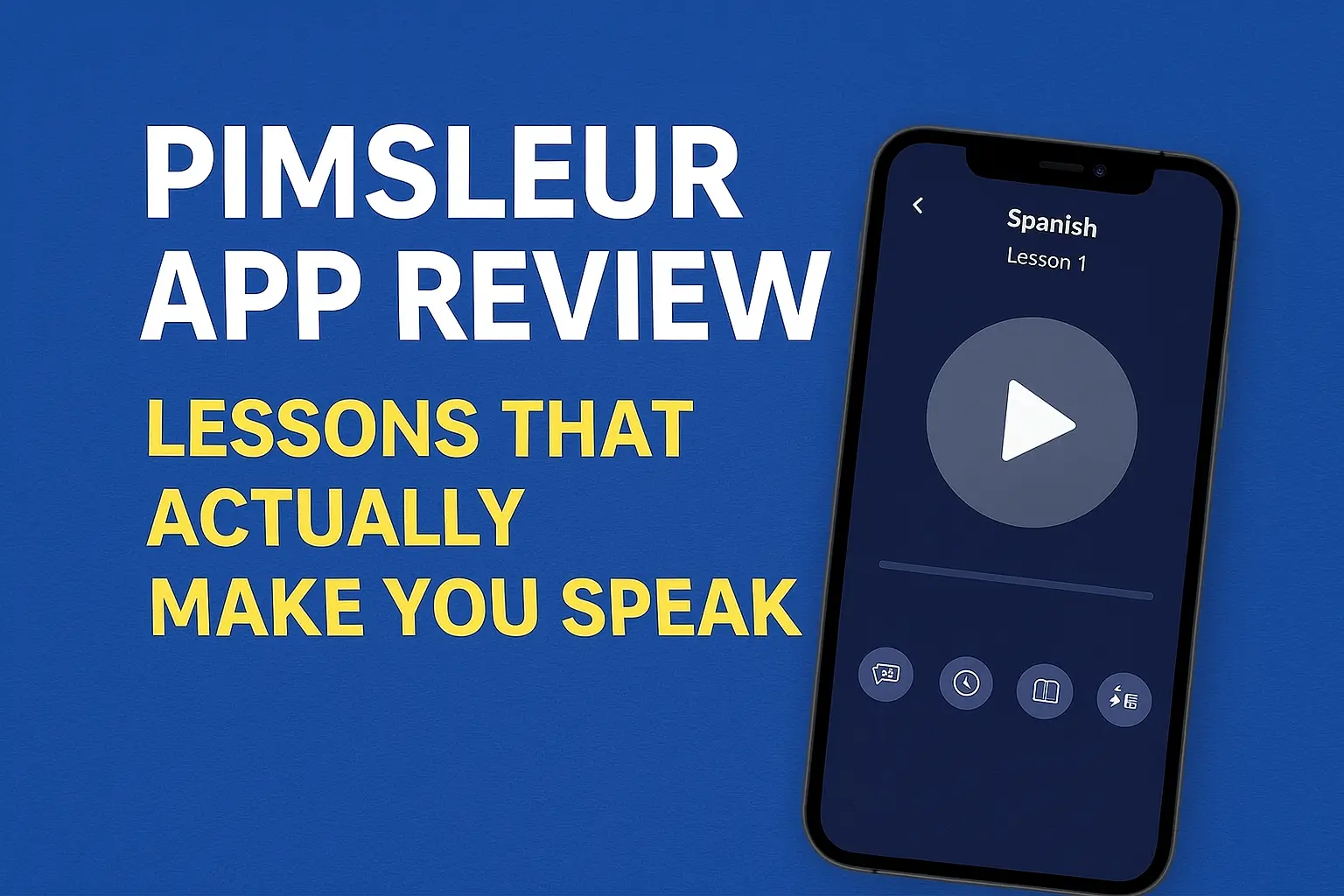
The design is clean and intuitive, with your current course and next lesson presented front and centre.
Lessons are arranged in a logical sequence, and moving between units, settings, or extra practice features takes only a tap or two.
The layout avoids visual noise, making it easy to stay on track and giving the whole app a calm, focused feel.
Accessibility features and overall usability
Pimsleur includes practical accessibility features that make the audio-based format easier to work with. You can slow playback, skip back in small steps, turn on transcripts, and download lessons for offline learning.
Buttons are large and simple to follow, so you’re not tied to the screen during practice. The app balances audio immersion with enough visual support to suit a range of learning needs.
Compatibility across devices
The app works smoothly across iOS, Android, and desktop browsers, with progress automatically syncing no matter where you last listened.
It handles offline mode reliably, and audio performs consistently whether you’re using headphones, earbuds, a Bluetooth speaker, or your phone’s built-in sound. This cross-device flexibility makes it easy to slot lessons into daily routines.
Course Offerings and Available Languages
Pimsleur is known for its wide selection of language courses, covering everything from major world languages to less commonly taught ones.
Each course follows the same structured, audio-first method, but the depth and number of levels vary depending on the language.
List of languages offered through Pimsleur
Pimsleur offers more than 50 languages. This includes popular options such as:
It also includes a range of less common languages, like:
- Icelandic
- Ojibwe
- Hebrew
- Romanian
- Turkish
- Cantonese
- Finnish
- Vietnamese
- Swahili
- Indonesian
The catalogue is broad enough to support mainstream learners. Also, those looking for something more niche.
Course levels from beginner to advanced
Most major languages come with five full levels, each containing 30 lessons. Giving you up to 150 days of structured learning
Languages with smaller demand may have one to three levels, but still follow the same core format:
- Level 1 focuses on foundational phrases, pronunciation, and basic conversation;
- Levels 2 and 3 deepen grammar and vocabulary;
- Levels 4 and 5 expand into more natural, flowing speech and longer dialogues.
The progression is clear, steady, and designed to build real conversational ability.
Special features or dialect-focused lessons for certain languages
Some languages include extra content tailored to specific regions or dialects.
For example, Spanish offers both Latin American and Castilian variations. Japanese includes a reading section that introduces kana. Mandarin features tone-focused exercises to help with pronunciation accuracy.
A few courses also include bonus cultural notes or role-play challenges. That reflects real-world speaking scenarios. These enhancements help learners align the course more. All with their travel plans, cultural interests, or regional preferences.
Lesson Structure and Content
Pimsleur’s lessons follow a consistent, well-designed pattern. This aims to build speaking confidence step by step.
Each session feels like a guided conversation rather than a traditional classroom exercise. Keeping the focus on practical communication.
Breakdown of a typical Pimsleur lesson
A standard lesson lasts around 30 minutes. It begins with a short dialogue spoken by native speakers. You first listen to the full exchange, then break it down phrase by phrase.
The instructor prompts you to repeat words, form new sentences, and recall earlier material at carefully timed intervals.
This cycle of hearing, repeating, and responding creates a steady rhythm. That makes the learning process feel natural and manageable.
Emphasis on speaking and listening development
Pimsleur prioritises active speaking above everything else.
Listening skills develop at the same time. Regular exposure to native pronunciation, intonation, and pacing. It helps you internalise how the language sounds.
The balance means you spend more time using the language than studying it.
Integration of cultural context and real-life conversational scenarios
Many lessons weave in cultural insights to help you understand not just what to say, but how and when to say it.
Dialogues reflect everyday situations. Such as ordering food, greeting someone, asking for directions, or meeting new people. You’ll also find short cultural notes that explain local customs or language nuances.
This grounding in real-life context makes the lessons more engaging. Helping you sound more natural when speaking to native speakers.
Effectiveness in Speaking Skills
Pimsleur is recognised for its focus on real spoken ability. Much of its reputation comes from how learners feel confident forming sentences out loud.
Its audio-led structure mimics natural conversation. Helping you build recall, rhythm, and pronunciation. All in ways that many app-based methods struggle to achieve.
Analysis of how Pimsleur promotes real conversational fluency
The programme strengthens speaking skills through constant verbal participation. Each lesson prompts you to produce language actively.
Spacing out vocabulary through graduated interval recall. The method reinforces memory in a way that mirrors how we retrieve words in real conversations.
The frequent prompts to expect, respond, and self-correct help you develop spontaneity. Which is one of the hardest parts of becoming fluent?
Comparison with alternative language learning methods
Compared with visual-heavy apps like Duolingo or vocabulary-focused tools like Memrise. Pimsleur stands out for its emphasis on speaking instead of passive recognition.
Other apps excel at drills, reading practice, or gamified repetition. Pimsleur trains your ability to think and respond in the moment. It sits closer to one-to-one tutoring or language exchange sessions, but with the structure and sequencing of a guided course.
For learners who want practical conversation skills rather than grammar-first study. Its effectiveness is difficult to match.
Pros and Cons of the Pimsleur App
Pimsleur offers a structured, reliable path to speaking a new language, but like any method, it has its own limitations.
Here’s a balanced look at where the app excels and where it may fall short, helping you decide whether it fits your learning style.
Advantages: convenience, proven effectiveness, and engaging format
One of Pimsleur’s biggest advantages is its convenience. Lessons are audio-based, so you can learn while commuting, walking, or doing chores.
The method itself has decades of research behind it. Its focus on spaced recall and active participation helps learners speak with confidence.
The format feels engaging because you’re involved throughout. You listen, respond, expect answers, and practise natural pronunciation. All without relying on screens or typing.
Disadvantages: cost and limited emphasis on reading/writing
The main drawback for many learners is the price.
Pimsleur’s subscription is higher than most mainstream language apps. Especially if you’re used to gamified platforms with lower monthly fees.
Another limitation is its lighter focus on reading and writing. Some courses offer supplementary practice. The core programme is audio-driven. Meaning you’ll need more resources if you want strong literacy skills in your target language.
Pimsleur strengths and weaknesses
Strengths:
- Excellent for speaking, pronunciation, and listening
- Ideal for busy learners thanks to its hands-free format
- Proven learning method backed by linguistic research
- Clear progression across lessons and levels
- Natural-sounding dialogues that build real communication skills
Weaknesses:
- Higher cost compared with most competitor apps
- Limited reading and writing development
- Repetitive for learners who prefer visual or variety-heavy lessons
- Some languages have fewer levels or extras than others
Pricing and Subscription Options
Pimsleur’s pricing reflects its position as a premium, research-backed programme focused on spoken skills.
Plans are simple, flexible, and designed to give learners access to full course levels. Rather than locking content behind micro-transactions or tiered lesson packs.
Subscription plans
Pimsleur offers a monthly subscription. There is a yearly subscription, and the option to buy individual course levels outright.
The monthly and yearly plans provide access to all levels of a language. Full audio lessons, reading practice (where available), and the app’s more tools, such as flashcards and quizzes.
Annual plans typically work out cheaper per month. One-off level purchases are better suited to learners who prefer lifelong access without ongoing payments.
Free trial availability and what it includes
Pimsleur provides a 7-day free trial. It allows you to explore the first lessons of your chosen language and test all app features.
You can try the audio sessions, download lessons offline, use the practice activities, and see how the method feels in practice.
The trial is genuinely fully functional. Making it easy to assess whether the pacing, teaching style, and audio-first approach suit your learning habits.
Value for money compared with other language learning apps
Pimsleur is more expensive than many mainstream language apps. It also offers something most competitors don’t: a structured pathway designed for real speaking ability.
While apps like Duolingo or Memrise are cheaper (or even free), their focus tends to be on reading, tapping answers, or vocabulary drills.
Pimsleur delivers instructor-led audio sessions that mimic one-to-one tutoring and build practical, conversational confidence.
Tips for Maximising Your Learning Experience
Pimsleur works best when used consistently and actively. Because the programme is built around spoken recall, a few smart habits can make your progress faster, smoother, and more enjoyable.
Best practices for getting the most out of the app
Try to complete one lesson per day: the 30-minute format is designed for daily practice. The spaced recall system works best with a steady rhythm.
Always speak your answers out loud, even if it feels awkward at first; verbal participation is what builds fluency. Avoid multitasking during the critical recall moments. Rewind when needed rather than letting mistakes slip by.
Setting realistic goals and monitoring progress
Set clear, achievable goals, for example, completing one level in 30 days or being able to hold a basic five-minute conversation.
Track your progress within the app. Also, test yourself in the real world: record short speaking clips. Try explaining your day in your target language, or revisit older lessons to see how much easier they feel.
These small benchmarks make improvements visible and help keep you motivated as you move through each level.
Pimsleur App Review FAQs
Is Pimsleur good for complete beginners?
Yes. Pimsleur is designed to help absolute beginners start speaking from day one, using guided audio and step-by-step prompts that require no prior knowledge.
How long does it take to see progress with Pimsleur?
Most users notice improvements in speaking confidence within the first 1–2 weeks, especially if completing one 30-minute lesson per day as recommended.
Does Pimsleur teach reading and writing?
Partially. Some languages include reading exercises, but the programme focuses primarily on speaking and listening. You may want supplementary resources for full literacy.
Can I use Pimsleur offline?
Yes. You can download lessons for offline listening, which is ideal for commuting, travelling, or studying without data or Wi-Fi.
Is Pimsleur worth the price?
If your priority is speaking confidently and developing natural conversational skills, many learners find the cost worthwhile due to its structured, research-based approach.