|
Getting your Trinity Audio player ready...
|
TL;DR: Learning the English alphabet is the foundation of reading, writing, and pronunciation. By understanding letters, sounds, and how they form words, beginners can build confidence quickly.
The English alphabet is the foundation of the language. Every English word, from simple greetings to complex sentences, begins with these 26 letters.
Learning the alphabet helps you recognise words, understand spelling, and start building clear pronunciation.
Once you understand how the letters look, sound, and combine to form words, reading and speaking the language becomes much easier.
The importance of the English alphabet
The English alphabet is the foundation of reading, writing, and communication in English. Every word is built from its 26 letters, making the alphabet one of the first and most important things learners need to understand.
Why the English alphabet is important:
- Foundation of reading: Knowing the alphabet helps learners recognise letters and decode written words.
- Essential for spelling: Understanding letter order and structure makes it easier to spell new words correctly.
- Supports pronunciation: Learning the letters helps learners understand how English sounds are formed.
- Improves vocabulary learning: Recognising letters makes it easier to remember and learn new words.
- Builds confidence in communication: A strong grasp of the alphabet helps beginners read, write, and speak more comfortably.
Get answers like this for your language questions
Your personal AI language tutor — adapts to your native language, your level, and the words that actually trip you up.
The Basics of the English Alphabet
Before you can read or write in English, it’s important to understand how the alphabet works.
The English alphabet is the system of letters used to represent the sounds of the language. These letters combine to form words, sentences, and meaning..
What is the English Alphabet?
An alphabet is a set of letters used to represent the sounds of a language. Each letter corresponds to one or more sounds, which allows speakers and writers to record spoken language in written form.
In English, letters are combined in different ways to create words. For example, the letters c, a, and t form the word cat, which represents a specific sound and meaning.
Total number of letters in the English alphabet
The English alphabet contains 26 letters, ranging from A to Z. These letters are used to form every word in the English language.
Although there are only 26 letters, English actually has many more sounds. Because of this, letters often work together in combinations such as sh, th, or ch to represent different sounds.
This is one reason why English spelling can sometimes seem unpredictable for beginners.
Overview of uppercase and lowercase letters
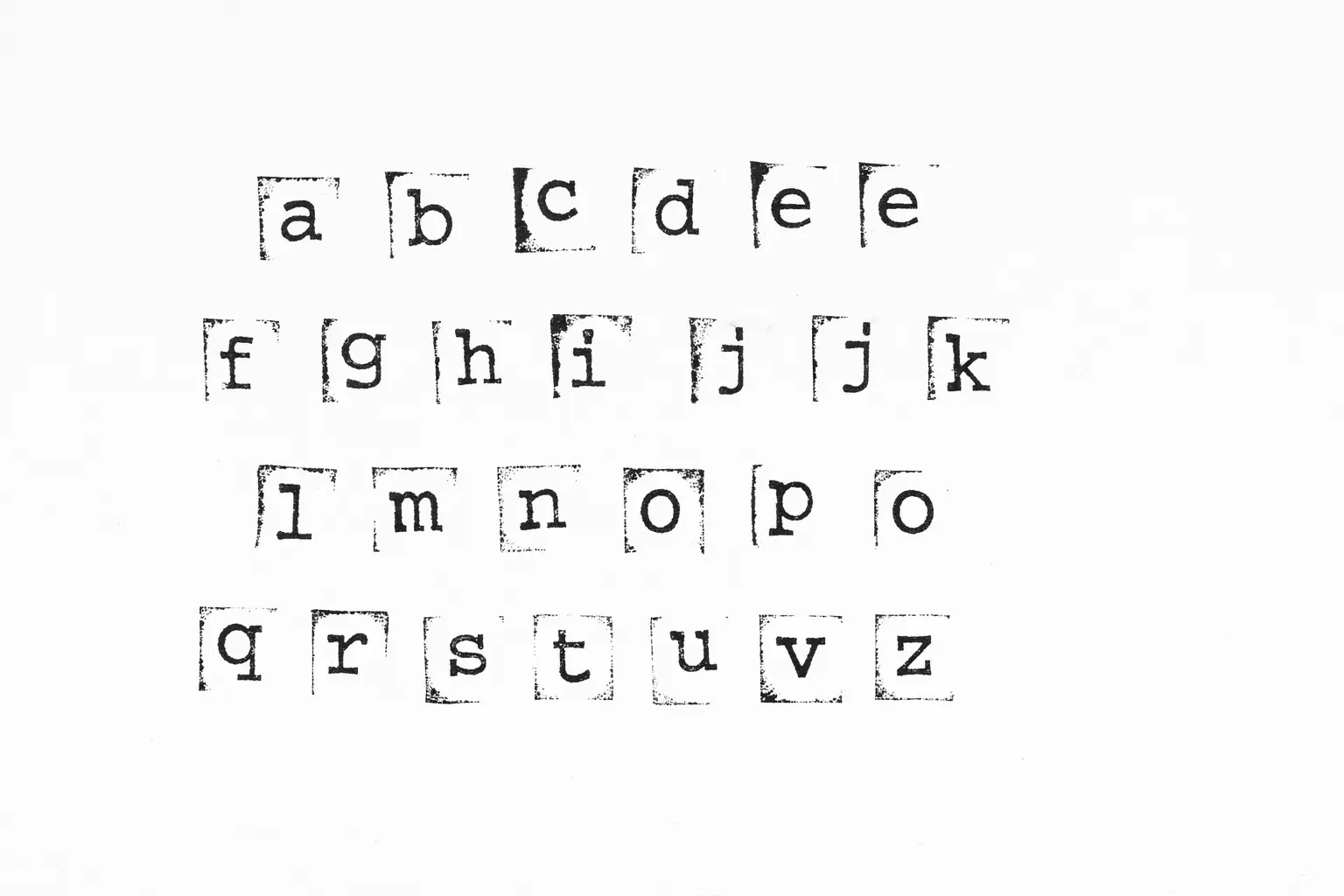
Each letter in the English alphabet has two forms: uppercase and lowercase.
- Uppercase letters are typically used at the beginning of sentences, for proper nouns such as names of people and places, and for certain titles or headings.
- Examples include A, B, C, D.
- Lowercase letters are the smaller forms used in most everyday writing.
- Examples include a, b, c, d.
The Letters of the English Alphabet
The English alphabet is made up of 26 letters, each with its own shape, name, and sound.
Learning to recognise these letters, in both their uppercase and lowercase forms, is essential for reading and writing.
Just as importantly, understanding how each letter is pronounced will help you speak and spell more accurately.
List of all 26 letters
Here are the 26 letters of the English alphabet:
A, B, C, D, E, F, G, H, I, J, K, L, M, N, O, P, Q, R, S, T, U, V, W, X, Y, Z
These letters are the building blocks of every English word.
Visual representation of uppercase and lowercase forms
Each letter has two forms: uppercase (capital) and lowercase. Both represent the same letter but are used in different situations.
- A a
- B b
- C c
- D d
- E e
- F f
- G g
- H h
- I i
- J j
- K k
- L l
- M m
- N n
- O o
- P p
- Q q
- R r
- S s
- T t
- U u
- V v
- W w
- X x
- Y y
- Z z
Uppercase letters are used at the beginning of sentences and for names, while lowercase letters are used in most everyday writing.
Phonetic pronunciation of each letter
Each letter also has a name and a typical pronunciation. These are how you say the letters when spelling words:
- A: /eɪ/
- B: /biː/
- C: /siː/
- D: /diː/
- E: /iː/
- F: /ɛf/
- G: /dʒiː/
- H: /eɪtʃ/
- I: /aɪ/
- J: /dʒeɪ/
- K: /keɪ/
- L: /ɛl/
- M: /ɛm/
- N: /ɛn/
- O: /əʊ/ (UK) /oʊ/ (US)
- P: /piː/
- Q: /kjuː/
- R: /ɑː/ (UK) /ɑr/ (US)
- S: /ɛs/
- T: /tiː/
- U: /juː/
- V: /viː/
- W: /ˈdʌbəl.juː/
- X: /ɛks/
- Y: /waɪ/
- Z: /zed/ (UK) /ziː/ (US)
Learning these pronunciations is especially useful when spelling words out loud, such as giving your name or email address.
Vowels vs Consonants
To understand how English words are formed, it’s important to know the difference between vowels and consonants.
Every word in English is built using a combination of these two types of letters, and each plays a different role in pronunciation and meaning.
What are vowels (A, E, I, O, U)?
Vowels are letters that represent open sounds, where the air flows freely through the mouth without being blocked. In English, there are five main vowels: A, E, I, O, U.
Examples:
- A in apple
- E in elephant
- I in igloo
- O in orange
- U in umbrella
What are consonants (the remaining letters)?
Consonants are all the other letters in the English alphabet. These sounds are made by partially or fully blocking the airflow using the lips, tongue, or teeth.
Examples:
- B in book
- C in cat
- D in dog
- T in table
- S in sun
There are 21 consonants in English, and they often work together with vowels to form complete words.
Importance of vowels and consonants in forming words
Vowels and consonants work together to create words and meaning.
Most English words need at least one vowel to be pronounceable, while consonants help shape and define the structure of the word.
For example:
- cat → consonant + vowel + consonant
- see → consonant + vowel + vowel
- stop → consonant cluster + vowel + consonant
Get explanations like this for your English questions
Personalised to your native language and level. Free to start, no card needed.
The Sounds of the English Alphabet
Learning the letters of the alphabet is only the first step. To speak and understand English effectively, it’s also important to know how those letters sound.
English pronunciation is based on the relationship between letters and sounds, and this is where phonetics becomes useful.
What are phonetics?
Phonetics is the study of the sounds used in human speech. In language learning, phonetics helps explain how letters and combinations of letters produce different sounds.
English pronunciation can sometimes be challenging because the same letter may produce different sounds depending on the word. For example, the letter C sounds different in cat and city.
Overview of the sounds associated with each letter
Each letter of the alphabet has a name and can represent one or more sounds in spoken English.
For example:
- A can sound like a in apple, a in cake, or a in father.
- G can be a hard sound as in go, or a soft sound as in giant.
- S can sound like s in sun or z in rose.
In addition, many English sounds are created when letters combine together. Common examples include:
- SH as in ship
- TH as in think or this
- CH as in chair
These combinations are called digraphs, and they are an important part of English pronunciation.
Tips for practising pronunciation
Improving pronunciation takes time and regular practice. The key is to listen carefully and repeat sounds as often as possible.
Helpful ways to practise include:
- Listening to native speakers through videos, podcasts, or language apps.
- Repeating words out loud to train your mouth and ears to recognise the sounds.
- Practising with the phonetic alphabet or pronunciation guides when learning new vocabulary.
- Breaking words into smaller sounds to make them easier to pronounce.
- Recording yourself speaking and comparing it with correct pronunciation.
Learning the English Alphabet Song
One of the most popular ways to learn the English alphabet is through the alphabet song.
For decades, it has been used in schools and language classes to help beginners remember the order of the letters. It combines rhythm, repetition, and melody, and the song makes learning the alphabet much easier and more enjoyable.
Importance of the alphabet song in learning
The alphabet song helps learners memorise the correct order of the 26 letters quickly and naturally.
Music improves memory, so repeating the song helps learners recall the letters without needing to think too hard about them.
For children and beginners, the song also makes learning feel less like studying and more like a fun activity.
Lyrics and melody overview
The alphabet song lists the letters of the alphabet in order and is typically sung to the same melody as “Twinkle, Twinkle, Little Star.”
The lyrics are simple and follow the sequence of the alphabet:
A B C D E F G
H I J K L M N O P
Q R S
T U V
W X
Y and Z
Now I know my ABCs
Next time won’t you sing with me?
The tune is familiar and repetitive, it helps learners remember the letters quickly.
Suggestions for fun ways to practise singing the song
There are many creative ways to practise the alphabet song while learning English:
- Sing along with videos to hear the correct rhythm and pronunciation.
- Point to letters while singing to connect the sound with the written form.
- Use flashcards or posters to follow the alphabet visually while singing.
- Try singing faster or slower to challenge your memory.
- Sing with friends or classmates to make the activity more engaging.
Writing the English Alphabet
Learning to write the English alphabet is an important step in developing reading and writing skills.
Once learners recognise the letters and understand their sounds, practising how to write them helps reinforce memory and build confidence.
Writing both uppercase and lowercase letters also helps learners understand how English is used in real texts.
Introduction to writing uppercase and lowercase letters
Each letter in the English alphabet has two forms: uppercase (capital) and lowercase. Both represent the same letter but are used in different situations.
- Uppercase letters are used at the beginning of sentences, for names of people and places, and for certain titles. Examples include A, B, C, D.
- Lowercase letters are used for most everyday writing. Examples include a, b, c, d.
Learning both forms helps beginners read books, write messages, and recognise letters in different contexts.
Step-by-step guide for beginners
When learning to write the alphabet, it helps to practise one letter at a time and focus on forming the shapes clearly.
A simple approach for beginners includes:
- Start with uppercase letters, as they often have simpler shapes
- Practise one letter repeatedly, such as writing A several times before moving on
- Follow stroke order, starting from the top and moving downward when possible
- Move to lowercase letters once you feel comfortable with capitals
- Practise writing simple words using the letters you have learned
Using lined paper or alphabet worksheets can help guide letter size and spacing.
Tips for improving handwriting
Handwriting improves with regular practice and attention to letter shapes. Even small adjustments can make writing clearer and easier to read.
Helpful tips include:
- Write slowly and focus on accuracy first, rather than speed
- Keep letters evenly spaced to make words easier to read
- Use lined paper to maintain consistent letter height
- Practise daily, even if it’s only a few minutes
- Copy simple words or sentences to strengthen muscle memory
Get explanations like this for your English questions
Personalised to your native language and level. Free to start, no card needed.
Common Mistakes to Avoid
When learning the English alphabet, it’s normal to make mistakes. In fact, these early errors are part of the learning process.
However, recognising common problems can help you improve faster and avoid building bad habits
Frequent errors made by beginners
Beginners often face similar challenges when learning the alphabet:
- Confusing similar-looking letters such as b and d, or p and q
- Mixing uppercase and lowercase forms incorrectly in writing
- Pronouncing letters inaccurately, especially when spelling words aloud
- Forgetting the correct order of letters in the alphabet
- Struggling with letter sounds, particularly when one letter has multiple pronunciations
Tips for overcoming these challenges
Improving comes down to focused practice and building strong habits from the start:
- Practise tricky letters separately until you can recognise and write them confidently
- Use visual aids like charts, flashcards, or alphabet posters
- Listen and repeat letter sounds to improve pronunciation
- Write regularly, even simple words, to reinforce learning
- Test yourself by covering letters and recalling them from memory
Importance of practice and patience
Learning the alphabet may seem simple, but mastering it takes time. Consistent practice helps build familiarity, while patience allows you to improve without frustration.
Even a few minutes of daily practice can lead to steady progress. Over time, recognising letters, writing them, and pronouncing them correctly will become automatic.
Fun Activities to Reinforce Learning
Learning the English alphabet doesn’t have to be limited to memorisation and worksheets.
Interactive activities make the process more enjoyable and help learners remember letters more effectively.
Suggestions for games and exercises
Simple games are a great way to reinforce letter recognition and pronunciation while keeping learners motivated.
Some useful activities include:
- Alphabet matching games where learners match uppercase letters with their lowercase forms
- Letter scavenger hunts, finding objects that start with a specific letter
- Spelling games, where players arrange letter cards to form simple words
- Alphabet memory games, matching pairs of letters or pictures with their starting letter
- Letter sound quizzes, where learners identify the correct sound for each letter
Creative ways to engage with the English alphabet
Creative activities can make learning the alphabet more memorable, especially for visual and hands-on learners.
Examples include:
- Alphabet crafts, such as drawing animals or objects that start with each letter
- Tracing letters with paint, clay, or sand to improve letter recognition and writing skills
- Using language learning apps that include alphabet exercises and pronunciation practice
- Creating personalised alphabet posters with pictures and example words
- Watching educational videos or songs that teach letters and sounds
These methods help learners connect the alphabet with real-world objects and experiences.
Importance of interactive learning
Interactive learning encourages active participation rather than passive memorisation.
When learners engage with letters through games, creativity, and movement, they are more likely to remember what they learn.
Activities that involve seeing, hearing, speaking, and writing the letters reinforce learning from multiple angles.
English Alphabet FAQs
What is the English alphabet and why is it important?
The English alphabet is a set of 26 letters used to read, write, and communicate in English. It is important because every word is built from these letters, making it the foundation of the entire language.
How many letters are in the English alphabet?
There are 26 letters in the English alphabet, ranging from A to Z. These letters are used to form all English words.
What is the difference between vowels and consonants?
Vowels are the letters A, E, I, O, and U, which represent open sounds. Consonants are the remaining 21 letters, which are formed by blocking airflow in different ways.
Why do English letters have different sounds?
English letters can represent multiple sounds depending on the word and context. This is because English has more sounds than letters, so combinations and variations are used.
What is the best way to learn the English alphabet?
The best way to learn is through a mix of repetition and interaction, practising writing, listening to pronunciation, and using songs, games, or apps to reinforce learning.